I’ve been thinking a lot lately about how much of my identity as a photographer I’ve quietly outsourced to my equipment. I shoot Sony now, but I started on Canon. I’ve owned four different camera systems in eight years. And every time I switch, there’s this weird grieving period, like I’m not just selling a body, I’m selling a version of myself.
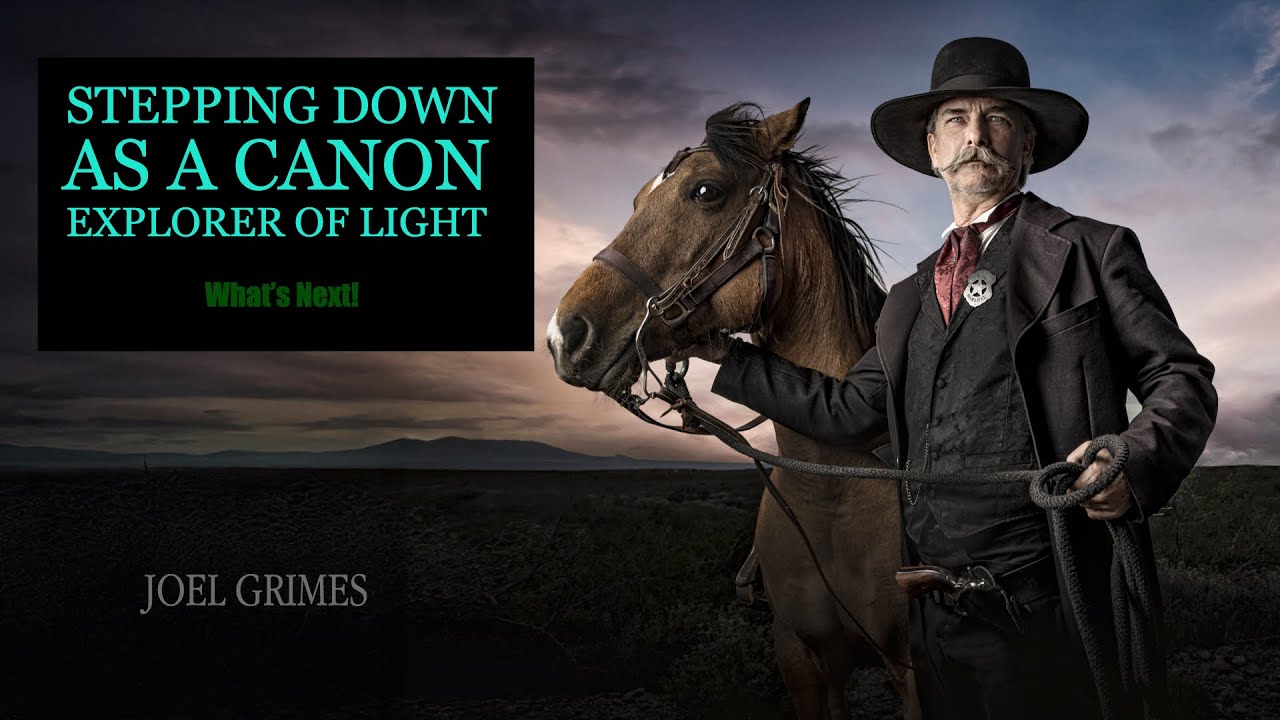
So when I came across Joel Grimes announcing he was stepping down as a Canon Explorer of Light after a decade in that role, I stopped scrolling immediately. Because Joel isn’t some hobbyist sorting through upgrade anxiety. He’s one of the most recognizable commercial photographers working today. And if he’s publicly reexamining his relationship with a brand, that felt worth sitting with.
Why This Video Isn’t Really About Canon
In this Joel Grimes video, he’s clear that stepping down has nothing to do with Canon as a company. He speaks warmly about the program, the relationships, and what ten years as an ambassador gave him, in terms of access, community, and visibility. This isn’t a breakup video. It’s more like a graduation speech.
What he’s describing is the natural tension that comes when any long-term professional relationship, even a good one, starts to limit what’s possible next. As an Explorer of Light, Joel represented Canon in an official capacity. That meant showing up with Canon gear, integrating it into his teaching, and being publicly associated with one ecosystem. For ten years, that worked. Then something shifted in what he wanted to build creatively, and the structure stopped fitting.
That’s not a complaint. That’s just honest.
The Real Technique Here Is Recognizing a Constraint You’ve Normalized
This is the part that actually applies to photographers at any level, not just the ones with ambassador deals.
Joel talks about wanting more freedom in how he approaches his future work and education. He doesn’t spell out every detail, but the implication is clear: when you’ve been operating inside a defined structure for long enough, you stop noticing the edges of it. You think you’re making free creative choices, but some of those choices were quietly made for you years ago, by a contract, a brand relationship, or just a habit you’ve never questioned.
Here’s the practical exercise I took from watching this. Sit down and list every piece of gear you own. Then ask, for each item: did I choose this because it genuinely solves a problem I have, or did I choose it because it was what I already had, what someone else recommended, or what made me feel like a “real” photographer?
I did this after watching Joel’s video and had a genuinely uncomfortable twenty minutes. Some of my kit is there for real reasons. Some of it is just inertia wearing the costume of preference.
What a Decade-Long Commitment Actually Builds (And What It Costs)
One thing Joel reflects on honestly is how much the Explorer of Light program gave him. Exposure to other working professionals, access to Canon’s latest technology, a platform that amplified his teaching. These aren’t small things. A ten-year run in any ambassador program at that level represents thousands of hours of work, relationship-building, and showing up consistently.
But he’s also clear that those benefits come attached to obligations. You’re representing something beyond yourself. Your gear choices, your public statements, your curriculum, all of it sits inside a larger brand story that isn’t entirely yours to write.
For most photographers reading this, the version of that trade-off isn’t a corporate sponsorship. It’s subtler. It’s building your whole workflow around one software because that’s what your mentor used. It’s buying into a lens system because your photo group is all shooting the same mount. It’s defining your style around what your most popular posts looked like three years ago, because that’s what “works.”
Joel stepping away is a reminder that the most experienced professionals revisit these decisions on purpose, not just when something goes wrong.
What I’d Do Differently in My Own Work
I’ll be honest: I watched this video partly hoping for gear news. I wanted to know what system Joel is moving toward next. He doesn’t say, at least not in this video, and I actually think that’s the right call. Because announcing a new brand deal the same week you’re leaving one would undercut the whole point.
What I would add to Joel’s reflection, from my own experience, is that these transitions are most useful when you give yourself a blank period before filling the space. I switched camera systems two years ago and immediately started building loyalty to the new one. I was basically doing the same thing, just with different logos on my strap.
The more interesting experiment, and the one I wish I’d tried, is to shoot with whatever you have for six months with no intention of upgrading anything. I’ve done enough Sunday morning photo walks with just my phone to know that the constraint forces something out of you that abundance doesn’t. Some of my favorite frames from the past year came from leaving the big bag at home.
Joel seems to be entering that kind of open space deliberately. I respect that more than any gear announcement.
The One Thing to Carry Forward
Your tools shape your creative identity whether you’re conscious of it or not. The most valuable thing you can do, at any stage of your career, is to choose that relationship on purpose rather than inherit it by default.
Watch the full video for the complete reflection directly from Joel, including the personal context behind this decision that makes the whole thing land differently than a press release ever could.
Comments
Leave a Comment