I used to throw whatever I needed into my bag every morning without thinking twice. A lens here, a battery there, my phone stuffed into whatever pocket had room. Then I’d get somewhere beautiful on a Sunday walk and realize I’d forgotten my AirPods, or my backup card, or the one thing I needed to actually enjoy the shoot. It sounds small until it happens enough times that it starts affecting your work.
Watch the full tutorial on YouTube
In this Peter McKinnon video, he sits down with knife maker and craftsman John Grimsmo to go through what Grimsmo carries in his pockets every single day. It’s a “what’s in your pockets” format, but the lesson underneath it is genuinely useful for any creative who works on the go. What struck me watching it wasn’t any single item. It was how deliberate every choice was. Nothing was in Grimsmo’s pockets by accident. That intentionality is something I’ve been trying to bring into my own kit for years, and this video crystallized it in a way that a gear list never quite does.
Step 1: Start With Tools That Serve Multiple Roles
 John Grimsmo pulling a knife from his pocket
The first thing out of Grimsmo’s pocket is a knife, and McKinnon notes that this is essentially a daily constant for him. For a craftsman, a knife is a utility tool. For a photographer, the equivalent might be a multitool or a compact screwdriver set. The point isn’t to carry a knife specifically. It’s to carry one thing that solves ten problems instead of carrying ten things that each solve one. Before you build out any everyday carry system, ask what single tool you reach for most often and make sure it earns its pocket space.
John Grimsmo pulling a knife from his pocket
The first thing out of Grimsmo’s pocket is a knife, and McKinnon notes that this is essentially a daily constant for him. For a craftsman, a knife is a utility tool. For a photographer, the equivalent might be a multitool or a compact screwdriver set. The point isn’t to carry a knife specifically. It’s to carry one thing that solves ten problems instead of carrying ten things that each solve one. Before you build out any everyday carry system, ask what single tool you reach for most often and make sure it earns its pocket space.
Step 2: Build a Color-Coded Note System You’ll Actually Use
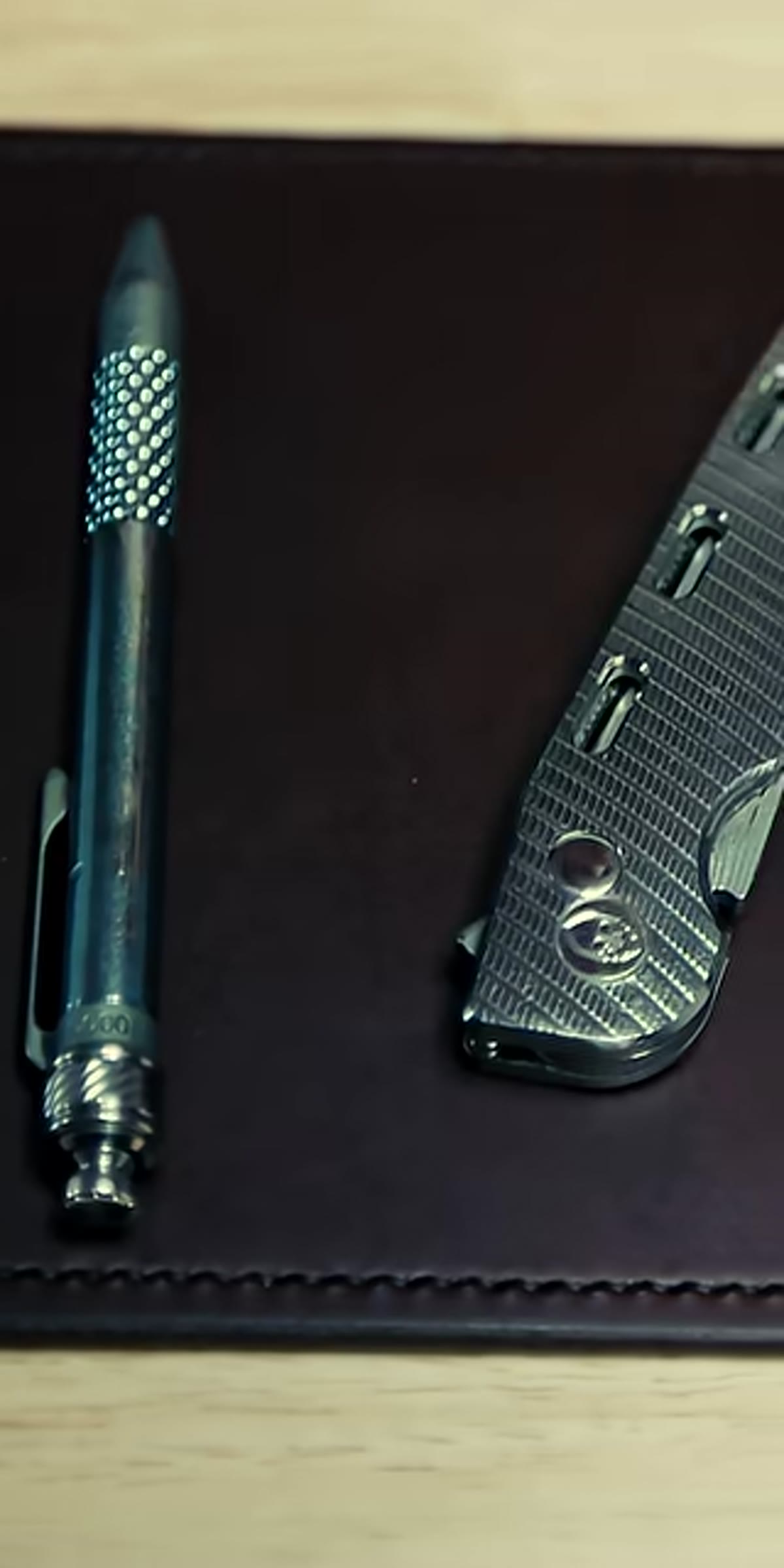 Three pens lined up, black, blue, and red
Grimsmo carries three pens daily, one black, one blue ink, one red, because he color-codes his notebook. McKinnon finds this a little wild at first, but Grimsmo is completely matter-of-fact about it. The system exists because it works for him. For photographers, the note-taking habit itself is worth stealing. I started keeping a small notebook in my camera bag a couple of years ago to log settings, locations, and lighting conditions for shots I want to recreate. Color coding by shoot type, outdoor, indoor, portraits, makes those notes scannable in a way that a wall of black ink never is. The tool is secondary. The habit of capturing your process in the moment is what actually compounds over time.
Three pens lined up, black, blue, and red
Grimsmo carries three pens daily, one black, one blue ink, one red, because he color-codes his notebook. McKinnon finds this a little wild at first, but Grimsmo is completely matter-of-fact about it. The system exists because it works for him. For photographers, the note-taking habit itself is worth stealing. I started keeping a small notebook in my camera bag a couple of years ago to log settings, locations, and lighting conditions for shots I want to recreate. Color coding by shoot type, outdoor, indoor, portraits, makes those notes scannable in a way that a wall of black ink never is. The tool is secondary. The habit of capturing your process in the moment is what actually compounds over time.
Step 3: Carry a Light Source You Trust
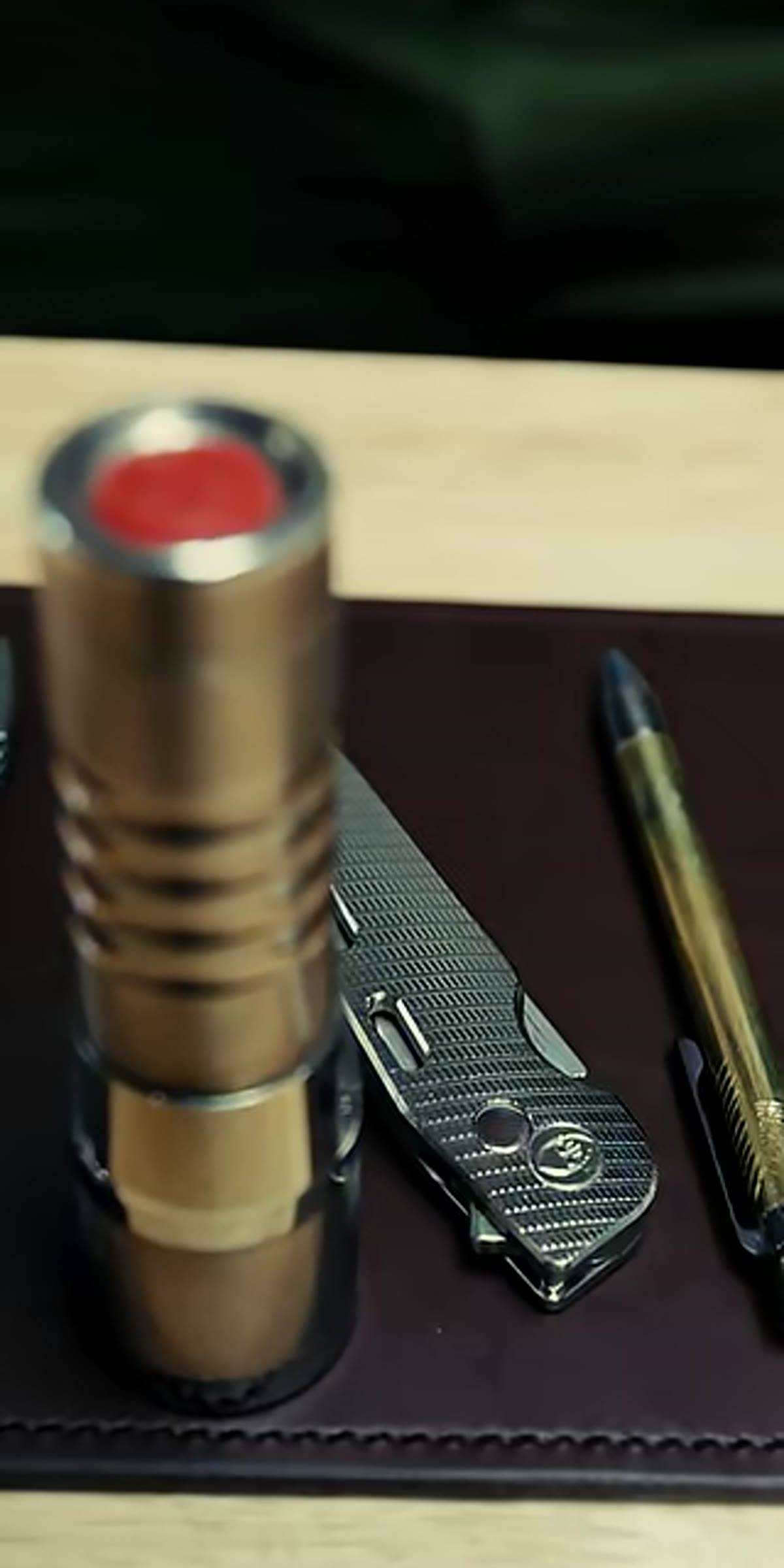 Prometheus flashlight being held up for the camera
Grimsmo carries a Prometheus flashlight, a compact, high-quality torch that he refers to as his “soup can” because of its shape. For photographers shooting at dawn or dusk, or doing any kind of interior work, a reliable handheld light is genuinely useful gear that often gets overlooked. I keep a small flashlight in my bag specifically for checking camera settings in dark venues, lighting a subject’s face quickly during a test shot, or just finding the lens cap I dropped under a chair. It doesn’t need to be expensive. It needs to be consistent and compact enough that you’ll actually carry it.
Prometheus flashlight being held up for the camera
Grimsmo carries a Prometheus flashlight, a compact, high-quality torch that he refers to as his “soup can” because of its shape. For photographers shooting at dawn or dusk, or doing any kind of interior work, a reliable handheld light is genuinely useful gear that often gets overlooked. I keep a small flashlight in my bag specifically for checking camera settings in dark venues, lighting a subject’s face quickly during a test shot, or just finding the lens cap I dropped under a chair. It doesn’t need to be expensive. It needs to be consistent and compact enough that you’ll actually carry it.
Step 4: Don’t Underestimate Analog Tools in a Digital Workflow
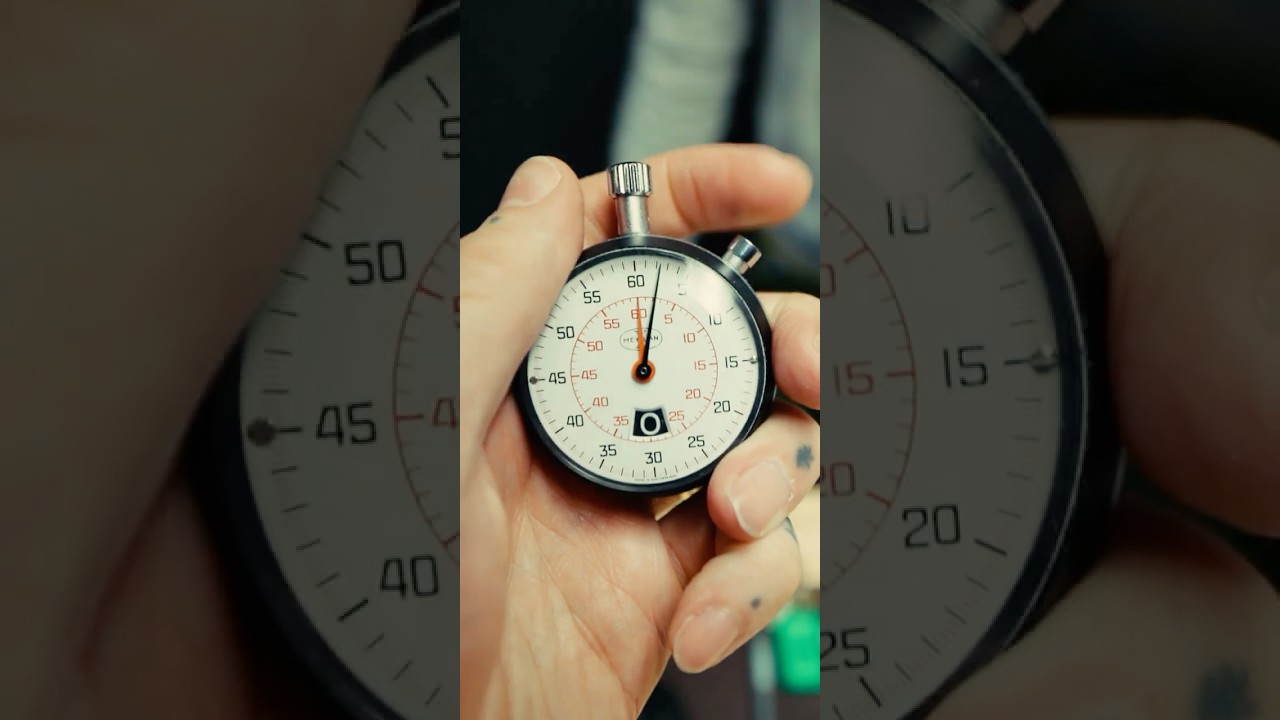
 Mechanical stopwatch being held and demonstrated
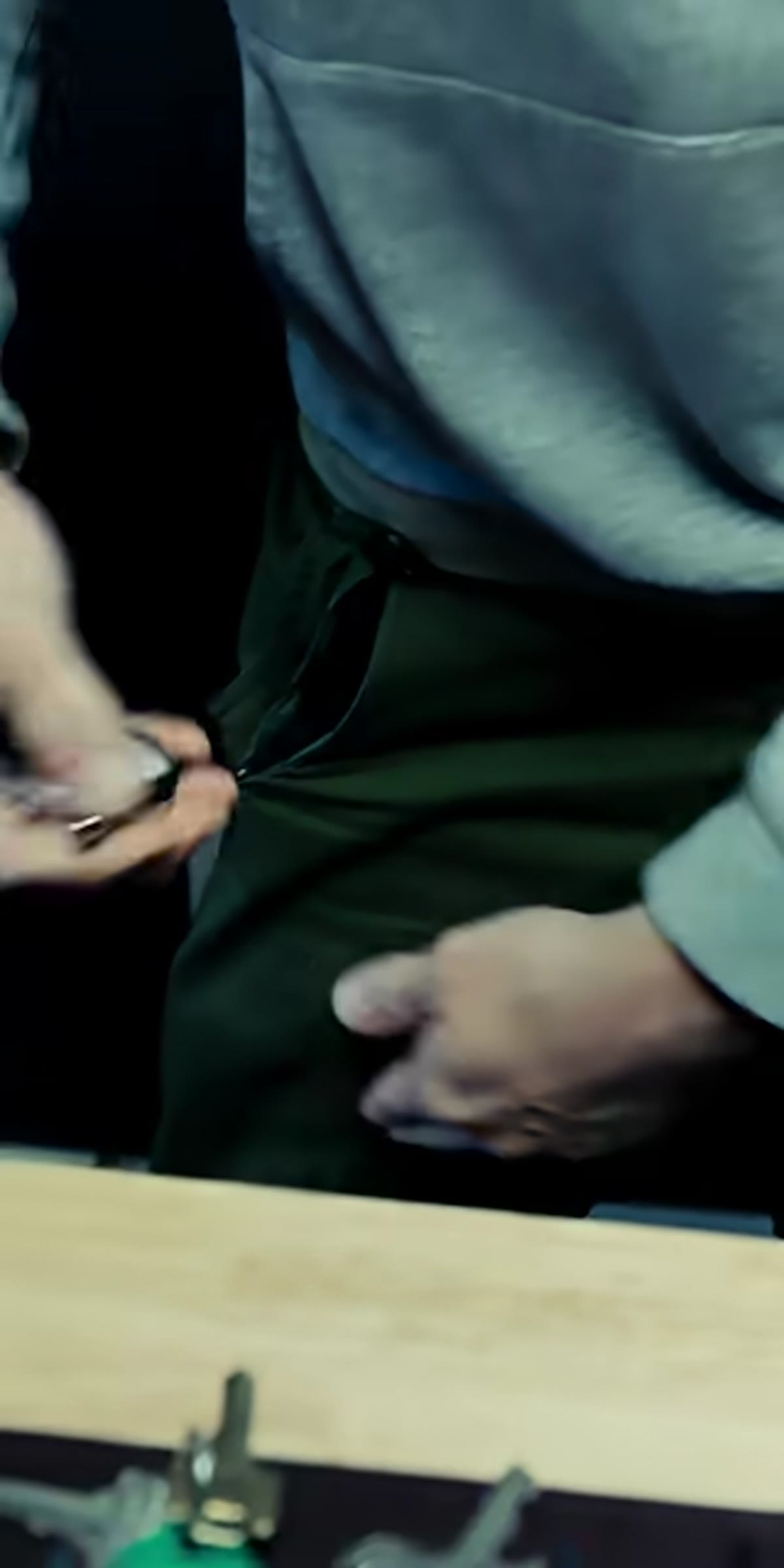
One of the most interesting items Grimsmo pulls out is a mechanical stopwatch, a Tudor-branded piece rebranded as a Mayland, that he’s been carrying for nearly a year. He uses it to time his workouts and his evening walks. He’s not anti-technology. He drives a Tesla. But he reaches for the mechanical watch because the tactile snap of the mechanism gives him something a phone timer doesn’t. As photographers, we often default to apps and screens for everything, but there’s real value in tools that keep your hands and eyes free. A physical timer, a printed shot list, a paper map of a location. These aren’t nostalgia. They’re workflow choices that keep your phone out of your hand when your camera should be in it.
Mechanical stopwatch being held and demonstrated
One of the most interesting items Grimsmo pulls out is a mechanical stopwatch, a Tudor-branded piece rebranded as a Mayland, that he’s been carrying for nearly a year. He uses it to time his workouts and his evening walks. He’s not anti-technology. He drives a Tesla. But he reaches for the mechanical watch because the tactile snap of the mechanism gives him something a phone timer doesn’t. As photographers, we often default to apps and screens for everything, but there’s real value in tools that keep your hands and eyes free. A physical timer, a printed shot list, a paper map of a location. These aren’t nostalgia. They’re workflow choices that keep your phone out of your hand when your camera should be in it.
Step 5: Edit Your Carry Ruthlessly and Revisit It Often
 Full pocket contents laid out together on a surface
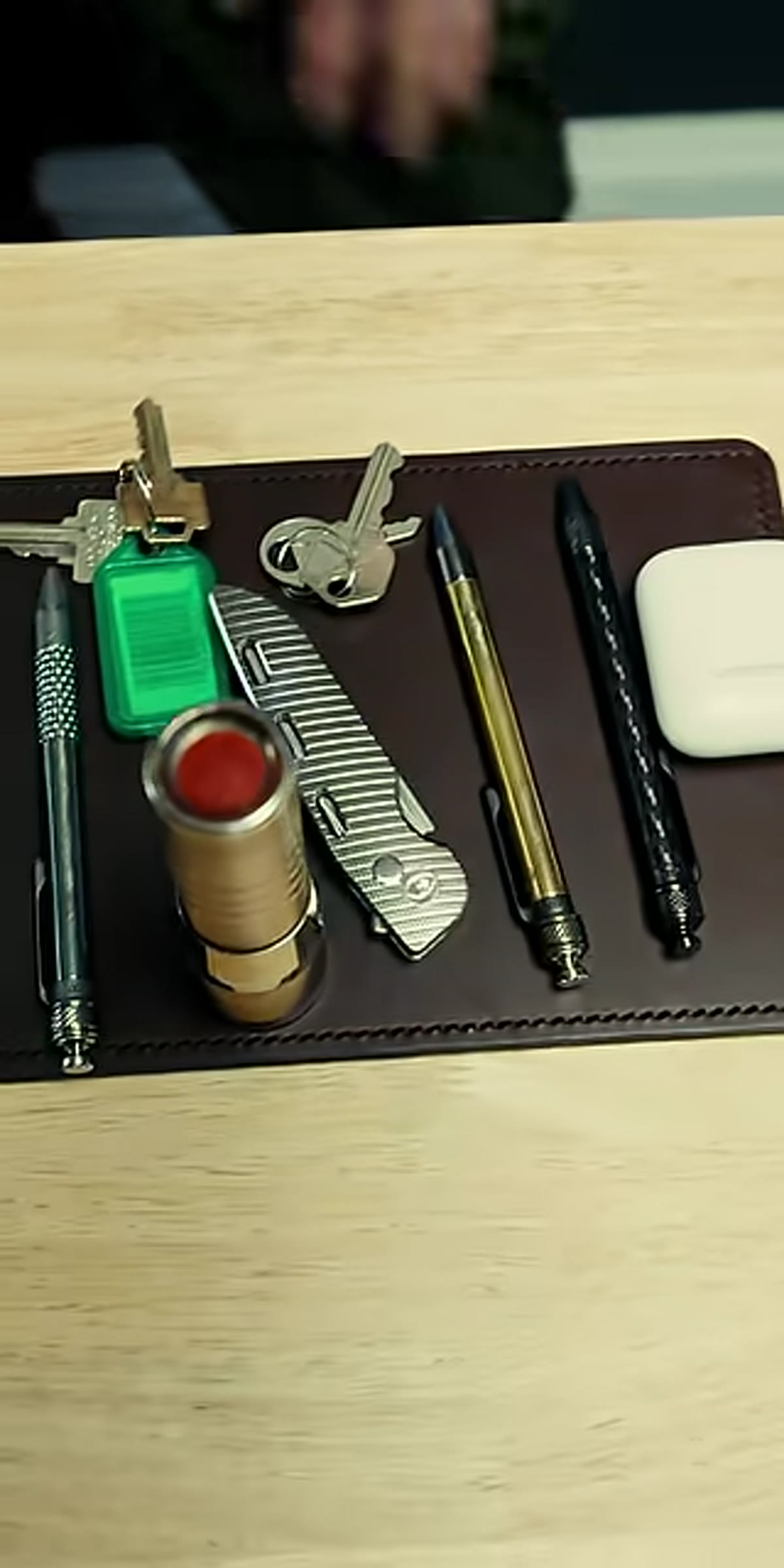
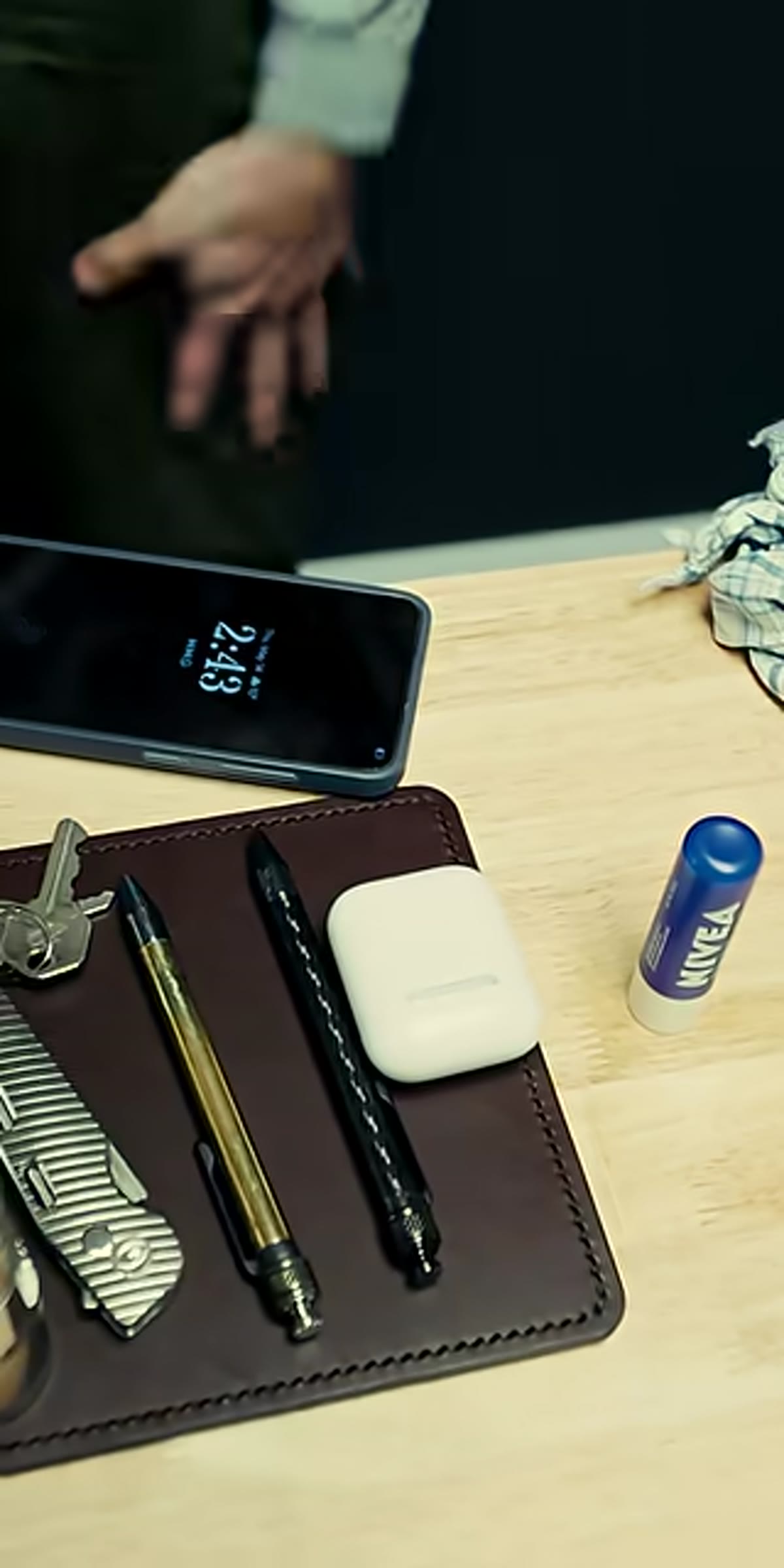
By the time Grimsmo finishes emptying his pockets, there’s a wallet, a phone, a watch, a flashlight, a hankie, AirPods, a chopstick, keys, the three pens, and the knife. It sounds like a lot, but each item has a clear reason for being there. McKinnon’s reaction is part disbelief, part admiration. The carry has been refined over time to the point where Grimsmo doesn’t think about it anymore. It’s just what’s in his pockets. For photographers, this is the goal with any kit, whether it’s your pockets, your camera bag, or your editing presets. The best systems feel automatic because you’ve done the work of eliminating what doesn’t belong. Revisit your carry every few months. Remove anything you haven’t touched and replace it only if something proves its worth.
Full pocket contents laid out together on a surface
By the time Grimsmo finishes emptying his pockets, there’s a wallet, a phone, a watch, a flashlight, a hankie, AirPods, a chopstick, keys, the three pens, and the knife. It sounds like a lot, but each item has a clear reason for being there. McKinnon’s reaction is part disbelief, part admiration. The carry has been refined over time to the point where Grimsmo doesn’t think about it anymore. It’s just what’s in his pockets. For photographers, this is the goal with any kit, whether it’s your pockets, your camera bag, or your editing presets. The best systems feel automatic because you’ve done the work of eliminating what doesn’t belong. Revisit your carry every few months. Remove anything you haven’t touched and replace it only if something proves its worth.
Step 6: Let Your Tools Reflect How You Actually Work
 Grimsmo and McKinnon discussing the full layout together
What the full pocket reveal makes clear is that Grimsmo’s everyday carry is a physical portrait of his priorities. He tracks his body, he writes things down, he values craftsmanship, and he builds things with his hands. Every item reflects that. Your kit, whatever form it takes, should do the same. I shoot a lot of solo travel work, which means my everyday carry leans toward compact, quiet, and self-sufficient. A mirrorless body, a 35mm prime, wireless earbuds for long editing sessions, and yes, a small notebook. When someone asks why I carry what I carry, I can answer immediately. If you can’t answer that question about something in your bag, it probably shouldn’t be there.
Grimsmo and McKinnon discussing the full layout together
What the full pocket reveal makes clear is that Grimsmo’s everyday carry is a physical portrait of his priorities. He tracks his body, he writes things down, he values craftsmanship, and he builds things with his hands. Every item reflects that. Your kit, whatever form it takes, should do the same. I shoot a lot of solo travel work, which means my everyday carry leans toward compact, quiet, and self-sufficient. A mirrorless body, a 35mm prime, wireless earbuds for long editing sessions, and yes, a small notebook. When someone asks why I carry what I carry, I can answer immediately. If you can’t answer that question about something in your bag, it probably shouldn’t be there.
What I’d Add From My Own Experience
The one thing this video doesn’t address is how your carry changes with context, and I think that’s worth naming. My Sunday photo walk carry is completely different from what I pack for a client shoot. The pocket philosophy Grimsmo demonstrates works because his daily life is consistent enough to support a fixed system. If your work is more varied, the lesson is to build two or three intentional loadouts rather than one. A travel kit, a studio kit, a casual kit. Label them, keep them stocked, and rotate between them rather than repacking from scratch every time. The goal is to spend your mental energy on making photographs, not on remembering whether you packed the battery charger.
The single most important takeaway here is this: every item you carry costs you attention, even when you’re not thinking about it. Grimsmo’s pockets work because he’s made every decision in advance. That’s the standard worth holding yourself to.
Watch the full tutorial on YouTube and pay attention to how Grimsmo talks about each item. It’s not gear talk. It’s systems thinking, and that’s a skill that transfers directly to how you shoot.
Comments (1)
Just used this on a wedding shoot edit. Client was thrilled.
Leave a Comment