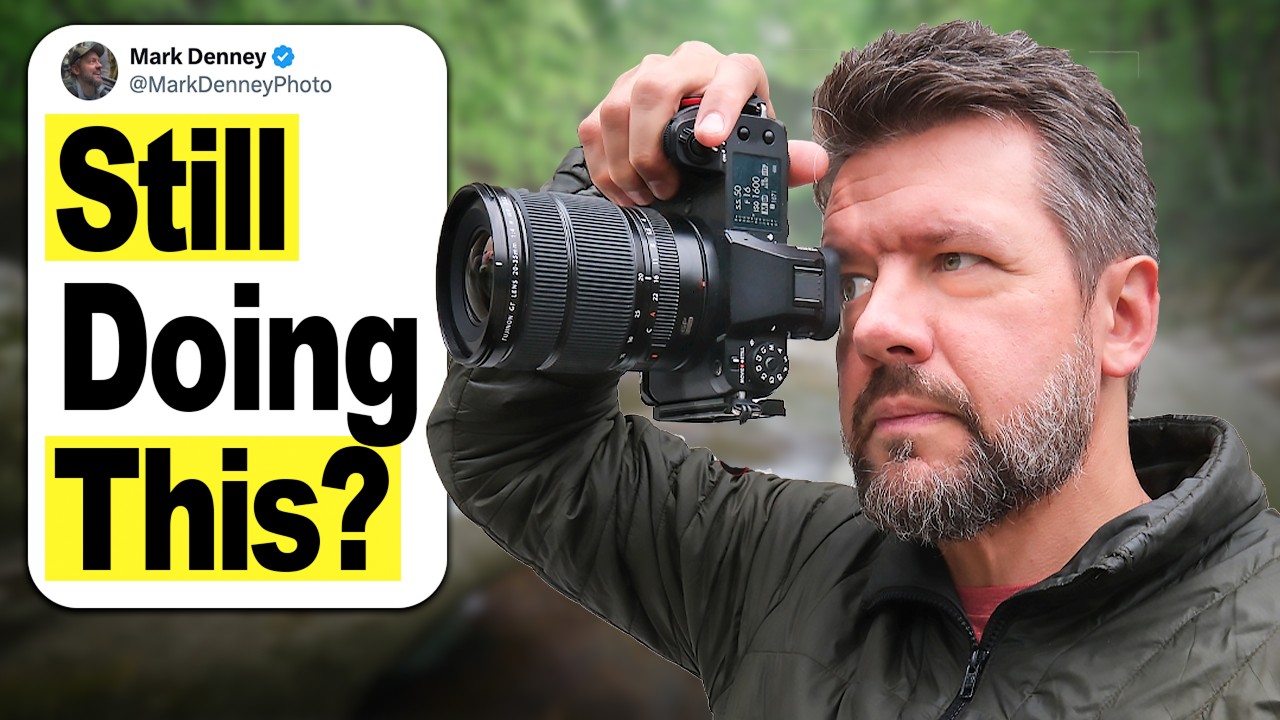
I used to think that putting in the hours was enough. Show up, shoot, repeat. And for a while, that belief carried me. But there’s a particular kind of frustration that sets in when you’ve been shooting for years and your photos still feel like they’re circling the same drain. You’re not a beginner anymore, but you’re not where you want to be either. That middle space is uncomfortable, and it’s sneaky, because the habits keeping you there are usually the same ones that helped you get started.
In this Mark Denney tutorial, Watch the full tutorial on YouTube, he names three habits that stalled his own growth for over a decade. What makes this worth your time isn’t just the self-awareness he brings to it. It’s that he describes each habit with enough honesty that you’ll probably recognize yourself in at least one of them. I recognized myself in all three.
What I want to do here is walk you through each habit as a concrete, actionable step you can take on your next shoot or editing session. Not a summary of what Mark said, but a practical guide to actually catching yourself in the habit and doing something different.
Step 1: Audit Your SD Card After Every Trip
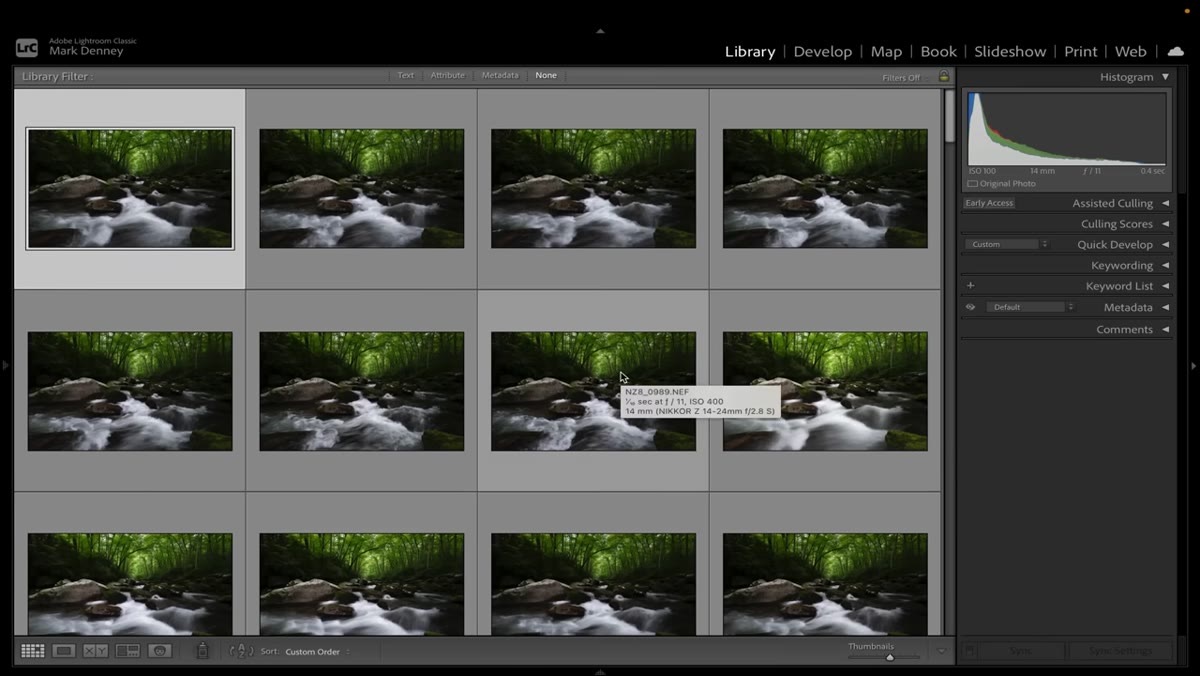 SD card contents showing nearly identical repeated compositions
When you get home from a shoot, before you do anything else, scroll through your images without culling or editing. Just look at the spread. If the first twenty frames look almost identical to the last twenty, that’s your signal. Not that you’re bad at photography, but that you’ve been camping on a single composition instead of working the scene.
SD card contents showing nearly identical repeated compositions
When you get home from a shoot, before you do anything else, scroll through your images without culling or editing. Just look at the spread. If the first twenty frames look almost identical to the last twenty, that’s your signal. Not that you’re bad at photography, but that you’ve been camping on a single composition instead of working the scene.
The habit Mark describes is something I fell into hard on a trip to the Oregon coast a few years back. I found one angle I loved, locked in the tripod, and basically didn’t move for two hours. I came home with 340 nearly identical frames. The audit step sounds simple, but it’s genuinely clarifying. Once you see the repetition laid out in front of you, it’s hard to unsee it.
Step 2: Set a Maximum Frame Count Per Composition
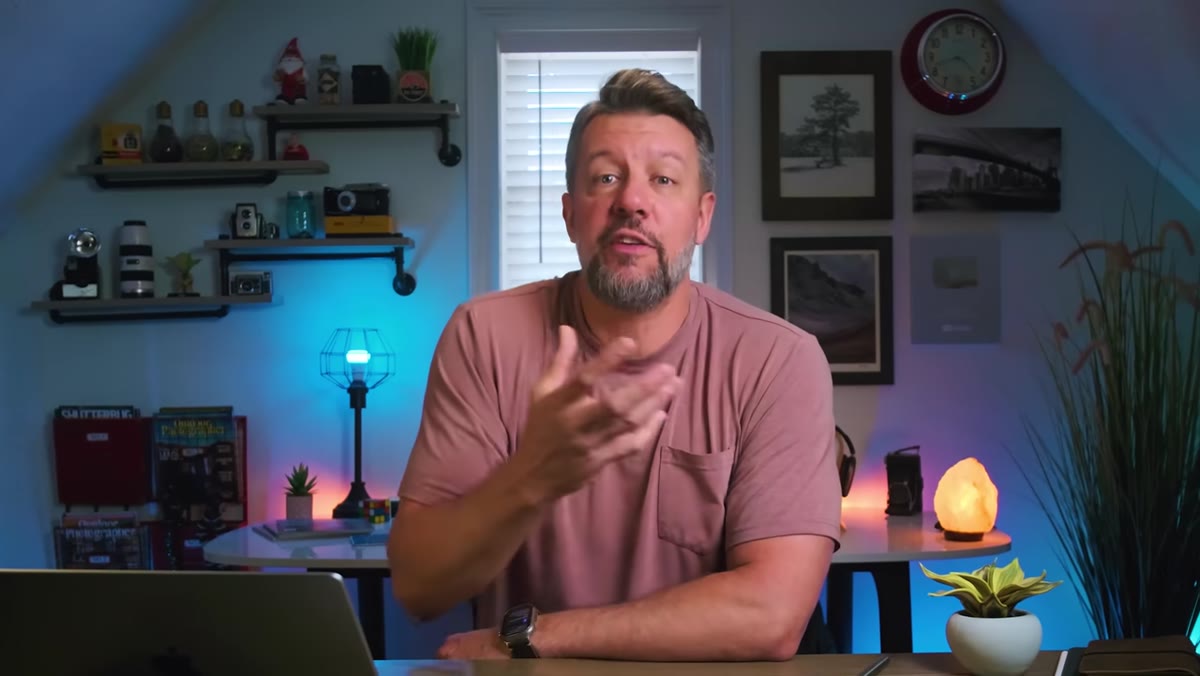 Waterfall photos repeated with no variation across the grid
Before your next shoot, give yourself a rule: no more than ten to fifteen frames from any single tripod position before you physically move. This sounds almost too simple, but it forces a decision. Either you’ve gotten what you came for, or you need to find a new angle.
Waterfall photos repeated with no variation across the grid
Before your next shoot, give yourself a rule: no more than ten to fifteen frames from any single tripod position before you physically move. This sounds almost too simple, but it forces a decision. Either you’ve gotten what you came for, or you need to find a new angle.
The fear Mark talks about, missing the magical light while you’re repositioning, is real. I’ve felt it. But here’s what I’ve learned from my Sunday morning photo walks: the shot you almost miss because you moved is almost always more interesting than the one you camped on for an hour. Limiting your frame count per position trains you to trust your instincts faster and explore more during the actual shoot window, rather than hoarding frames against a moment that may never come.
Step 3: Work the Scene Like a Checklist, Not a Waiting Game
 Mark describing working compositions versus waiting statically
Give yourself a scouting checklist before you ever touch the shutter. Three questions: What’s the foreground? What’s the background relationship? What changes if I move ten feet left, right, closer, or farther back? Run through these physically. Walk the spot. Crouch down. Step into the water if you have to.
Mark describing working compositions versus waiting statically
Give yourself a scouting checklist before you ever touch the shutter. Three questions: What’s the foreground? What’s the background relationship? What changes if I move ten feet left, right, closer, or farther back? Run through these physically. Walk the spot. Crouch down. Step into the water if you have to.
The difference between waiting on a scene and working a scene is movement with intention. Waiting is passive. Working means you’re actively looking for the frame, not holding your breath for the light to do the heavy lifting. The light matters enormously, but it lands differently depending on where you’re standing. Give yourself options before the good light shows up, and you’ll have somewhere interesting to point when it does.
Step 4: Name Your Editing Habit Before You Open the File
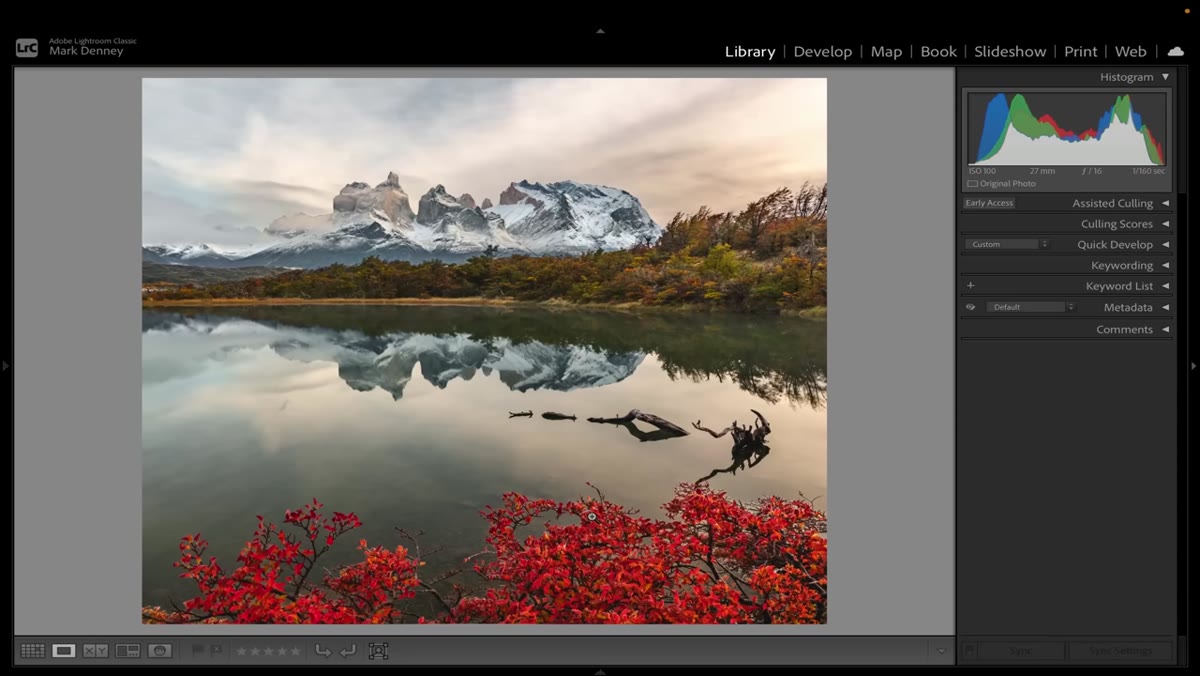 Mark sitting down to edit Patagonia images in post-processing software
Mark’s second habit lives in the edit, not the field. And it’s harder to catch because it doesn’t feel like a problem in the moment. Before you start editing an image, write down in one sentence what you want the viewer to feel or notice. Literally write it down. Then open the file.
Mark sitting down to edit Patagonia images in post-processing software
Mark’s second habit lives in the edit, not the field. And it’s harder to catch because it doesn’t feel like a problem in the moment. Before you start editing an image, write down in one sentence what you want the viewer to feel or notice. Literally write it down. Then open the file.
This sounds like journaling advice, not editing advice, but stay with me. When you have no anchor, you’ll reach for the same sliders in the same order out of muscle memory. Clarity up, vibrance up, shadows lifted. It’s comfortable, and it produces technically decent images that don’t say much. When you name your intention first, every adjustment you make either serves that goal or it doesn’t. You’ll find yourself leaving things alone that you’d normally push, and pushing things you’d normally leave.
Step 5: Identify the Habit That’s Working Just Well Enough to Keep You Stuck
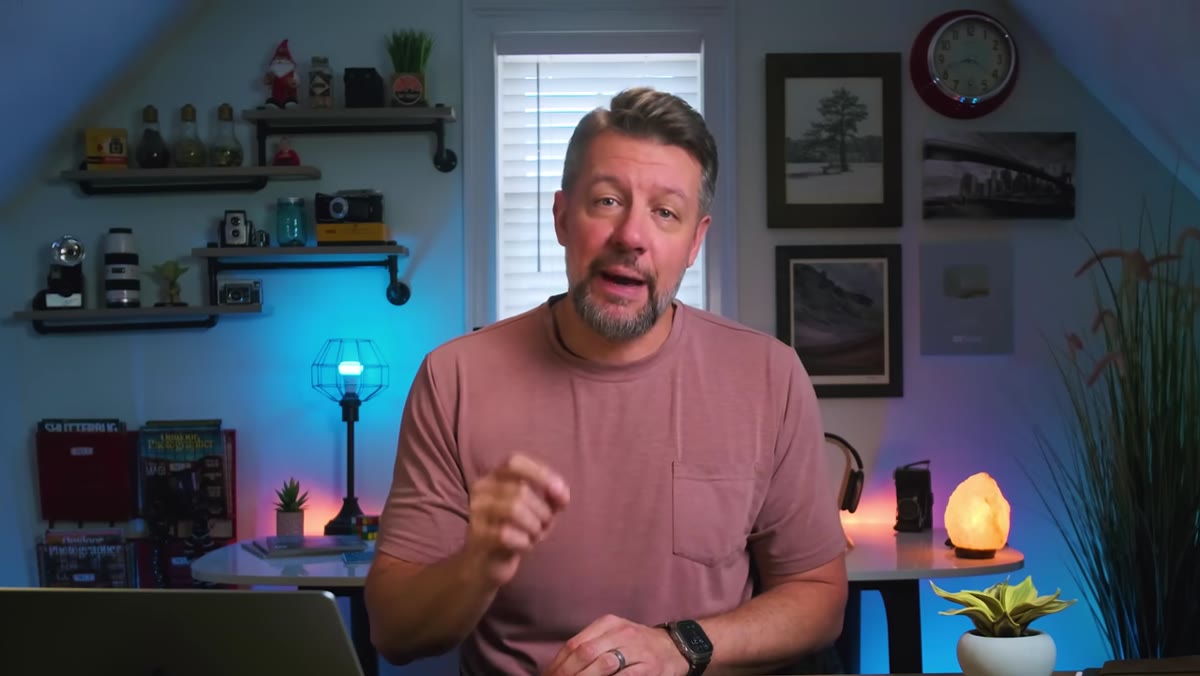 Mark explaining how early helpful habits quietly become limitations
This is the meta-step, and it’s the hardest one. Mark makes a point that hit me harder than anything else in this tutorial: the habits that are most difficult to break aren’t the obviously bad ones. They’re the ones that work just well enough to produce acceptable results. Those are the ones that keep you comfortable and keep you from pushing further.
Mark explaining how early helpful habits quietly become limitations
This is the meta-step, and it’s the hardest one. Mark makes a point that hit me harder than anything else in this tutorial: the habits that are most difficult to break aren’t the obviously bad ones. They’re the ones that work just well enough to produce acceptable results. Those are the ones that keep you comfortable and keep you from pushing further.
Take ten minutes after your next editing session to ask yourself: what did I do on autopilot today? Not what you did wrong, just what you did without thinking. That automatic behavior is worth examining, because it might be the thing producing your “pretty good” photos instead of your great ones. You don’t have to change everything at once. Just notice what’s running in the background.
My Own Extension: Give Yourself an Intentional Departure Shot
Here’s something I’ve added to my own workflow after sitting with Mark’s ideas. At the end of every shoot, before I pack up, I take one frame I’m not comfortable with. A weird angle. A composition that breaks my usual rules. Something that feels slightly wrong.
Most of the time, those shots don’t make the cut. But occasionally, one of them is the best image from the whole session, and it’s always the one that taught me something. It’s an easy habit to build, costs you maybe sixty seconds, and it keeps your eye from getting lazy. The Sunday walks help too. Low stakes, no client, no pressure. Just a camera and a neighborhood. That’s where I break the most habits, because nothing’s on the line.
The single most important takeaway from Mark’s tutorial is this: comfort is not the same as competence. The habits that feel productive, shooting lots of frames, returning to compositions you love, editing with familiar moves, can all be forms of staying still while looking like you’re moving. Catching those habits is the actual work.
Watch the full tutorial on YouTube to hear Mark walk through all three habits in his own words, with real examples from his shoots and editing sessions. It’s one of the more honest conversations I’ve seen a photographer have with themselves on camera, and it’s worth the full watch.
Comments (4)
Finally someone explains this in a way that actually makes sense.
This is the kind of content that keeps me coming back.
Solid advice. Especially the part about taking your time with it.
My workflow just got 10x faster. Not even kidding.
Leave a Comment