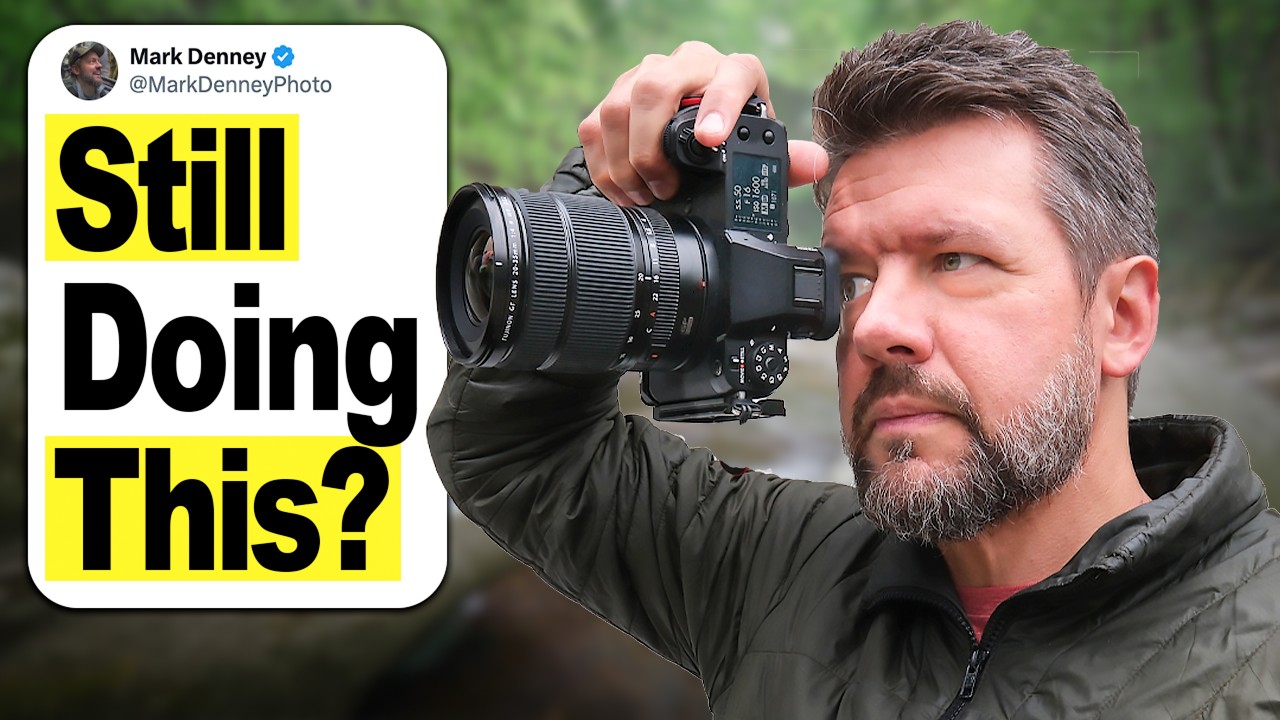
Every Sunday morning I do a photo walk. No agenda, no client, no pressure. Just me, whatever camera I grab on the way out the door, and about two hours before Seattle wakes up. It’s supposed to be freeing. But for a long stretch last year, I kept coming home with images that felt fine. Technically clean. Competently composed. And completely forgettable.
I wasn’t doing anything wrong. That was exactly the problem.
When I came across this Mark Denney tutorial on habits that held his photography back for over a decade, I expected the usual list of gear mistakes or exposure oversights. What I got instead was something more uncomfortable: a breakdown of how certain habits calcify precisely because they work just well enough to stop you from questioning them.
When “More Time Shooting” Stops Being the Answer
Mark opens with an assumption a lot of us carry without realizing it: that volume equals growth. Spend more time in the field, take more shots, and improvement follows automatically. Early on, that’s actually true. Repetition builds muscle memory, your eye sharpens, and your keeper rate climbs. The trap is that this logic doesn’t scale forever.
At some point, repeating the same process with more frequency just produces more of the same results faster. Mark frames this as the first habit worth examining: defaulting to quantity over intentional repetition. If you’re heading out every weekend and your portfolio hasn’t shifted in six months, the answer probably isn’t more weekends. It’s a different question before you press the shutter.
His fix is deceptively simple. Before shooting a scene, he now asks himself what specific element he’s trying to improve on this outing. Not “get a great shot,” but something narrower: foreground depth, light direction, leading lines, whatever it is. One variable. That constraint forces presence instead of pattern.
The Composition Comfort Zone You Don’t Know You’re In
The second habit Mark identifies is one I recognized immediately, which is relying on the same compositional formulas because they reliably produce decent results. Rule of thirds, strong foreground element, horizon off-center. These aren’t wrong. They’re just not enough on their own once you’ve internalized them.
The issue is that “formula composition” becomes invisible to you. You stop seeing the scene and start slotting the scene into a framework. Mark describes arriving at locations and almost immediately knowing where he’d set up the tripod, not because that spot was best, but because it matched a pattern his brain had already tagged as successful.
His approach now involves what he calls deliberate discomfort: physically moving to a position that doesn’t immediately feel like the right shot. Standing too close, too low, too far to one side. Not because those angles will produce the final image, but because the friction of an unfamiliar angle forces you to actually look at what’s in front of you. Sometimes that uncomfortable position turns out to be exactly right. More often, working through it makes the eventual composition more considered and less automatic.
The Lightroom Edit That Looked Finished But Wasn’t
The third habit is where Mark gets into specifics that are immediately actionable for anyone editing in Lightroom, and it’s probably the one that stung the most for me personally.
The pattern goes like this: you bring an image into Lightroom, boost the exposure, pull the highlights, lift the shadows, add a little clarity and vibrance, maybe a slight S-curve in tone, and then you’re done. The photo looks good on screen. You export and move on. Mark calls this the “complete but not finished” trap. The edit is coherent, but it hasn’t actually been pushed toward a specific mood or intention.
His correction involves adding a deliberate step at the end of any edit: ask what emotion this image is supposed to carry, and then make one targeted adjustment that serves only that goal. If the answer is stillness, maybe you desaturate just the oranges slightly to reduce visual noise. If it’s drama, you deepen the blacks with a specific curves adjustment rather than just the Blacks slider. The point isn’t a different tool, it’s a different question arriving earlier in the process.
He also talks about the habit of editing with the histogram as the primary guide, which keeps technical accuracy high but creative intention low. Using your gut as a check before the histogram, rather than after, produces a different kind of edit.
Where I’d Push This Further
I think Mark’s framework is solid, and I use all three adjustments now. The one place I’d add a caveat is around the “deliberate discomfort” composition exercise. For photographers newer to the craft, deliberately shooting from positions that feel wrong can sometimes entrench confusion rather than sharpen instinct. If you haven’t spent enough time with foundational composition to have actual instincts yet, there’s no pattern to productively disrupt.
My version for beginners: do the formula composition first, get that frame, and then force yourself to take five more frames that break one rule each. You’re not abandoning the foundation, you’re pressure-testing it. That sequence builds the contrast you need to actually learn something from the uncomfortable angles instead of just feeling uncertain.
The Real Lesson Under All Three Habits
The thread connecting everything Mark covers is this: habits that made you better aren’t the same as habits that will keep making you better. Recognizing the difference requires the specific discomfort of evaluating your process while it’s still producing acceptable results, which is genuinely harder than fixing something that’s clearly broken.
If your photography feels like it’s plateaued and you can’t point to an obvious technical reason why, this video is worth your full attention. Watch it for the visual examples especially, because seeing Mark demonstrate the composition and editing principles in context makes the shifts click faster than reading about them.
Comments (2)
Would love to see a follow-up going deeper into this topic.
I tried this on a client project yesterday and the results were way better than expected.
Leave a Comment