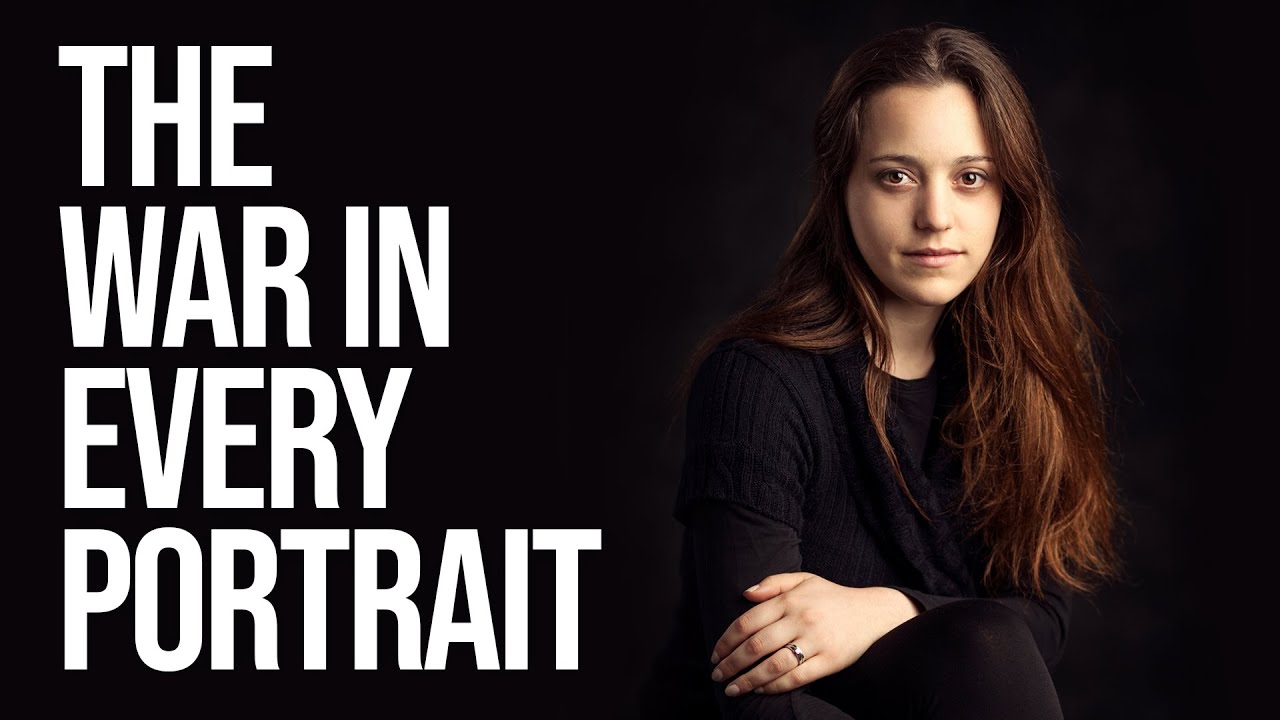
Portrait sessions make me nervous in a way that landscape work never does. A mountain doesn’t care how it looks. A person absolutely does. And for the longest time, I couldn’t quite name what was actually happening in those first few awkward minutes of a shoot, when my subject is smiling too hard or standing too stiff, and I’m firing off frames that look technically fine but feel completely hollow.
In this Sean Tucker tutorial, Watch the full tutorial on YouTube, he names that tension better than anything I’ve come across. He frames portrait photography as a kind of war, and once you hear it described that way, you can’t unsee it. Every session I’ve shot since watching this has felt more intentional, because I finally understand what I’m actually trying to do.
The payoff here isn’t a camera setting or a lighting trick. It’s a shift in how you think about your role as the person behind the lens. But that shift changes everything about how you approach the work.
Step 1: Understand What You’re Really Trying to Capture
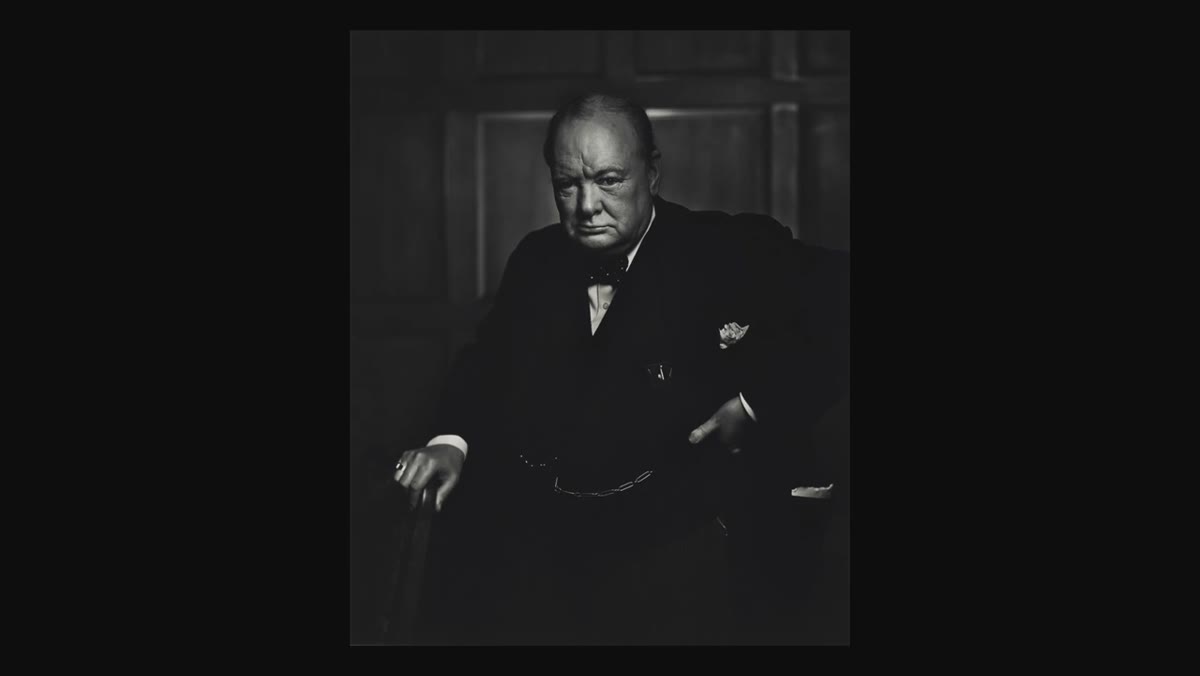 Yusuf Karsh’s famous belligerent Churchill portrait
The job of a portrait photographer isn’t to make someone look good. It’s to reveal who they actually are. Tucker opens with the story of Yusuf Karsh photographing Winston Churchill in 1941, with a hard two-minute window and a subject who made no secret of not wanting to be there. What came out of that session wasn’t a flattering, composed image. It was a photograph of raw defiance that the whole world recognized as Churchill. That’s what a great portrait does: it shows the soul, not the performance.
Yusuf Karsh’s famous belligerent Churchill portrait
The job of a portrait photographer isn’t to make someone look good. It’s to reveal who they actually are. Tucker opens with the story of Yusuf Karsh photographing Winston Churchill in 1941, with a hard two-minute window and a subject who made no secret of not wanting to be there. What came out of that session wasn’t a flattering, composed image. It was a photograph of raw defiance that the whole world recognized as Churchill. That’s what a great portrait does: it shows the soul, not the performance.
Before you pick up your camera for a portrait session, ask yourself what you actually know about the person you’re shooting. What do people say about them? What do they project? And more importantly, what might they be hiding underneath that projection? Your job is to find the gap between those two things.
Step 2: Recognize the Persona Your Subject Is Selling
 Tucker speaking to camera about modern personal branding
Tucker makes a sharp observation about the world we’re shooting in now. Most people have spent years carefully constructing how they present themselves, whether through social media or just the daily performance of being a person in public. By the time someone sits down in front of your camera, they already have a very specific idea of what they want you to capture. They will work to maintain that version of themselves for the entire session if you let them.
Tucker speaking to camera about modern personal branding
Tucker makes a sharp observation about the world we’re shooting in now. Most people have spent years carefully constructing how they present themselves, whether through social media or just the daily performance of being a person in public. By the time someone sits down in front of your camera, they already have a very specific idea of what they want you to capture. They will work to maintain that version of themselves for the entire session if you let them.
This isn’t vanity in a shallow sense. It’s self-protection. Tucker references the old myth that some cultures believed a camera could steal a person’s soul, and he uses it seriously: being photographed is genuinely vulnerable, and your subject knows it on some level even if they’d never say it out loud. When someone walks into your studio and immediately tells you they’re fussy about how they photograph, they’re not being difficult. They’re telling you they’re scared.
Step 3: Name the Tension So You Can Work With It
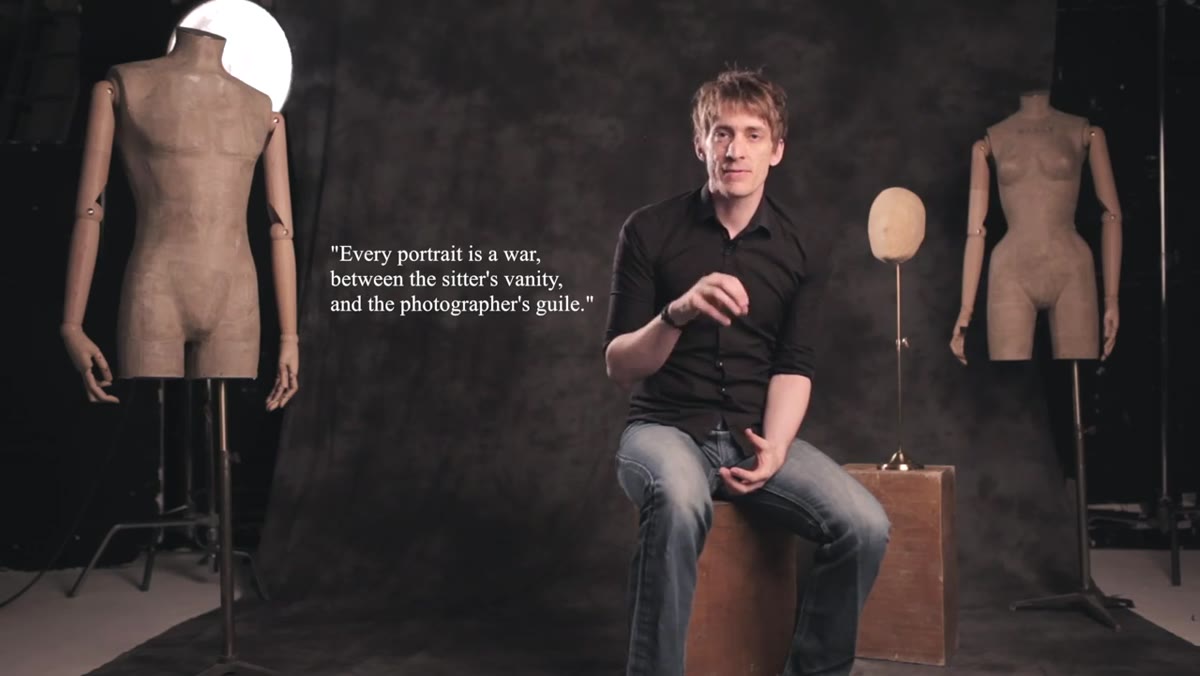 Tucker framing the “war” quote about vanity and guile
There’s a quote Tucker shares that stuck with me immediately: every portrait is a war between the sitter’s vanity and the photographer’s guile. I love this framing because it makes your role explicit. You’re not there to trick your subject or disrespect what they want. But you do have to be clever enough, and patient enough, to catch the moments when the mask slips and the real person shows through.
Tucker framing the “war” quote about vanity and guile
There’s a quote Tucker shares that stuck with me immediately: every portrait is a war between the sitter’s vanity and the photographer’s guile. I love this framing because it makes your role explicit. You’re not there to trick your subject or disrespect what they want. But you do have to be clever enough, and patient enough, to catch the moments when the mask slips and the real person shows through.
Knowing this going into a session changes your body language, your pacing, and the decisions you make in the room. You’re not just chasing good light anymore. You’re managing a dynamic. The sooner you accept that this is part of the job, the more prepared you’ll be when it gets uncomfortable.
Step 4: Match Your Approach to Your Own Personality
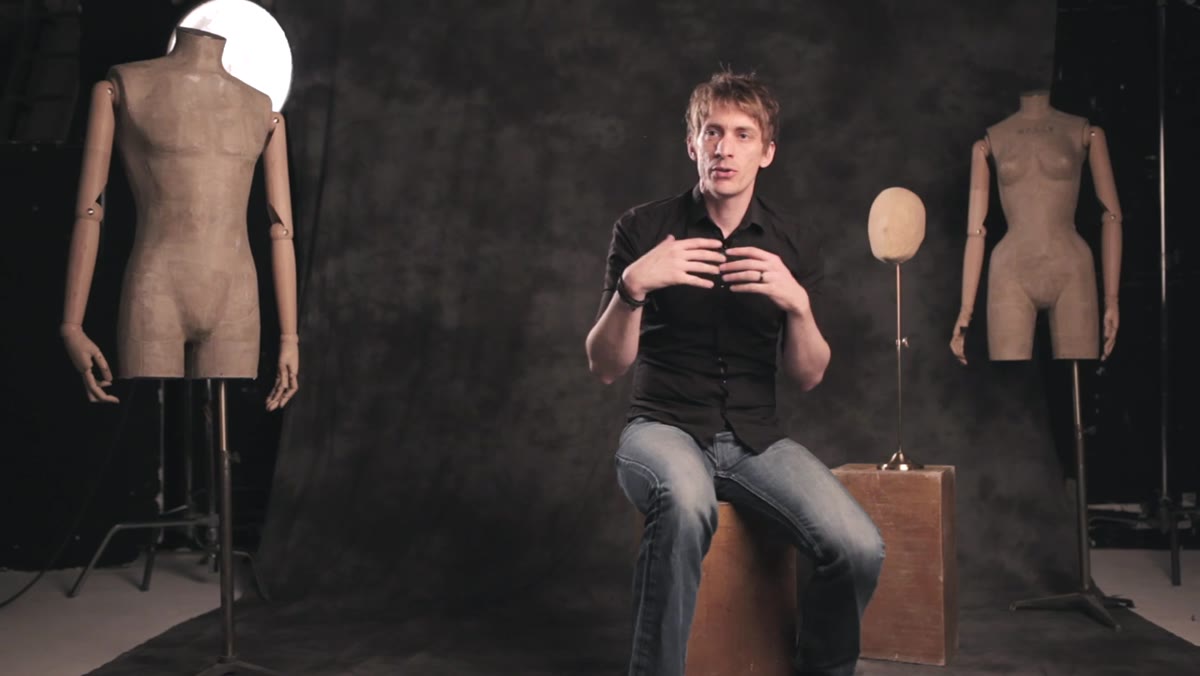 Tucker discussing extrovert vs introvert photographer styles
Tucker is honest here in a way that a lot of photography education isn’t: there’s no single technique that works for every photographer, because drawing people out is fundamentally about human connection, and we all connect differently. If you’re naturally outgoing, you’ll probably fill the room with energy and use that to get your subject out of their own head. If you’re quieter, you might create a calmer space where people relax because the pressure feels lower.
Tucker discussing extrovert vs introvert photographer styles
Tucker is honest here in a way that a lot of photography education isn’t: there’s no single technique that works for every photographer, because drawing people out is fundamentally about human connection, and we all connect differently. If you’re naturally outgoing, you’ll probably fill the room with energy and use that to get your subject out of their own head. If you’re quieter, you might create a calmer space where people relax because the pressure feels lower.
Neither approach is wrong. What doesn’t work is pretending to be something you’re not. I’ve tried to do the high-energy, funny, “okay give me big energy!” thing before, and it falls flat because it isn’t me. My subjects can feel the performance. Lean into how you actually interact with people, and build your portrait approach from there.
Step 5: Use the Technical Setup as Cover
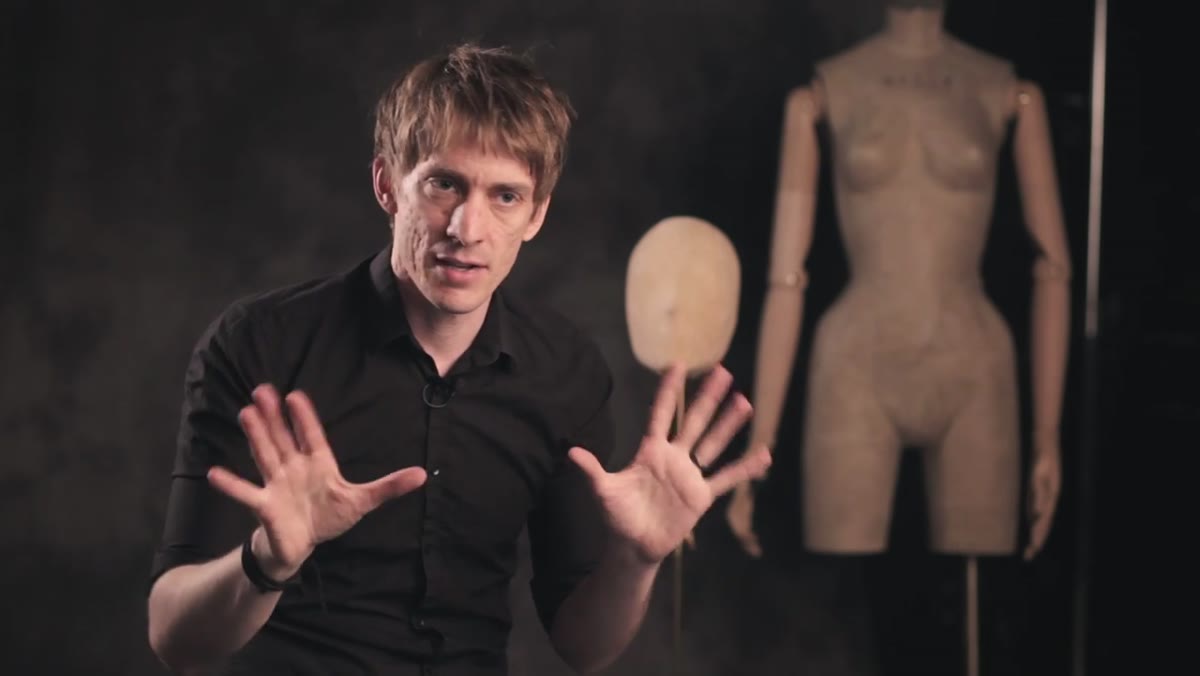 Tucker describing test shots during lighting setup
One of the most practical things Tucker mentions is using the lighting setup phase as a way to get genuine frames before your subject knows you’re really shooting. Tell them you’re just testing the lights, that they don’t need to perform yet, that you’ll let them know when you’re actually starting. Then take frames during that window.
Tucker describing test shots during lighting setup
One of the most practical things Tucker mentions is using the lighting setup phase as a way to get genuine frames before your subject knows you’re really shooting. Tell them you’re just testing the lights, that they don’t need to perform yet, that you’ll let them know when you’re actually starting. Then take frames during that window.
The reason this works is attention. When someone thinks the session hasn’t started, they stop managing their expression. They look around, they think about something else, they forget to hold the pose they’ve been practicing in their head. Those unguarded moments are often the best ones. Tucker also suggests asking subjects to close their eyes and then open them on cue, which interrupts the habit of performing for the camera and can produce something much more honest in the split second after.
Step 6: Wait. Actually Wait.
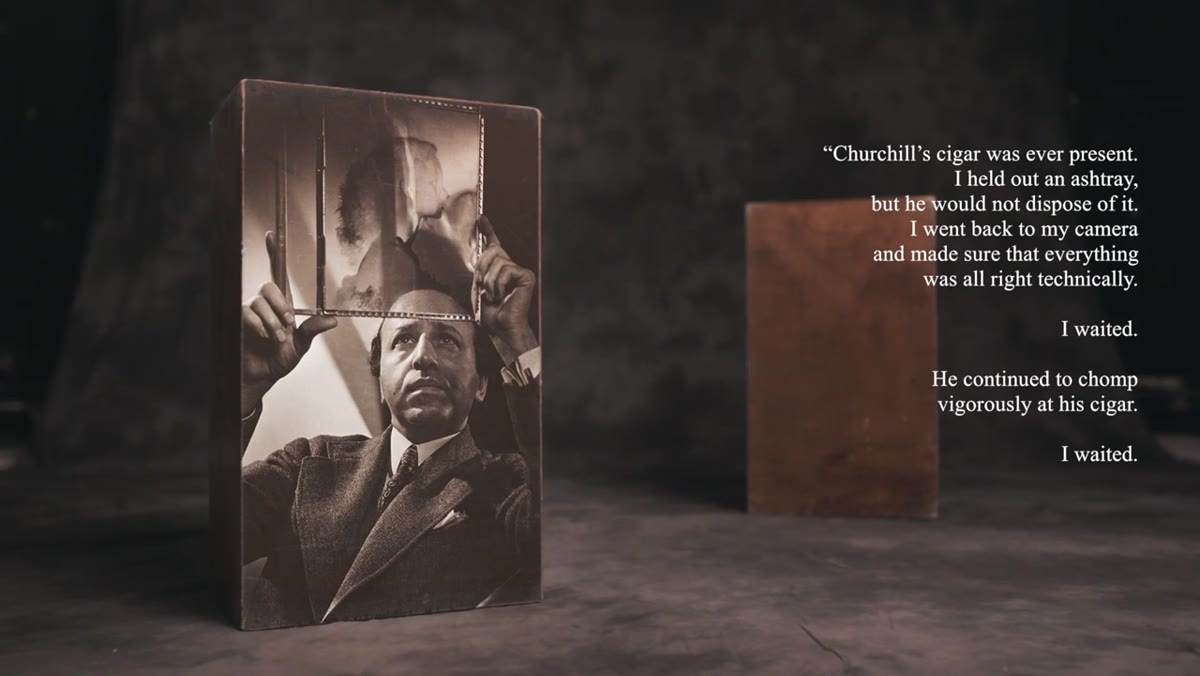 Karsh describing waiting for Churchill cigar moment
The Karsh story comes back to this point quietly but clearly. Karsh waited. Churchill chomped his cigar. Karsh waited more. Then, only when he had a plan, he moved. The impulse in portrait sessions is to keep shooting, keep adjusting, keep trying to fix things through volume. But some of the best moments come from stillness on your end.
Karsh describing waiting for Churchill cigar moment
The Karsh story comes back to this point quietly but clearly. Karsh waited. Churchill chomped his cigar. Karsh waited more. Then, only when he had a plan, he moved. The impulse in portrait sessions is to keep shooting, keep adjusting, keep trying to fix things through volume. But some of the best moments come from stillness on your end.
Build pauses into your sessions deliberately. Stop shooting for a moment. Let your subject breathe. Watch what they do with their hands when they’re not being directed. Watch what their face does when they think you’re not focused on them. The image that actually matters might happen in one of those gaps.
What I’d Add From My Own Experience
The hardest part of all of this, at least for me, is being present enough to catch the moment when it actually comes. I’ve missed good frames because I was checking my histogram or adjusting a setting right when my subject finally relaxed. Now I do a full technical check before the session starts and try to leave as little to fiddle with as possible once a person is in front of me. The camera should be an extension of your attention, not a distraction from it.
Portrait photography is the only genre I know where the most important skill isn’t actually a photography skill at all. It’s people skills. Light and settings matter, but what Tucker is describing here is emotional intelligence applied to a technical craft. The photographers who are truly great at this aren’t just seeing light. They’re reading people.
If portraits have ever felt frustrating or flat for you, this is the perspective shift that might finally make things click. Watch the full tutorial on YouTube and sit with the idea that your subject is not your collaborator in the way you might hope. They’re working against you, gently, out of self-protection. Your job is to make them forget that, just long enough to get the shot.
Comments (1)
Love how you break down complex stuff into manageable steps.
Leave a Comment