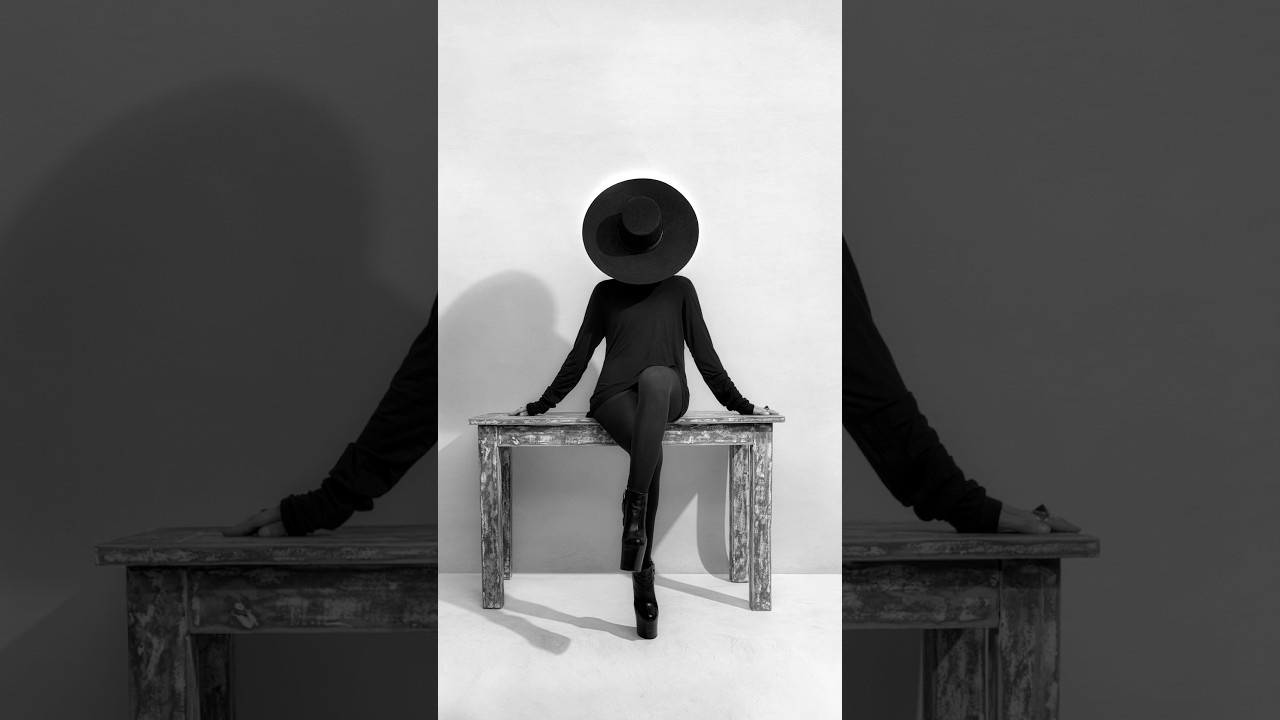
I had a client session last month that humbled me. Corporate headshots, simple brief, nothing fancy. But the client kept pulling up reference photos on her phone, all of them with these gorgeous little catchlights and a kind of sparkle to the skin that looked expensive without looking overdone. I knew the technique existed. I just hadn’t locked it down in a way I could repeat reliably under pressure.
That’s when I found this tutorial and it clicked something into place.
In this Joel Grimes tutorial, Watch the full tutorial on YouTube, he walks through a lighting setup designed specifically to produce those brilliant specular highlights, the kind that make a portrait feel alive without crossing into harsh or unflattering territory. The technique is simple on the surface, but the reasoning behind each decision is what makes it worth studying.
Why Specular Highlights Change the Feeling of a Portrait
Most photographers learn early on to chase soft, even light. Big modifiers, gentle wrapping, minimal shadows. And that works. But it can also flatten a subject, especially in beauty and commercial work where you want dimension and energy.
Specular highlights are the small, intense points of light that reflect directly off a surface. Think of the bright dot in someone’s eye, or the glint off a cheekbone. When they’re placed intentionally, they create a sense of depth and life that diffused light alone can’t produce. Grimes understands this intuitively, and his whole setup is engineered around controlling exactly where those points of light fall.
The Core Setup: Small, Bright, and Positioned with Purpose
The key to this look is using a smaller, harder light source than you might expect. Grimes uses a light modifier that produces a relatively tight, concentrated output rather than a large softbox that spreads light broadly. The smaller the source relative to your subject, the harder the light, and the more defined and sparkly those specular highlights become.
Here’s how the setup breaks down:
- Position your main light at roughly a 45-degree angle to your subject, elevated slightly above eye level. This is a standard Rembrandt-adjacent position, but the modifier choice is what changes the outcome.
- Keep the light closer than you think you need to. Distance softens light. Moving it in tightens contrast and intensifies the specular response on skin and eyes.
- Watch your subject’s eyes. The catchlight placement tells you everything. You want that bright reflection sitting in the upper portion of the iris, between about 10 o’clock and 2 o’clock. If it’s dropping too low, raise the light. If it’s disappearing entirely, you’re too far off-axis.
- Expose for the highlights. With a setup like this, you’re not trying to open up shadows. The contrast is part of the look. Let the shadow side fall off. Grimes leans into that drama rather than fighting it with fill.
The sparkle effect in the title comes from that combination: a tight source, close proximity, intentional angle, and the confidence to let shadows exist in the frame.
What the Camera Side Looks Like
Grimes doesn’t overcomplicate the camera settings, and that’s a deliberate choice worth noting. He’s shooting at a moderate aperture, somewhere in the f/8 range, which keeps the subject sharp without fighting depth of field as a variable. Shutter speed is synced to his flash. ISO stays low to keep noise out of the shadow areas where it tends to pool.
The point he makes, and it’s one I’ve started repeating to every student I work with, is that your camera is just recording the light. If the light is doing its job, the camera settings are almost a formality. Get the light right first. Adjust exposure to match. Not the other way around.
Where I’d Push Back (Gently)
This technique shines in controlled environments. A studio, a dim room, a garage with the door shut. Any location where you can manage your ambient light and keep it from competing with your strobe.
I’ve tried to adapt this approach on outdoor shoots in Seattle’s overcast-but-still-bright conditions, and it fights you. The ambient light fills your shadows before you get a chance to enjoy them, and that specular punch gets diluted. You can overpower the sun with enough flash output, but then you’re hauling a generator and that’s a different kind of shoot entirely.
For location work in mixed or bright light, I’d pair this concept with a different tool. A beauty dish outdoors gives you some of that harder-edged specular quality without needing to outgun the sun. But for anything indoors or in a controlled environment, Grimes’s approach is one I’d reach for without hesitation.
The Thing That Actually Sticks
The single most transferable idea here is this: smaller and closer produces more character than bigger and farther. Most photographers default to larger modifiers because they feel safer. Grimes makes a compelling case that controlled hardness, used deliberately, produces images with more personality.
If your portraits have been feeling a little flat lately, try pulling your light source in and sizing down before you change anything else. It costs nothing and takes thirty seconds.
Then watch the full tutorial on YouTube to see exactly how Grimes positions everything and reads the light in real time. Watching someone who’s done this ten thousand times make micro-adjustments is worth more than any diagram I could draw you.
Comments
Leave a Comment