
I started teaching photography because a stranger at a coffee shop asked how I got a particular shot on my phone. Not my camera. My phone. I almost deflected the question with “oh, I’m not really a teacher” before I caught myself. Here I was, someone who had spent years shooting professionally, about to tell a complete stranger that I wasn’t qualified to explain what I had literally just done. That moment stuck with me, and it’s exactly why I kept coming back to this video.
In this Sean Tucker tutorial, Watch the full tutorial on YouTube, Tucker digs into one of the most common and least-talked-about struggles in photography: impostor syndrome. Not the surface-level “oh I’m just being humble” version, but the real kind that makes you second-guess publishing your work, asking for help, or calling yourself a photographer at all. He breaks it into distinct types, gives each one a name, and offers practical ways to move past them. This isn’t a technique video about settings or gear. It’s the video you watch when your gear is fine but your head is getting in the way.
What I appreciate most is that Tucker doesn’t treat this as a beginner problem. He frames it as a universal creative struggle, and honestly, that reframe alone is worth 20 minutes of your time.
Step 1: Recognize That Impostor Syndrome Is a Fear State, Not a Fact
 Host describes impostor syndrome as a psychological fear state
Before you can deal with impostor syndrome, you have to understand what it actually is. Tucker defines it clearly: it’s a persistent pattern of doubting your abilities and dismissing your accomplishments, even when the evidence says otherwise. The key word is “persistent.” Everyone has a bad shoot. Everyone looks at their work and cringes at old photos. That’s normal self-awareness. Impostor syndrome is when that voice never quiets down, even after good work, even after compliments, even after years of practice.
Host describes impostor syndrome as a psychological fear state
Before you can deal with impostor syndrome, you have to understand what it actually is. Tucker defines it clearly: it’s a persistent pattern of doubting your abilities and dismissing your accomplishments, even when the evidence says otherwise. The key word is “persistent.” Everyone has a bad shoot. Everyone looks at their work and cringes at old photos. That’s normal self-awareness. Impostor syndrome is when that voice never quiets down, even after good work, even after compliments, even after years of practice.
The practical takeaway here is to start treating your self-doubt as data worth questioning rather than truth worth obeying. When the thought “I’m not a real photographer” shows up, ask what evidence you’re actually working with.
Step 2: Identify Which Type of Impostor Syndrome Is Hitting You
 Host lists different flavors of impostor syndrome on screen
Tucker outlines four distinct types, and identifying yours matters because each one has a different trigger. The first is perfectionism, where anything less than flawless feels like failure. If you’ve ever avoided posting a photo because it wasn’t quite right, this is probably yours. The second is insecurity around knowledge gaps, where you feel like everyone else knows something critical that you don’t, and eventually someone will notice.
Host lists different flavors of impostor syndrome on screen
Tucker outlines four distinct types, and identifying yours matters because each one has a different trigger. The first is perfectionism, where anything less than flawless feels like failure. If you’ve ever avoided posting a photo because it wasn’t quite right, this is probably yours. The second is insecurity around knowledge gaps, where you feel like everyone else knows something critical that you don’t, and eventually someone will notice.
The third type is what Tucker calls the “struggle” flavor: the belief that if you were truly talented, this would all come easier. And the fourth is isolation, the impulse to work alone and hide your process so no one can see the messy parts. Tucker admits this last one has been his own particular weakness. I’d say perfectionism was mine for a long time. Knowing which one you’re fighting helps you stop treating them all as one big formless wall of self-doubt.
Step 3: Stop Waiting to Know Everything Before You Begin
 Host discusses fear of knowledge gaps and being “found out”
The insecurity type of impostor syndrome often shows up as a belief that you need to master every setting, every technique, and every genre before you’re allowed to call yourself a photographer. This is a trap, and Tucker addresses it directly. The reality is that no working photographer knows everything. The field is too wide, too deep, and always changing. Waiting until you have complete knowledge means waiting forever.
Host discusses fear of knowledge gaps and being “found out”
The insecurity type of impostor syndrome often shows up as a belief that you need to master every setting, every technique, and every genre before you’re allowed to call yourself a photographer. This is a trap, and Tucker addresses it directly. The reality is that no working photographer knows everything. The field is too wide, too deep, and always changing. Waiting until you have complete knowledge means waiting forever.
A better approach: know your tools well enough to make intentional decisions, and be honest when you’re still learning. I’ve been shooting for over a decade and I still google things. My Sunday morning photo walks have taught me more about composition than any course I took, because I was out there experimenting instead of waiting to feel ready.
Step 4: Reframe Struggle as a Sign of Growth, Not Absence of Talent
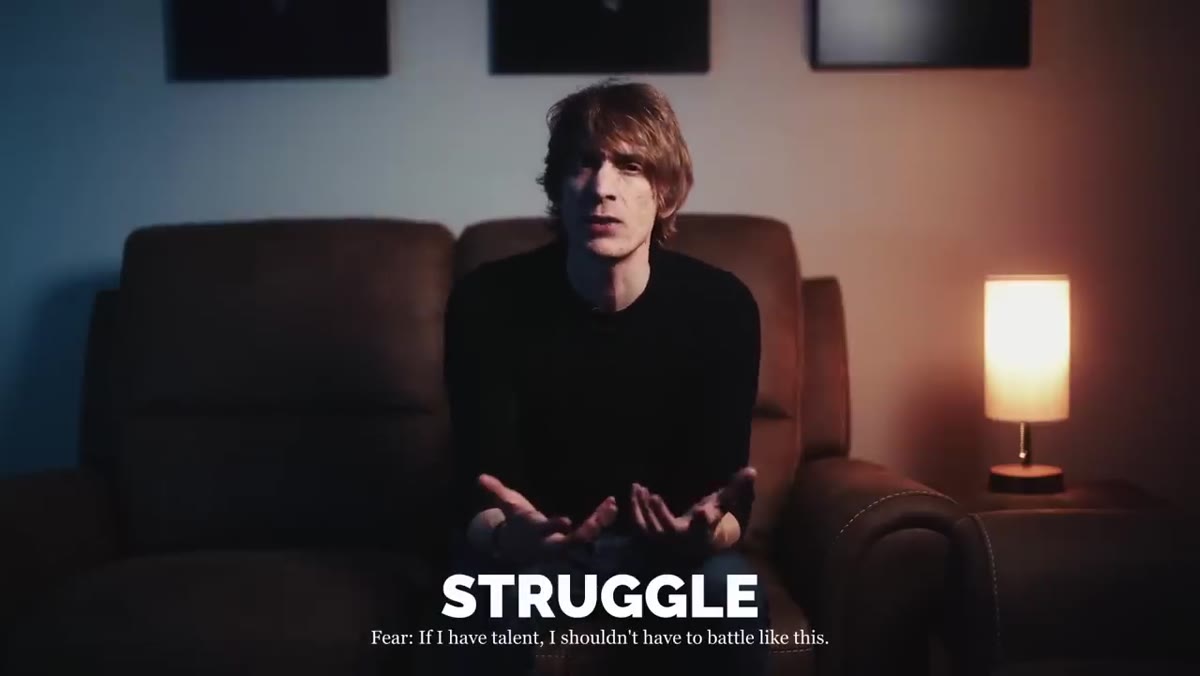 Host explains why difficulty does not indicate lack of talent
One of the most damaging myths in photography, and in creative work generally, is the idea that talent means ease. Tucker pushes back on this hard. If something is difficult, that doesn’t mean you’re not cut out for it. It often means you’re working at the edge of your current ability, which is exactly where growth happens.
Host explains why difficulty does not indicate lack of talent
One of the most damaging myths in photography, and in creative work generally, is the idea that talent means ease. Tucker pushes back on this hard. If something is difficult, that doesn’t mean you’re not cut out for it. It often means you’re working at the edge of your current ability, which is exactly where growth happens.
When I was trying to get a specific waterfall shot on a trip a few years back and missed dinner three nights in a row because the light wasn’t cooperating, I spent a lot of mental energy wondering if I just wasn’t good enough to pull it off. The shot I eventually got wasn’t perfect. But the problem was never my talent. It was the weather, and my own unrealistic timeline. Difficulty is context, not verdict.
Step 5: Break the Isolation Habit and Let People In
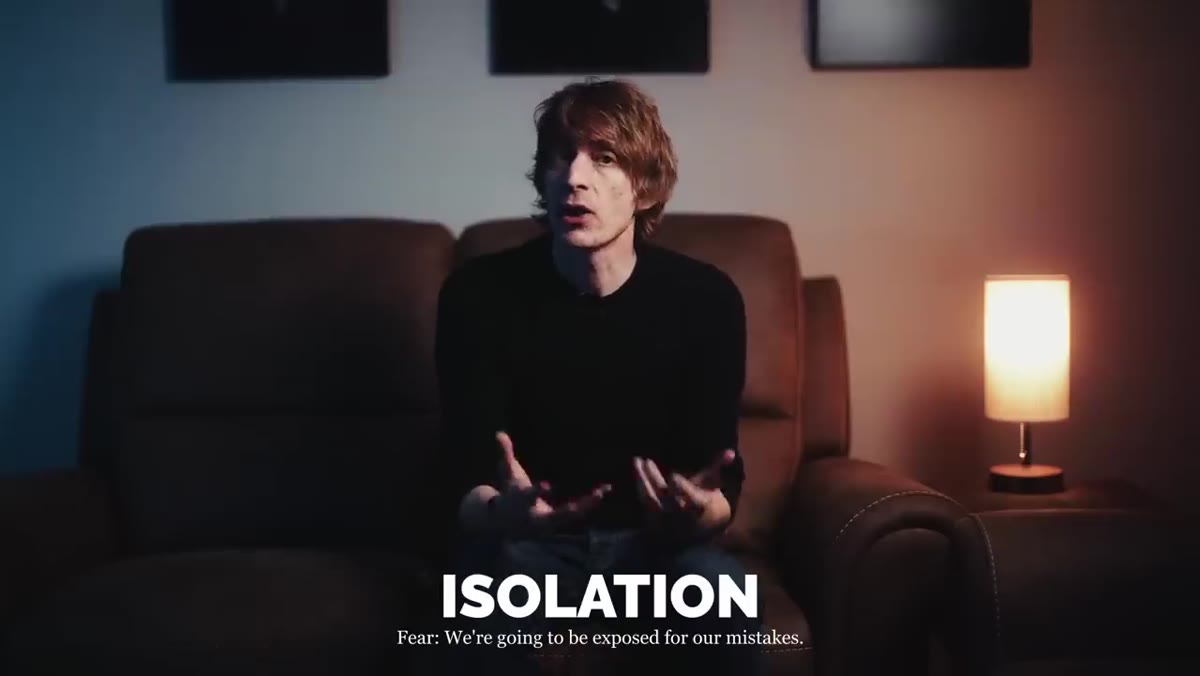 Host reflects on his own tendency to work in isolation
Tucker is candid about the way isolation feeds impostor syndrome rather than protecting you from it. When you work entirely alone, when you avoid sharing work-in-progress or asking questions, you cut yourself off from the feedback that would actually help you improve. The irony is that hiding feels safer but it makes the self-doubt louder.
Host reflects on his own tendency to work in isolation
Tucker is candid about the way isolation feeds impostor syndrome rather than protecting you from it. When you work entirely alone, when you avoid sharing work-in-progress or asking questions, you cut yourself off from the feedback that would actually help you improve. The irony is that hiding feels safer but it makes the self-doubt louder.
Practically, this means sharing work before it’s finished sometimes. It means asking a question in a photography forum even if you think the answer should be obvious. It means joining a photo walk or a critique group. Connection is one of the fastest ways to realize that everyone else is also figuring it out as they go.
What I’d Add From My Own Experience
Tucker’s framework is solid, and I use versions of it when I talk to students. The thing I’d layer on top is this: impostor syndrome often gets loudest right before a breakthrough. In my experience, the moment you’re about to level up in some way, your brain gets very busy trying to convince you to stay where it’s comfortable.
I’d also recommend keeping a small record of wins, not a highlight reel for Instagram, just a private note or folder of shots you’re proud of. On the days when nothing feels like it’s working, having something tangible to look at matters more than any pep talk.
The single most important thing Tucker says in this video is that the question “when can I call myself a photographer” is already the wrong question. If you’re making photographs with intention and care, you’re a photographer. The label isn’t something you earn after crossing some invisible threshold. It’s something you claim.
Watch the full tutorial on YouTube and let Tucker walk you through it in his own words. It’s one of those videos that has nothing to do with camera settings and everything to do with whether you’ll still be making photos five years from now.
Comments (5)
Applied this to my portfolio shots and the improvement is noticeable.
Really solid breakdown. This pairs perfectly with the photoshop work I've been writing about.
Simple but effective. Sometimes that's all you need.
Simple but effective. Sometimes that's all you need.
This is fantastic. I've been recommending this approach to my readers too.
Leave a Comment