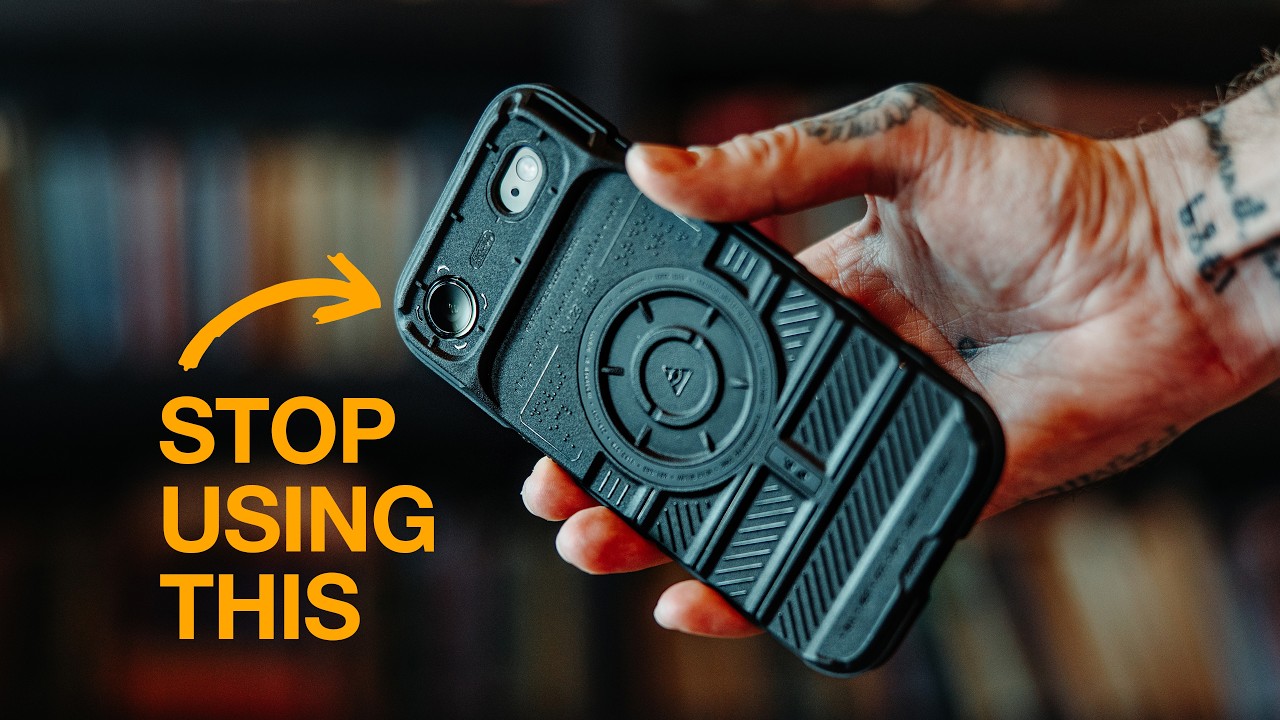
Every few months I catch myself defaulting back to my phone. Not because my mirrorless is too heavy to carry, but because the iPhone just works. It’s fast, it’s always in my pocket, and honestly, the results look good enough to post without touching them in Lightroom. That convenience, I’ve come to realize, is exactly the trap.
Watch the full tutorial on YouTube
In this Peter McKinnon video, he sits down with a fellow photographer and drops what he calls a hot take: the iPhone isn’t a real camera, and we should stop treating it like one. What sounds like gear snobbery at first is actually a pretty sharp observation about creative habits. McKinnon’s argument isn’t that the iPhone takes bad photos. It’s the opposite. It’s so good at making automatic decisions for you that it quietly removes you from the creative process altogether. That clicked for me immediately. My most-liked Instagram photo was taken on a $200 Android phone at a ferry terminal in the rain. But here’s the thing I never admitted until recently: I had no idea why it worked. The phone just figured it out. And that’s a problem if you’re trying to grow as a photographer.
This isn’t a post about throwing your phone in a lake. It’s about understanding what McKinnon is really saying, and using that to make more intentional choices with whatever camera is in your hand.
Step 1: Recognize What the iPhone Is Actually Doing
 Peter McKinnon saying the iPhone is too good
The first shift McKinnon asks you to make is a mental one. He isn’t critiquing image quality. He’s critiquing the relationship between the photographer and the tool. When you raise an iPhone to take a picture, the phone is already making dozens of decisions for you: exposure, white balance, sharpening, HDR blending, noise reduction, even subject detection. By the time you tap the shutter, most of the photograph has already been made.
Peter McKinnon saying the iPhone is too good
The first shift McKinnon asks you to make is a mental one. He isn’t critiquing image quality. He’s critiquing the relationship between the photographer and the tool. When you raise an iPhone to take a picture, the phone is already making dozens of decisions for you: exposure, white balance, sharpening, HDR blending, noise reduction, even subject detection. By the time you tap the shutter, most of the photograph has already been made.
Compare that to picking up a dedicated camera in manual mode. You’re choosing the aperture. You’re setting the shutter speed. You’re deciding whether to push the ISO or move to a different position. Those choices are where your eye as a photographer actually develops. The iPhone skips all of that, and the result is images that look competent but don’t teach you anything.
Step 2: Understand Why “Good Enough” Can Hold You Back
 Peter McKinnon holding up three cameras side by side
McKinnon holds up what he calls a trifecta of cameras, placing the iPhone alongside two dedicated options, and points to the phone as the biggest problem of the three. His reasoning is simple: if the worst option in the lineup produces results that look nearly identical to the better options on a phone screen, there’s no visual feedback pushing you to improve.
Peter McKinnon holding up three cameras side by side
McKinnon holds up what he calls a trifecta of cameras, placing the iPhone alongside two dedicated options, and points to the phone as the biggest problem of the three. His reasoning is simple: if the worst option in the lineup produces results that look nearly identical to the better options on a phone screen, there’s no visual feedback pushing you to improve.
This is something I’ve watched happen with students I’ve worked with at workshops. When someone shoots exclusively on a phone and their photos look fine, there’s no incentive to learn anything new. But fine and intentional are not the same thing. Fine is the phone’s doing. Intentional is yours. The gap between those two things is where your growth lives.
Step 3: Separate Your Phone Use Into Categories
 McKinnon explaining the vlog camera is better for reels and quick content
McKinnon makes a practical concession that’s worth paying attention to. He notes that even a small compact or vlog-style camera is a better choice than a phone for content like short-form video, because it’s at least a real camera with physical controls. He’s not demanding that everyone shoot on a full-frame body. He’s asking you to make a deliberate choice about what a phone is actually for.
McKinnon explaining the vlog camera is better for reels and quick content
McKinnon makes a practical concession that’s worth paying attention to. He notes that even a small compact or vlog-style camera is a better choice than a phone for content like short-form video, because it’s at least a real camera with physical controls. He’s not demanding that everyone shoot on a full-frame body. He’s asking you to make a deliberate choice about what a phone is actually for.
A useful exercise: for one week, write down every time you reach for your phone to take a photo. Then ask yourself, for each one, whether you were making a creative decision or just documenting something quickly. Neither answer is wrong. But knowing which is which helps you understand when you’re practicing photography and when you’re just capturing something. Phones are great for the second category. They’re limiting for the first.
Step 4: Pick Up a Dedicated Camera for Intentional Shooting
 Both hosts comparing image quality side by side on cameras
The practical instruction here is straightforward: when you want to grow as a photographer, shoot with a dedicated camera on manual or semi-manual settings. It doesn’t have to be expensive. McKinnon’s point is about the act of choosing, not about gear status. An entry-level DSLR or mirrorless camera from five years ago will force you to engage with exposure in a way the iPhone never will.
Both hosts comparing image quality side by side on cameras
The practical instruction here is straightforward: when you want to grow as a photographer, shoot with a dedicated camera on manual or semi-manual settings. It doesn’t have to be expensive. McKinnon’s point is about the act of choosing, not about gear status. An entry-level DSLR or mirrorless camera from five years ago will force you to engage with exposure in a way the iPhone never will.
Start with aperture priority mode if full manual feels overwhelming. Set your aperture intentionally based on the look you want, let the camera handle shutter speed, and keep ISO as low as the light allows. That single decision, choosing your aperture, puts you back in the driver’s seat. Over time, those decisions become instinct, and that’s when your photos start to reflect your eye rather than your phone’s algorithm.
Step 5: Use the Absence of Convenience as a Creative Tool
 McKinnon noticing the light quality in his office at a specific time of day
One of the quieter moments in the video is McKinnon noticing that his office only gets good natural light between 7:30 and 8:30 in the morning. He knows this because he pays attention to light as a photographer. That kind of awareness grows when you’re working with a camera that doesn’t compensate for bad light automatically.
McKinnon noticing the light quality in his office at a specific time of day
One of the quieter moments in the video is McKinnon noticing that his office only gets good natural light between 7:30 and 8:30 in the morning. He knows this because he pays attention to light as a photographer. That kind of awareness grows when you’re working with a camera that doesn’t compensate for bad light automatically.
When you shoot on a dedicated camera and a photo doesn’t work, you have to figure out why. Was the light flat? Did you choose the wrong aperture? Was your shutter speed too slow? That troubleshooting loop builds real understanding. Your phone would have just brightened the shadows and called it a day, and you’d never have learned to read the light in the first place.
What I’d Add From My Own Experience
I want to be honest with you: I still shoot on my phone sometimes. Sunday morning photo walks with just my phone and a coffee are one of my favorite things, and I’m not giving them up. But there’s a difference between shooting on your phone consciously, as a constraint or a creative game, and shooting on it by default because it’s easier.
The times my phone shots have been genuinely strong are the times I’ve treated it like a camera with limitations I had to work around, not a magic box that handles everything. That mindset is the same one you bring to any dedicated camera. The tool matters less than whether you’re actually thinking.
If McKinnon’s argument sparks anything in you, let it be this: next time you’re about to take a photo that matters to you, notice whether you’re making decisions or just reacting. That gap is where photography actually lives.
Watch the full tutorial on YouTube to hear McKinnon and Matty work through this idea in real time. The back-and-forth between them makes the argument land in a way that a written summary can’t fully replicate.
Comments
Leave a Comment