I deleted a lot of photos in my first two years of shooting. Not because they were bad, exactly, but because they weren’t technically clean. Slightly soft corners. A stray highlight. Motion blur I didn’t intend. I treated my Lightroom culling sessions like a quality control line at a factory, and anything that didn’t pass inspection got trashed without a second look. It took me an embarrassingly long time to realize I was throwing away some of my most interesting frames.
In this Thomas Heaton tutorial, Watch the full tutorial on YouTube, Heaton walks through a set of technically flawed images he made during a stormy shoot in Northern Ireland and makes a genuinely compelling case for why those flaws aren’t failures. They’re evidence. They’re storytelling. And understanding the difference between a damaging technical flaw and a meaningful one is one of the more important shifts you can make as a photographer.
This isn’t a tutorial about how to nail perfect exposure every time. It’s about knowing when perfect exposure is beside the point, and having the confidence to keep the image anyway.
Step 1: Recognize the Perfection Trap
 Heaton speaking directly to camera about perfection obsession
Before you can shoot with more freedom, you have to notice how rigidly you’re already thinking. Heaton opens by naming something most of us won’t admit out loud: we’ve built a checklist in our heads that every image has to pass. Pinpoint focus. Clean exposure. No noise. Maximum depth of field. Sharp corners edge to edge.
Heaton speaking directly to camera about perfection obsession
Before you can shoot with more freedom, you have to notice how rigidly you’re already thinking. Heaton opens by naming something most of us won’t admit out loud: we’ve built a checklist in our heads that every image has to pass. Pinpoint focus. Clean exposure. No noise. Maximum depth of field. Sharp corners edge to edge.
The problem is that checklist lives in your head while you’re shooting, not just while you’re editing. It makes you hesitant in moments that reward boldness. Start paying attention to when you’re pulling back from a shot because you’re worried it won’t be “good enough” technically. That hesitation is the trap.
Step 2: Separate Technical Quality from Emotional Quality
 Heaton introducing the Northern Ireland storm images
Heaton draws a clear line between two things we tend to treat as the same: technical quality and emotional quality. A photo can score high on one and low on the other, and the most affecting images are often the ones that sacrifice the first for the second.
Heaton introducing the Northern Ireland storm images
Heaton draws a clear line between two things we tend to treat as the same: technical quality and emotional quality. A photo can score high on one and low on the other, and the most affecting images are often the ones that sacrifice the first for the second.
His primary goal when shooting landscapes, he explains, is to make the viewer feel something. Either transported to the location, or emotionally connected to it. Technical perfection doesn’t automatically produce that feeling. A clinically sharp, perfectly exposed landscape can feel completely sterile. When you’re out shooting, ask yourself: what is the feeling I’m trying to communicate? Then ask whether your technical choices are serving that feeling or just serving the checklist.
Step 3: Let Difficult Conditions Show in the Frame
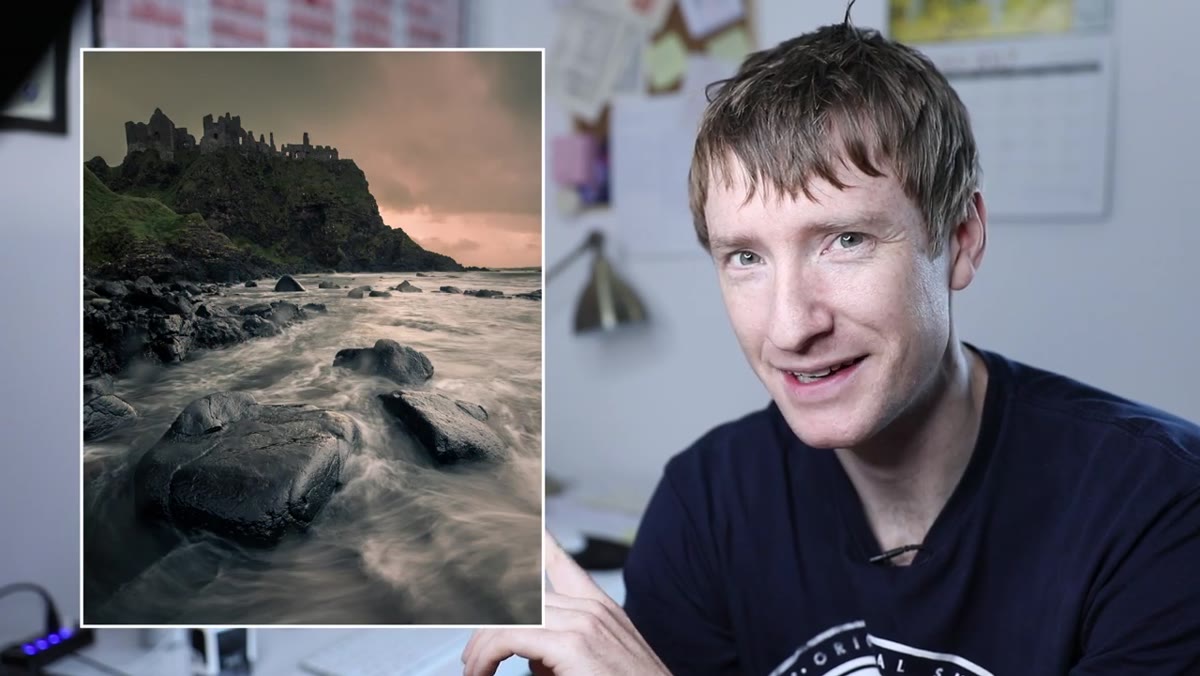 First stormy Northern Ireland image displayed with water droplets visible
The image that prompted Heaton’s video had water droplets on the lens. A viewer pointed this out as a flaw. Heaton’s response reframes the whole thing: those droplets are proof of what it was actually like to stand there. Heavy rain. Strong wind. Salt spray. If he had cleaned the lens and waited for a break in the weather, the image would have looked fine, but it would have lied about the experience.
First stormy Northern Ireland image displayed with water droplets visible
The image that prompted Heaton’s video had water droplets on the lens. A viewer pointed this out as a flaw. Heaton’s response reframes the whole thing: those droplets are proof of what it was actually like to stand there. Heavy rain. Strong wind. Salt spray. If he had cleaned the lens and waited for a break in the weather, the image would have looked fine, but it would have lied about the experience.
When you’re shooting in challenging conditions, consider what evidence of those conditions is landing in your frame. Rain on the lens, motion blur from wind, spray catching the light, these aren’t automatically problems to solve. They can be the most honest thing in the photograph. Before you wipe down the lens or wait for stillness, ask whether the “flaw” is actually telling the truth about where you are.
Step 4: Make Fast Decisions and Accept the Consequences
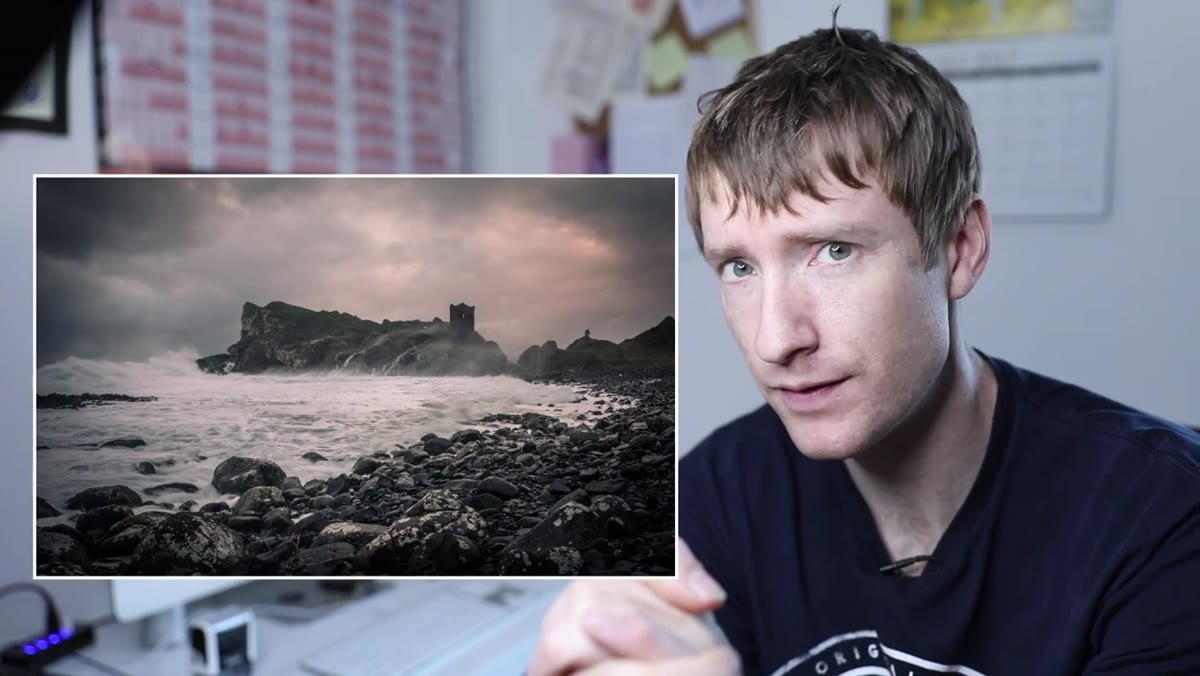 Second image from the trip, rougher conditions, discussed as out of focus
The second image Heaton shares is out of focus. Not a little soft. Genuinely missed. The conditions had gotten worse overnight, and the wind was strong enough that he couldn’t hold his tripod steady for a clean shot. Waves were breaking across the beach. His process was to run to a position, set the tripod down fast, compose quickly, and fire. He missed focus by a significant margin.
Second image from the trip, rougher conditions, discussed as out of focus
The second image Heaton shares is out of focus. Not a little soft. Genuinely missed. The conditions had gotten worse overnight, and the wind was strong enough that he couldn’t hold his tripod steady for a clean shot. Waves were breaking across the beach. His process was to run to a position, set the tripod down fast, compose quickly, and fire. He missed focus by a significant margin.
He kept the image anyway, and he explains why: the out-of-focus quality communicates the chaos of the scene in a way a sharp, composed image never could. When conditions force you to shoot fast and loose, work with what you actually got rather than deciding the whole session was a failure. Review your frames for what they did capture, not just for whether they hit your technical marks.
Step 5: Evaluate Images by What They Communicate, Not Just What They Contain
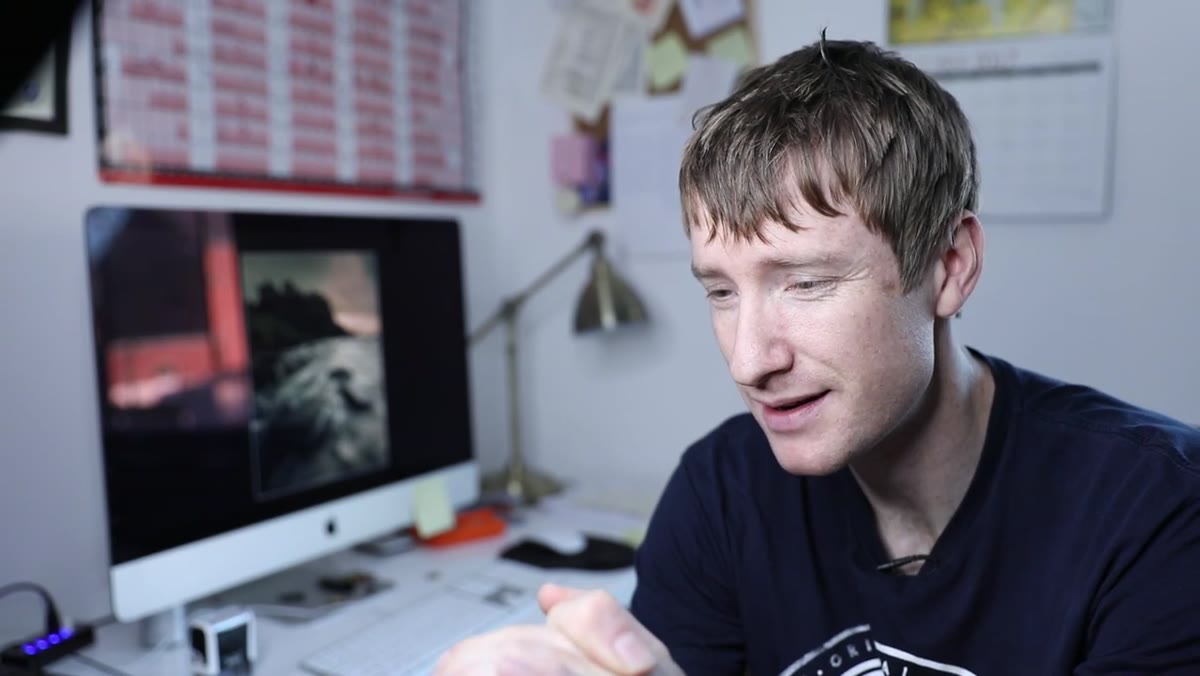 Heaton discussing water droplets as storytelling elements
This is where Heaton’s approach becomes a practical editing tool, not just a philosophy. When you’re reviewing images after a shoot, add one question to your culling process: what does this image make me feel, and does that feeling match the experience I was having when I took it?
Heaton discussing water droplets as storytelling elements
This is where Heaton’s approach becomes a practical editing tool, not just a philosophy. When you’re reviewing images after a shoot, add one question to your culling process: what does this image make me feel, and does that feeling match the experience I was having when I took it?
A photo with water droplets that makes a viewer feel cold and exposed is doing its job. A technically perfect photo that makes the viewer feel nothing is not. This doesn’t mean you keep every blurry, noisy, out-of-focus frame you ever shoot. It means you add emotional effectiveness as a real criterion alongside sharpness and exposure. Some flawed images earn their place. Others are just flawed.
What I’d Add From My Own Experience
Here’s where I’ll push Heaton’s point a little further. He talks mostly about flaws that happen because of extreme conditions. But I think this applies to everyday shooting too. I’ve kept photos from my Sunday morning walks around Seattle that are slightly soft because I was handholding at a slow shutter speed, or that have blown highlights because the light changed faster than I could adjust. I kept them because the light was doing something I’d never seen it do before, or because the frame had a quality that the “corrected” version wouldn’t.
The exercise I’d recommend: pull ten images you’ve deleted or nearly deleted in the last six months. Look at them again with the question Heaton is asking. You might find a few that deserved to survive. I do this every couple of months, and I’ve rescued some genuinely good work from my own trash folder. It’s also a useful reality check on whether your technical standards are serving your photography, or just your anxiety about it.
The single most important thing I took from this tutorial is the idea that imperfections can be evidence. They document the truth of being somewhere difficult, uncomfortable, and alive to the moment. A perfectly clean image is sometimes the result of playing it safe, and playing it safe is not always the same as making a good photograph.
Watch the full tutorial on YouTube to see Heaton walk through the actual images and hear him talk through his thinking in real time. It’s worth watching alongside his Northern Ireland shoot video, which gives you the full context for why those conditions produced the frames they did.
Comments (2)
Love how you break down complex stuff into manageable steps.
Great breakdown. The step-by-step approach really helps.
Leave a Comment