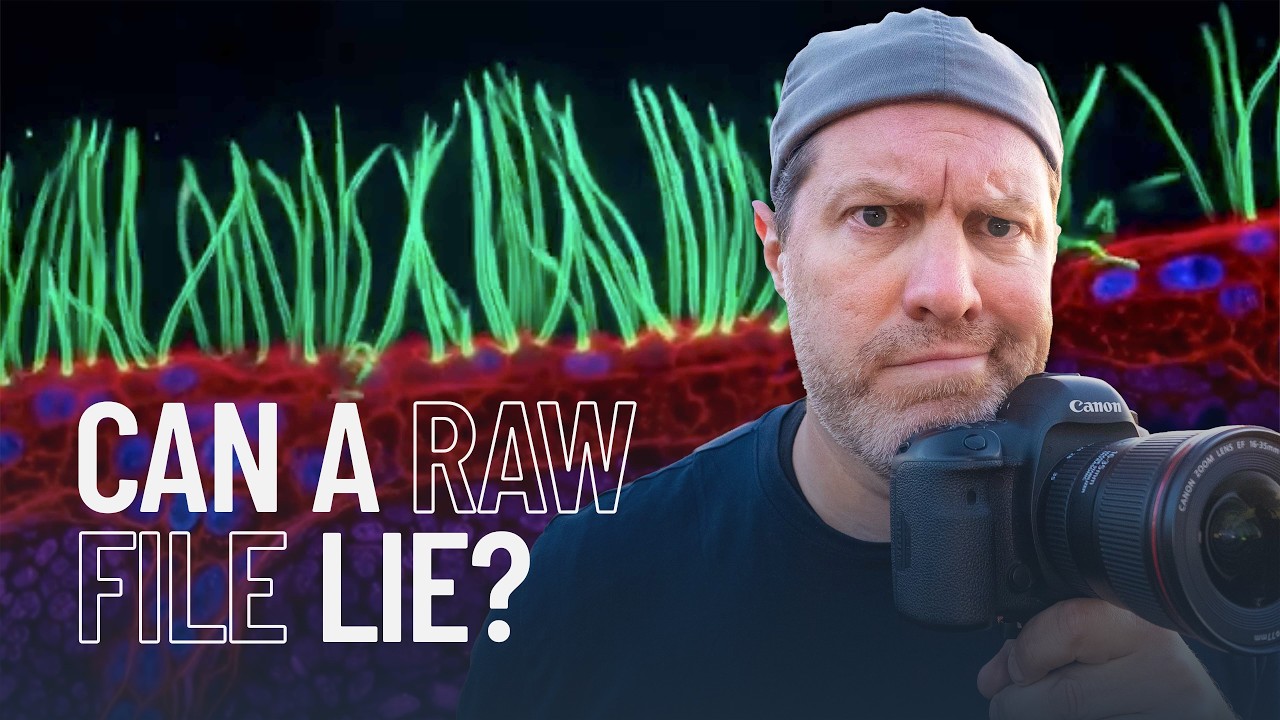
I used to submit to photography competitions a lot. I told myself it was for the feedback, the exposure, the community. But honestly? I wanted the validation. A badge from a respected name felt like proof that I was doing something right. Then I watched a First Man Photography video that reframed the whole thing for me, and I haven’t looked at contests quite the same way since.
Watch the full tutorial on YouTube
In this First Man Photography video, creator Ross (who goes by First Man) unpacks a brewing controversy around Nikon’s Small World in Motion competition, a prestigious contest featuring videos shot through microscopes. What starts as a story about one winner and some suspicious-looking footage quickly expands into a much bigger conversation. Who decides what’s real? Can any competition actually verify authenticity anymore? And if the answer is no, what does that mean for the value we’ve been placing on these contests all along? Here’s how Ross breaks it all down, and what I think every photographer should take away from it.
Step 1: Understand What Actually Happened in the Nikon Controversy
 Video thumbnail showing Nikon Small World in Motion contest entry
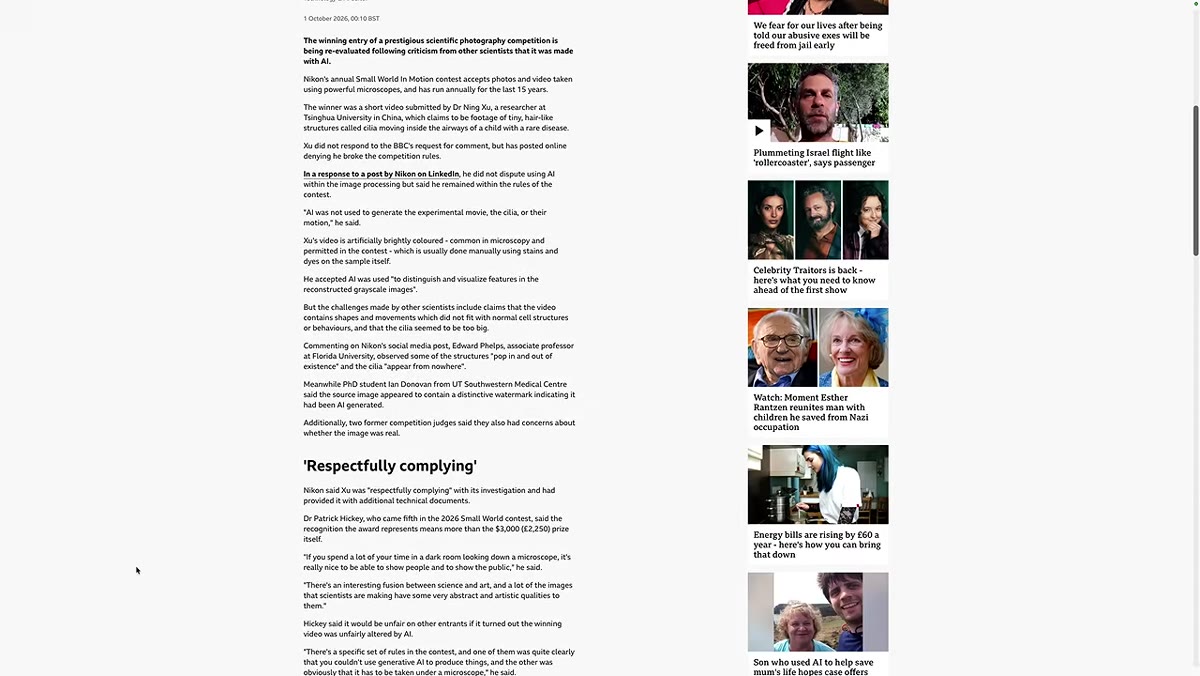
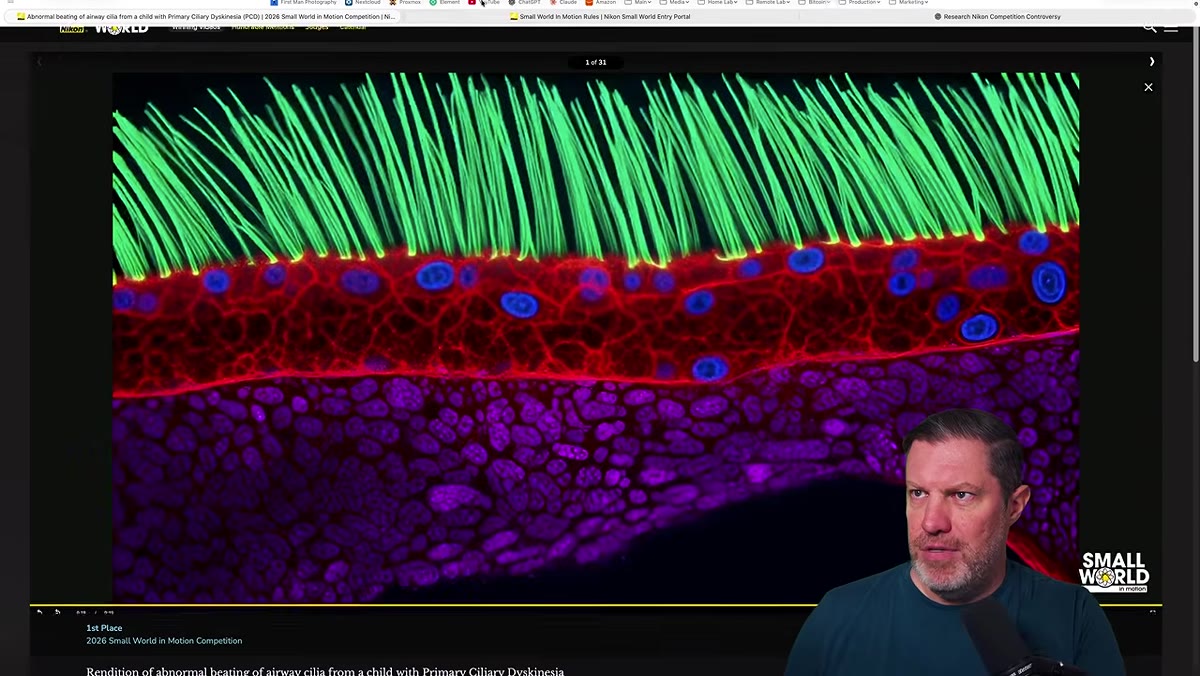
The controversy centers on the 2024 winning entry of Nikon’s Small World in Motion contest. The video claimed to document abnormal cilia movement in a child with a specific respiratory condition. After Nikon announced the winner, scientists on LinkedIn started raising red flags. The movement of the structures in the video didn’t match how those biological features actually behave. Comments flooded in from cell biologists and imaging specialists pointing out specific inconsistencies, including the fact that the blue structures visible in the video didn’t behave like the nuclei they appeared to represent.
Video thumbnail showing Nikon Small World in Motion contest entry
The controversy centers on the 2024 winning entry of Nikon’s Small World in Motion contest. The video claimed to document abnormal cilia movement in a child with a specific respiratory condition. After Nikon announced the winner, scientists on LinkedIn started raising red flags. The movement of the structures in the video didn’t match how those biological features actually behave. Comments flooded in from cell biologists and imaging specialists pointing out specific inconsistencies, including the fact that the blue structures visible in the video didn’t behave like the nuclei they appeared to represent.
The creator of the winning entry, Dr. Ning Zhu, responded by clarifying that AI was not used to generate the cilia or their movement, but he did acknowledge AI was used in post-production to help distinguish and visualize features in reconstructed images. Nikon confirmed they were reviewing the submission. The important takeaway here is that nobody definitively proved fraud. But the conversation it started is the real story.
Step 2: Know the Rules You’re Actually Agreeing To
 Screenshot of Nikon Small World contest rules on Wayback Machine
Ross pulled up the archived contest rules on the Wayback Machine, and this is worth doing yourself before entering any competition. The Nikon rules explicitly prohibit AI-generated videos. They also state that Nikon reserves the right to request original footage for verification. That last part is where things get complicated, because as Ross points out, “original footage” is harder to define than it sounds.
Screenshot of Nikon Small World contest rules on Wayback Machine
Ross pulled up the archived contest rules on the Wayback Machine, and this is worth doing yourself before entering any competition. The Nikon rules explicitly prohibit AI-generated videos. They also state that Nikon reserves the right to request original footage for verification. That last part is where things get complicated, because as Ross points out, “original footage” is harder to define than it sounds.
Before you enter any competition, read the rules line by line. Look specifically for language around post-processing, AI tools, and verification requests. Print them out if you have to. Knowing exactly what you agreed to protects you, and it also helps you make an honest assessment of your own workflow before you hit submit.
Step 3: Recognize Why the Incentive to Misrepresent Exists
 Text graphic showing $3,000 prize amount for contest winner
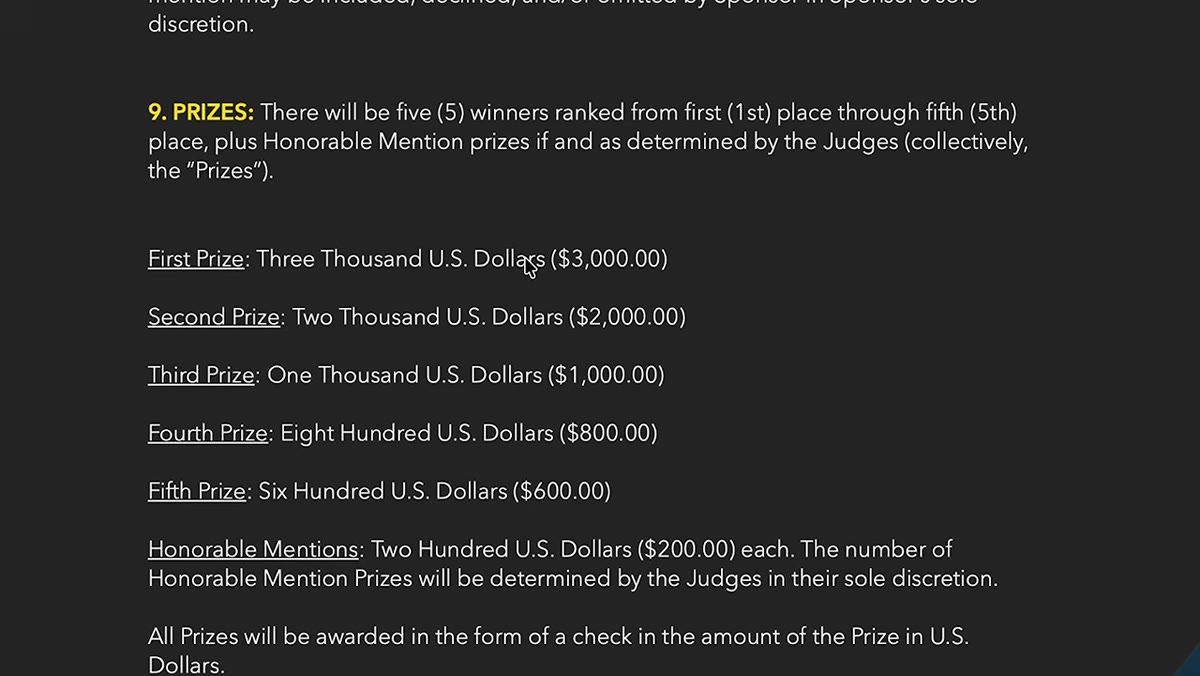
Ross makes a point here that I think a lot of photographers wave off too quickly. Even a $3,000 prize, which isn’t life-changing money for most professionals, changes how people behave. Add in the prestige, the career boost, the social media attention, and the incentive to win at all costs compounds fast. Ross frames it simply: we are human, and humans respond to incentives.
Text graphic showing $3,000 prize amount for contest winner
Ross makes a point here that I think a lot of photographers wave off too quickly. Even a $3,000 prize, which isn’t life-changing money for most professionals, changes how people behave. Add in the prestige, the career boost, the social media attention, and the incentive to win at all costs compounds fast. Ross frames it simply: we are human, and humans respond to incentives.
This isn’t cynicism. It’s just useful to understand when you’re deciding how much weight to give a competition result, whether you’re a winner, a loser, or a judge. The higher the stakes, the more pressure there is on every part of the system. Keep that in mind when you feel crushed by a rejection or tempted to over-process a submission.
Step 4: Ask the Hard Question About RAW Files
 Presenter speaking to camera about RAW file verification
Here’s the step that genuinely changed how I think. Ross asks whether a RAW file can lie, and the answer is more unsettling than most photographers want to admit. A RAW file has long been treated as the gold standard proof of authenticity in photography competitions. But AI tools are now sophisticated enough that the line between “captured” and “generated” is blurring, even at the RAW stage.
Presenter speaking to camera about RAW file verification
Here’s the step that genuinely changed how I think. Ross asks whether a RAW file can lie, and the answer is more unsettling than most photographers want to admit. A RAW file has long been treated as the gold standard proof of authenticity in photography competitions. But AI tools are now sophisticated enough that the line between “captured” and “generated” is blurring, even at the RAW stage.
For scientific imaging especially, the tools used to process and render microscopy data involve multiple computational steps before anything resembling a “photo” exists. The concept of an unaltered original is genuinely murky. For traditional photography, RAW files still carry weight, but even there, knowing what your camera’s in-body processing, noise reduction, or computational features are doing before you even open Lightroom matters. Understanding your own file pipeline makes you a more honest photographer and a smarter competition entrant.
Step 5: Think Critically About Who Is Doing the Judging
 Presenter discussing judging panels and gatekeeping in competitions
Ross raises something that doesn’t get talked about enough: judging panels are not neutral. They have aesthetic preferences, professional biases, and in many cases, limited technical knowledge of emerging tools. A panel of wildlife photographers may not understand what AI-assisted noise reduction looks like versus AI-generated detail. A panel of scientists, as we saw in this case, absolutely will.
Presenter discussing judging panels and gatekeeping in competitions
Ross raises something that doesn’t get talked about enough: judging panels are not neutral. They have aesthetic preferences, professional biases, and in many cases, limited technical knowledge of emerging tools. A panel of wildlife photographers may not understand what AI-assisted noise reduction looks like versus AI-generated detail. A panel of scientists, as we saw in this case, absolutely will.
The practical lesson here is to research who judges a competition before you invest time and money entering. Look at past winners. Notice whether the style, subject matter, or processing choices cluster in a particular direction. If they do, you’ll quickly figure out whether your work fits, and more importantly, whether their approval is something you actually want.
Step 6: Reframe What Winning Actually Proves
 Presenter making the case for why competition decline could be positive
Ross’s turn toward optimism is the part of the video I found most useful. His argument is essentially this: if competitions can no longer reliably verify authenticity, their gatekeeping function collapses. And if gatekeeping collapses, so does the idea that winning one means your work is objectively good, or that losing one means it isn’t.
Presenter making the case for why competition decline could be positive
Ross’s turn toward optimism is the part of the video I found most useful. His argument is essentially this: if competitions can no longer reliably verify authenticity, their gatekeeping function collapses. And if gatekeeping collapses, so does the idea that winning one means your work is objectively good, or that losing one means it isn’t.
That’s not a loss. That’s actually a relief. The real measure of your photography has always been whether it connects with an audience, whether it achieves what you set out to do, and whether it makes you want to keep going. Competitions were never a very good proxy for any of those things.
What I’d Add From My Own Experience
I started teaching photography after a stranger at a coffee shop pointed at my camera bag and asked how I got a particular shot on my phone. That conversation mattered more to me than any competition result ever has, and it wasn’t scored by anyone. The feedback was immediate, genuine, and specific.
If you’re early in your photography journey and competitions feel like the only way to benchmark your progress, I’d gently push back. Build a small audience, even just ten people who will tell you the truth. Go on photo walks. Share your work in honest communities. The feedback loop is faster, more honest, and a lot cheaper than most entry fees.
The single most important thing Ross’s video teaches is that external validation has always been a shaky foundation for creative growth, and the AI era is just making that shakiness impossible to ignore. Whether or not any specific contest is compromised, the habit of outsourcing your confidence to a judging panel was never going to serve you long-term.
Watch the full tutorial on YouTube - Ross goes deeper on the optimistic future he sees for photography communities outside the competition circuit, and it’s worth hearing in full.
Comments
Leave a Comment