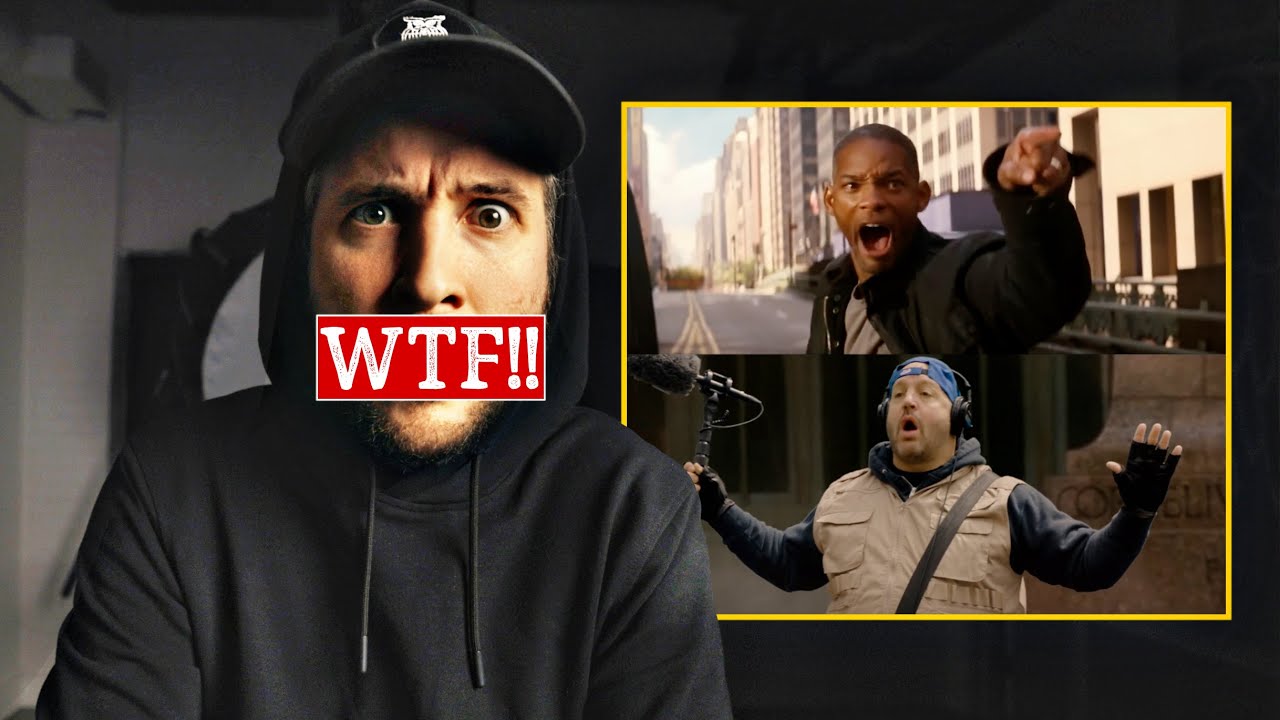
There’s a moment that happens every time I watch behind-the-scenes footage from a real film set. Something clicks. Not in a “I need a bigger budget” way, but in a “oh, that’s why that works” way. I’ve been shooting travel and lifestyle work for years, and I still learn more from watching how other people solve visual problems than from almost any other source. That’s exactly what keeps me coming back to Peter McKinnon’s “Filmmaker Reacts” series. Watch the full tutorial on YouTube before or after reading this breakdown. It’s worth your full attention.
In this particular episode, McKinnon sets up a projector-theater situation and watches a collection of BTS clips alongside finished footage. The format sounds simple, but what makes it genuinely useful is the side-by-side comparison. Seeing the shot and the setup that created it is the fastest way I know to rewire how you think about your own work. I started doing the same thing with my own archives after watching this. Pull up your favorite shot, then try to reconstruct what you would have needed to make it. It’s humbling, and it’s instructive.
The core lesson threaded through everything McKinnon reacts to is this: production value is almost never about equipment. It’s about intentionality. Here’s how to actually apply what he’s watching.
Step 1: Watch the Behind-the-Scenes Before You Watch the Final Shot
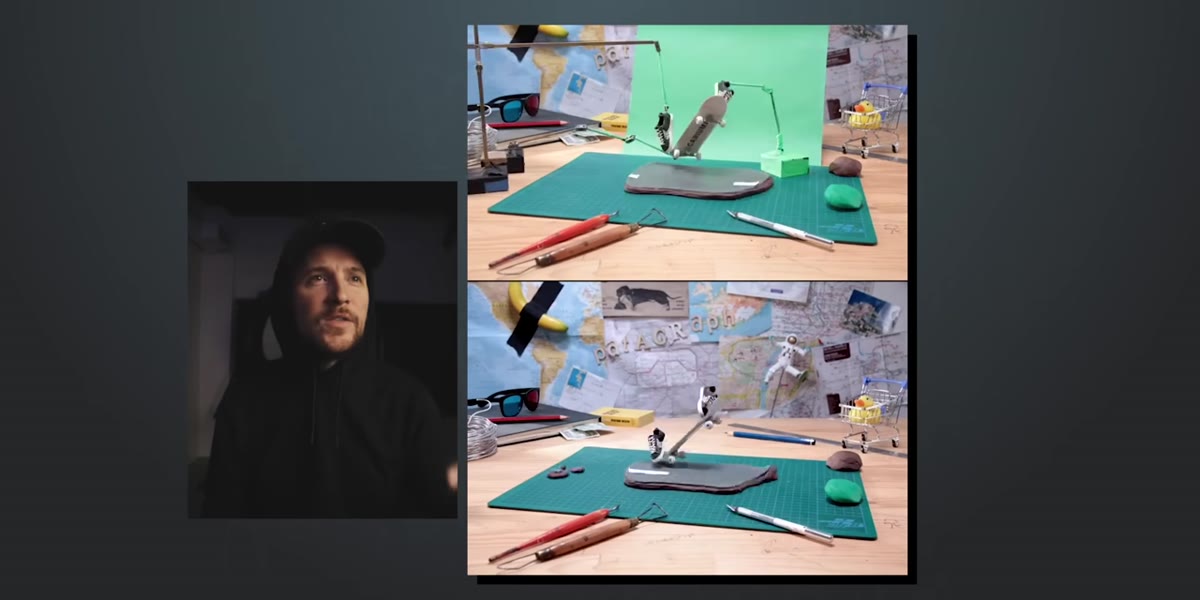 Split screen showing setup above and final shot below
McKinnon makes a point early on about how the series shows the “how” on top and the result on the bottom simultaneously. That structure isn’t just a fun editing choice. It’s the whole lesson. When you see a beautiful image first, your brain fills in assumptions about how it was made. When you see the setup first, you’re forced to connect cause and effect.
Split screen showing setup above and final shot below
McKinnon makes a point early on about how the series shows the “how” on top and the result on the bottom simultaneously. That structure isn’t just a fun editing choice. It’s the whole lesson. When you see a beautiful image first, your brain fills in assumptions about how it was made. When you see the setup first, you’re forced to connect cause and effect.
Try this with your own work this week. Before editing a photo, write down exactly what you did to get the shot. Lens, distance, light source, time of day. Then look at the final image. That habit alone will accelerate your technical growth faster than any preset pack.
Step 2: Recognize That Small Rigs Can Create Big Results
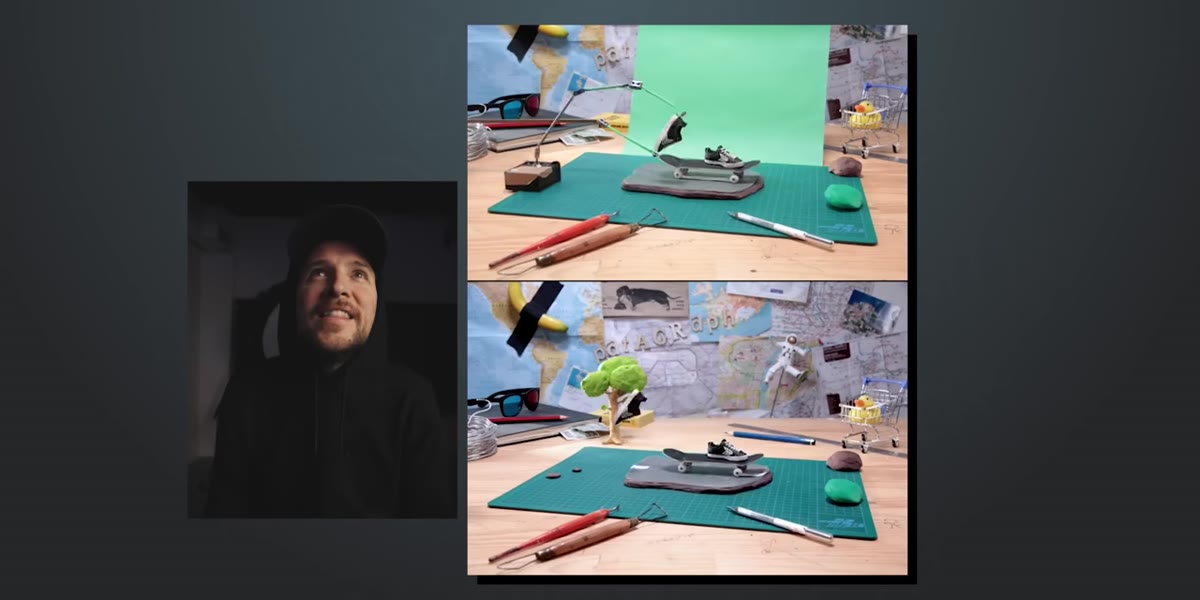 Miniature robotic arm setup on weighted platform
One of the clips McKinnon reacts to shows a tiny rig, almost like a miniature crane arm on small weighted mounts, producing footage that looks cinematic and polished. He immediately clocks it as a “mini Steve Geralt setup,” a reference to a well-known motion control style. The point isn’t the specific equipment. The point is that a small, deliberate tool used with intention beats a large, expensive one used carelessly.
Miniature robotic arm setup on weighted platform
One of the clips McKinnon reacts to shows a tiny rig, almost like a miniature crane arm on small weighted mounts, producing footage that looks cinematic and polished. He immediately clocks it as a “mini Steve Geralt setup,” a reference to a well-known motion control style. The point isn’t the specific equipment. The point is that a small, deliberate tool used with intention beats a large, expensive one used carelessly.
For photographers, this translates directly. A $30 mini tripod with a ballhead, used consistently and with purpose, will outperform a $400 carbon-fiber tripod that lives in your closet because it’s too heavy to carry. Match your tools to your actual shooting habits, not to your aspirational ones.
Step 3: Learn the Discipline of Stop Motion Frame-by-Frame Thinking
 Stop motion sequence with individual frame captures visible
McKinnon pauses noticeably when he sees stop motion work in the BTS reel. Stop motion is slow, precise, and unforgiving. Each frame is a deliberate photograph. There’s no burst mode, no “I’ll fix it in post.” That discipline, even if you never shoot a single stop motion frame, will improve your photography.
Stop motion sequence with individual frame captures visible
McKinnon pauses noticeably when he sees stop motion work in the BTS reel. Stop motion is slow, precise, and unforgiving. Each frame is a deliberate photograph. There’s no burst mode, no “I’ll fix it in post.” That discipline, even if you never shoot a single stop motion frame, will improve your photography.
The practical exercise here is to shoot a subject with total intentionality. One shot. No chimping between frames. Commit to your composition, your exposure, and your focus before you press the shutter. Do this five times in a row. It sounds rigid, but it builds the mental habit of previsualization, seeing the final image before you make it.
Step 4: Study How Commercial Productions Handle Location Constraints
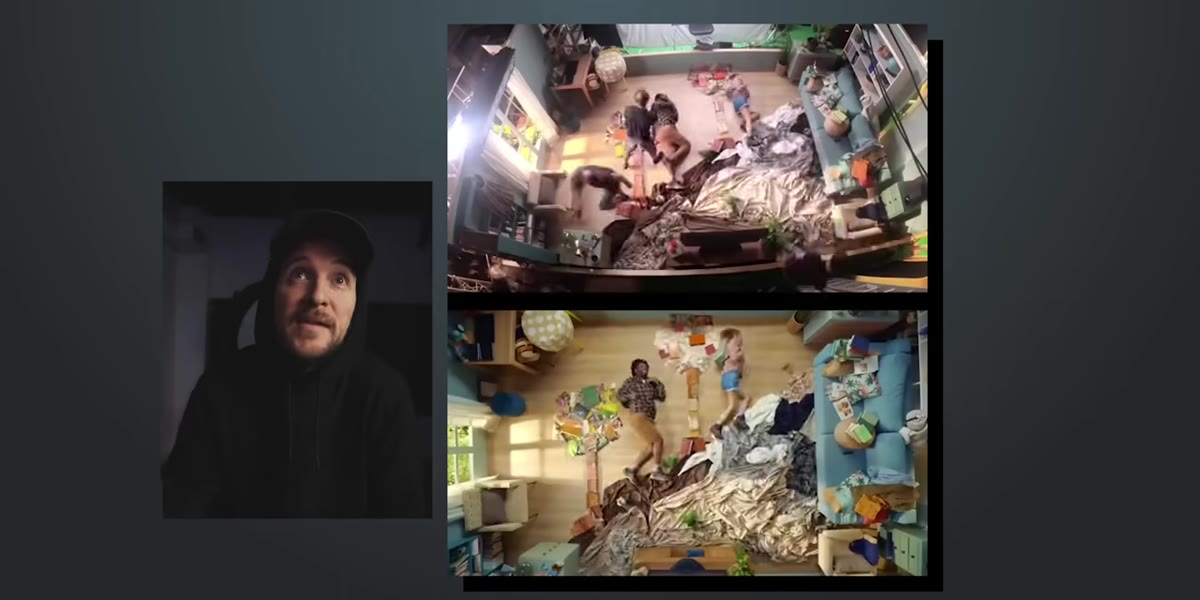
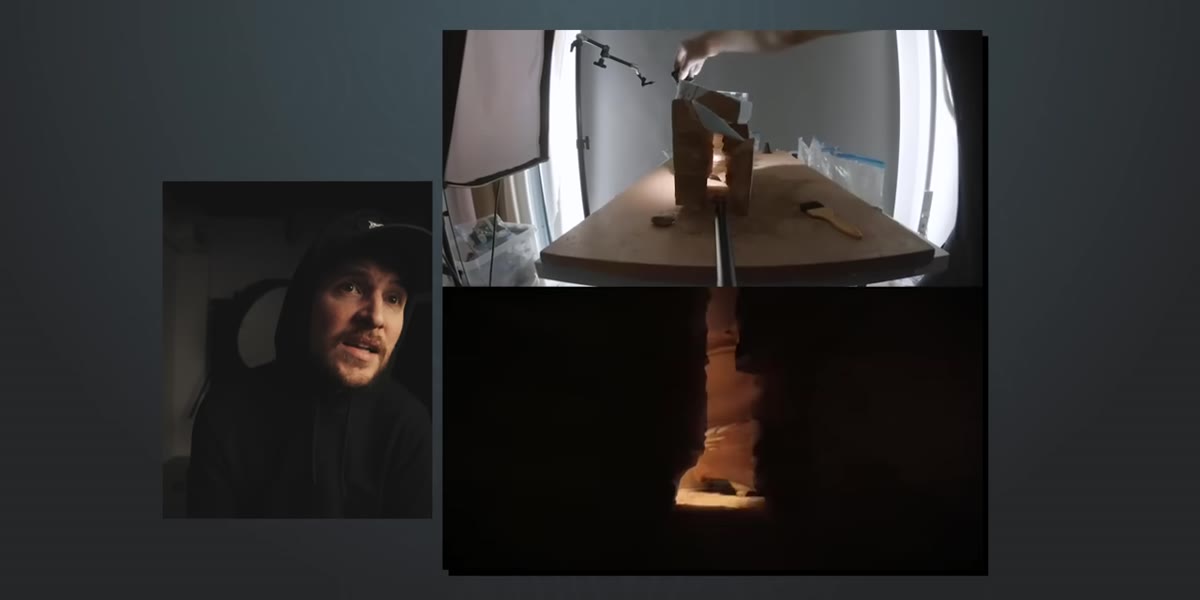 Creator building miniature 3D model set environment
Another clip McKinnon reacts to shows a creator who built his own miniature environments rather than sourcing real locations. McKinnon jokes that the guy was “in his basement making the most of the situation,” but there’s real craft in that approach. The sets look convincing because the creator understood how light, scale, and texture read on camera, not because he had access to a real location.
Creator building miniature 3D model set environment
Another clip McKinnon reacts to shows a creator who built his own miniature environments rather than sourcing real locations. McKinnon jokes that the guy was “in his basement making the most of the situation,” but there’s real craft in that approach. The sets look convincing because the creator understood how light, scale, and texture read on camera, not because he had access to a real location.
When you’re stuck shooting in a boring environment, the instinct is to wish you were somewhere else. The better instinct is to ask: what is the camera actually seeing, and how can I control that frame? Narrow your depth of field to remove a distracting background. Find a patch of interesting texture and shoot macro. Bring a small reflector and change the quality of available light. The location rarely matters as much as what you choose to show inside it.
Step 5: Notice the Invisible Production Work in Content You Already Consume
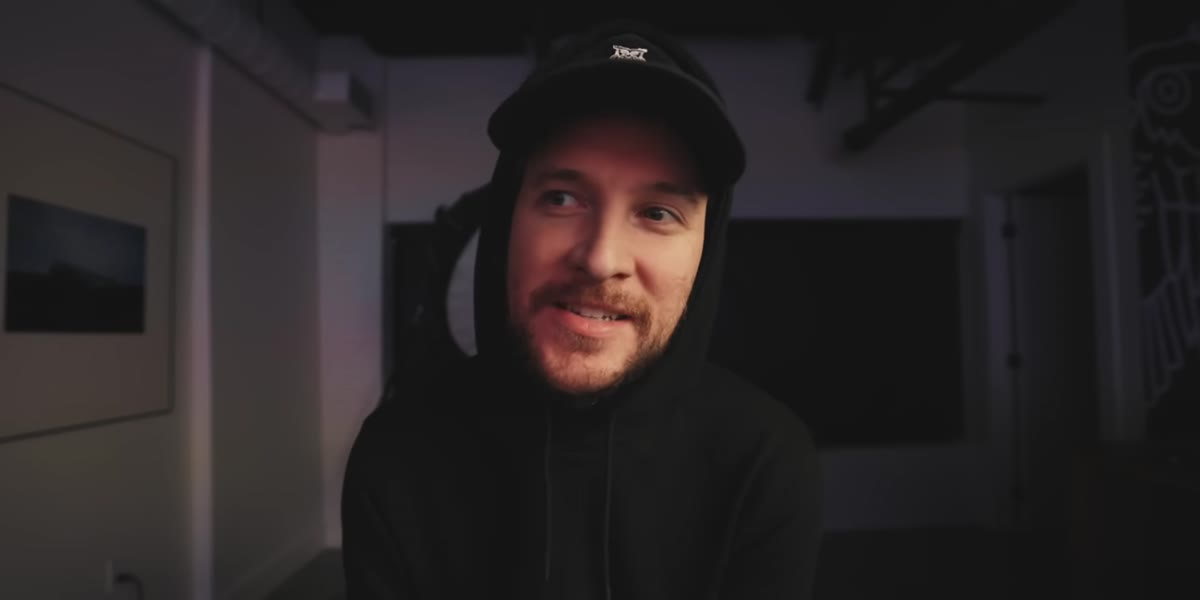 McKinnon reflecting on unseen effort behind polished videos
McKinnon steps back at one point and talks about passive watching versus active watching. When you scroll through video content or photos online, your brain registers “cool shot” and moves on. But every one of those images had a decision chain behind it: location scouting, timing, crew coordination, equipment prep, color decisions. The work is invisible by design, and that invisibility is the craft.
McKinnon reflecting on unseen effort behind polished videos
McKinnon steps back at one point and talks about passive watching versus active watching. When you scroll through video content or photos online, your brain registers “cool shot” and moves on. But every one of those images had a decision chain behind it: location scouting, timing, crew coordination, equipment prep, color decisions. The work is invisible by design, and that invisibility is the craft.
The habit I’d encourage here is simple. Once a day, pick one photo or video you encounter and spend 60 seconds reverse-engineering it. Where was the light source? What focal length does that compression suggest? Was this planned or grabbed? You’ll start seeing images differently within a week.
Step 6: Value the Reaction as a Learning Tool
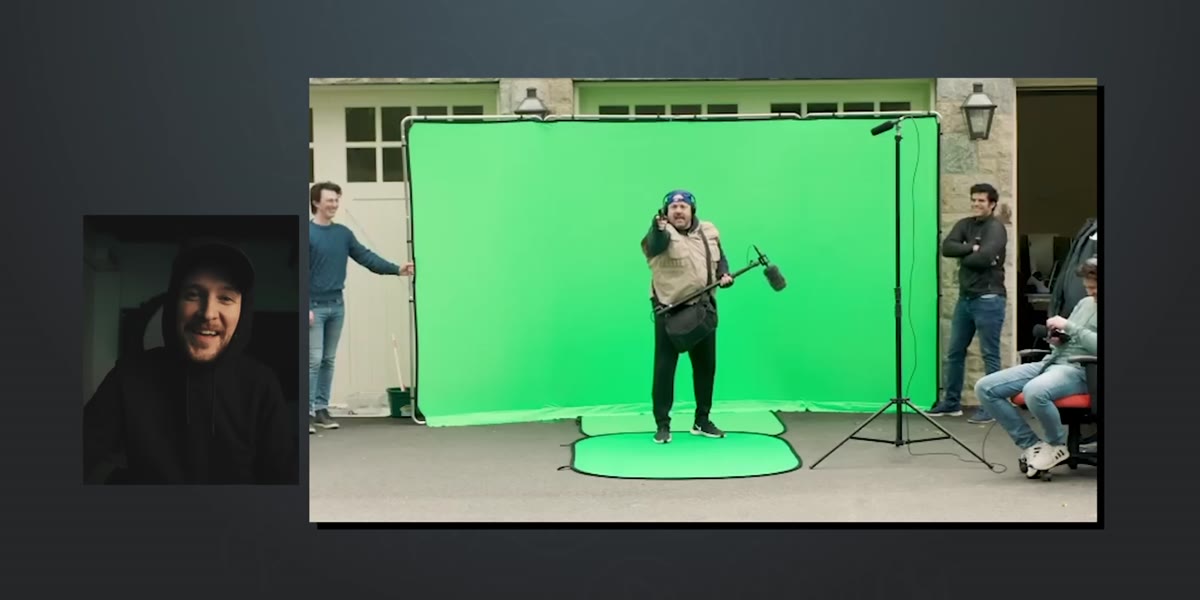 McKinnon laughing at backdrop changes in one-person production
One thing this format does exceptionally well is model how an experienced filmmaker thinks out loud. McKinnon’s reactions aren’t just entertainment. They’re a demonstration of what an experienced eye catches instantly. He clocks a rig type, names it, moves on. He spots a production trick, laughs, and then explains why it’s clever.
McKinnon laughing at backdrop changes in one-person production
One thing this format does exceptionally well is model how an experienced filmmaker thinks out loud. McKinnon’s reactions aren’t just entertainment. They’re a demonstration of what an experienced eye catches instantly. He clocks a rig type, names it, moves on. He spots a production trick, laughs, and then explains why it’s clever.
Find a peer or mentor whose eye you trust and watch content together. Talking through images out loud, even to yourself, activates a different kind of analysis than quiet observation. I started narrating my Sunday photo walks to myself a while back, out loud, like I was teaching. It felt absurd for about two weeks and then became one of my most useful habits.
What I’d Add From My Own Experience
McKinnon’s series is built around film and video production, but every single technique translates to still photography. The one thing I’d push further is the emotional accountability of watching your own BTS. I shoot behind-the-scenes frames on almost every job now, usually on my phone, and reviewing them alongside the finished work has shown me patterns in my own process I never would have caught otherwise. Sometimes the “wrong” camera position in the BTS shot is more interesting than the one I committed to. That’s useful information.
The bigger takeaway from this video is that attention is the skill. Not gear, not access, not budget. The photographers and filmmakers McKinnon is reacting to all share one thing: they looked at what they had and figured out how to make it work on camera. That’s the entire game.
Watch the full tutorial on YouTube and pay specific attention to the moments where McKinnon pauses. Those are the frames worth studying.
Comments
Leave a Comment