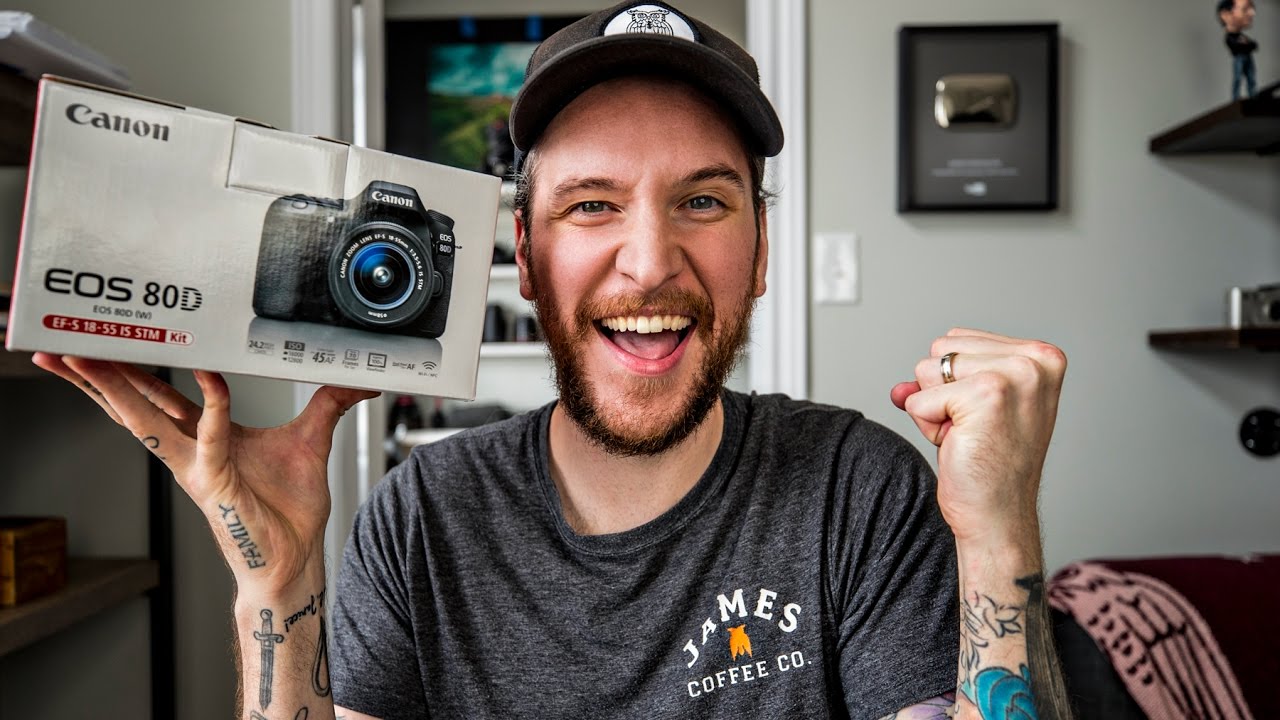
There’s a version of me from a few years ago who would have shown up to a once-in-a-lifetime shooting location with a dead battery and no backup plan. Actually, that’s not past tense. I did that exact thing on a trip to Iceland, standing in front of Skógafoss with a camera that had exactly four frames left before it gave up on me entirely. The location doesn’t matter if you’re not ready to shoot it. That’s the quiet lesson running underneath Watch the full tutorial on YouTube - Peter McKinnon’s 500K subscriber celebration vlog, which on the surface looks like a fun day out picking up a truck and eating pizza at Canon headquarters. Look closer and it’s a pretty honest portrait of how a working photographer moves through the world: gear always in hand, eyes always open, and a willingness to laugh at the moments when preparation falls short.
In this Peter McKinnon tutorial, the real teaching isn’t delivered through a formal lesson. It’s modeled through behavior. He carries his Canon 1DX everywhere, problem-solves a missing gorilla pod plate in real time, wanders into a Canon showroom and immediately starts shooting without being prompted, and reflects genuinely when he realizes he forgot a spare battery in one of the best possible locations to need one. For beginners, that kind of professional instinct can feel mysterious. But it’s actually a set of habits, and habits can be learned.
Here’s how I’d break down what he’s actually demonstrating, step by step.
Step 1: Keep Your Camera Accessible, Not Packed Away
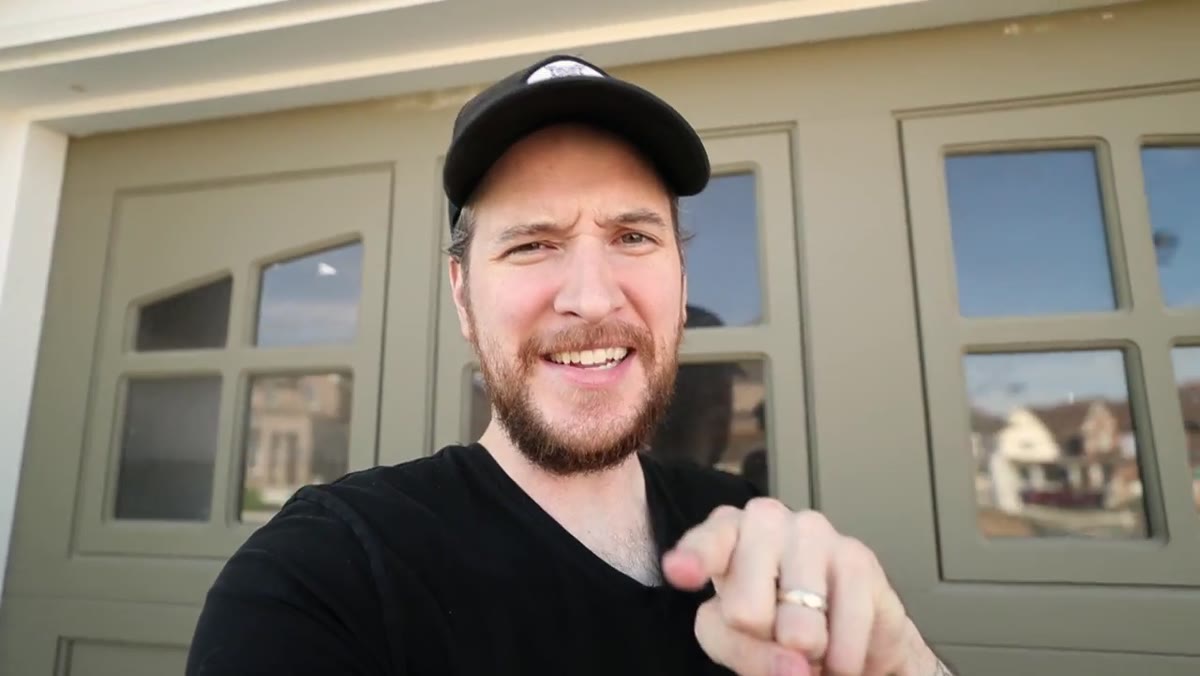 McKinnon holding the 1DX loosely while talking to camera
Peter opens the video literally palming his Canon 1DX like a basketball, joking that it’s about to drop. That sounds careless, but it’s actually the opposite: the camera is out, in hand, and ready. Most beginners (and honestly, a lot of intermediate shooters) keep their camera zipped in a bag until they reach “the location.” The problem is, the best moments often happen before you get there.
McKinnon holding the 1DX loosely while talking to camera
Peter opens the video literally palming his Canon 1DX like a basketball, joking that it’s about to drop. That sounds careless, but it’s actually the opposite: the camera is out, in hand, and ready. Most beginners (and honestly, a lot of intermediate shooters) keep their camera zipped in a bag until they reach “the location.” The problem is, the best moments often happen before you get there.
If you’re heading somewhere interesting, even a car ride or a coffee stop, your camera should be accessible within five seconds. That doesn’t mean dangling it recklessly. It means having it on a strap, in your lap, or clipped to a bag front pocket so the decision to shoot requires zero effort.
Step 2: Solve Gear Problems Immediately, Not Later
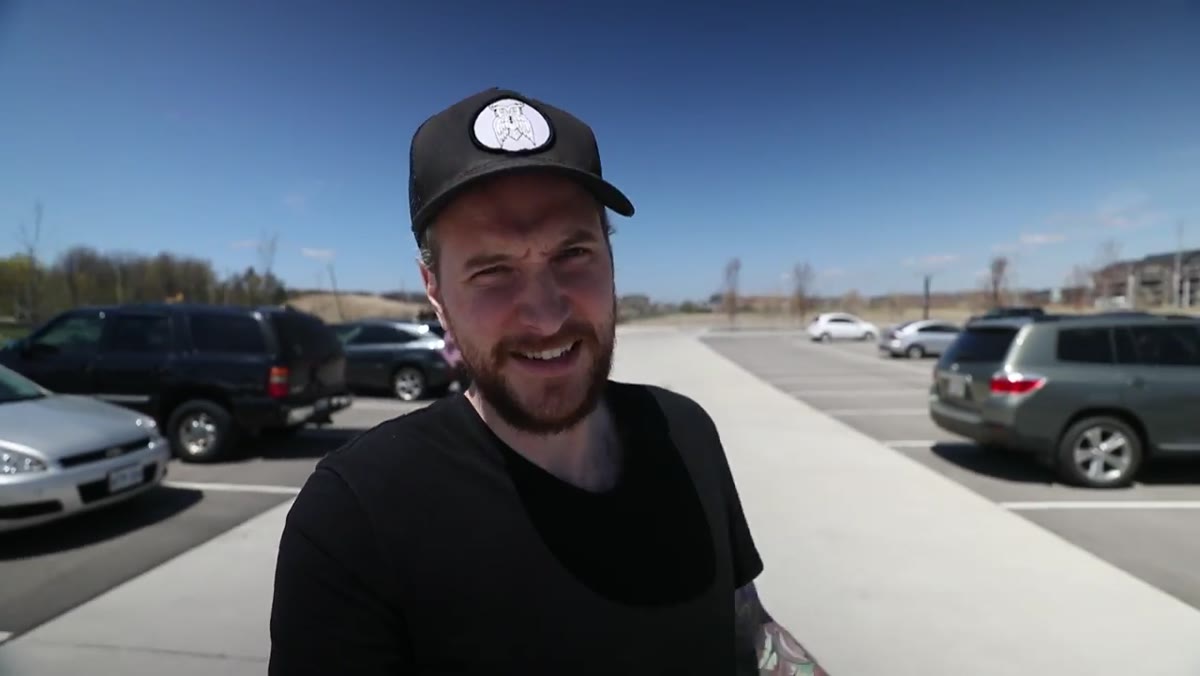
 McKinnon explaining the missing gorilla pod plate while in the car
He lost the hot shoe plate for his gorilla pod before this shoot and noticed immediately how much that small piece of gear affected his workflow. His fix: order a replacement on Amazon Prime and, as luck would have it, borrow one from his friend Gabriel who had the exact same setup. The lesson here isn’t “have a rich friend with matching gear.” It’s that he identified the problem, felt its impact, and acted on it right away rather than limping through the shoot.
McKinnon explaining the missing gorilla pod plate while in the car
He lost the hot shoe plate for his gorilla pod before this shoot and noticed immediately how much that small piece of gear affected his workflow. His fix: order a replacement on Amazon Prime and, as luck would have it, borrow one from his friend Gabriel who had the exact same setup. The lesson here isn’t “have a rich friend with matching gear.” It’s that he identified the problem, felt its impact, and acted on it right away rather than limping through the shoot.
When something breaks or goes missing in your kit, resist the urge to work around it indefinitely. Small accessories (plates, caps, cable releases, spare cards) seem minor until they aren’t. Keep a running notes list on your phone for gear that needs replacing, and actually check it before you order your next impulse lens.
Step 3: Treat Every Unfamiliar Space as a Potential Shoot
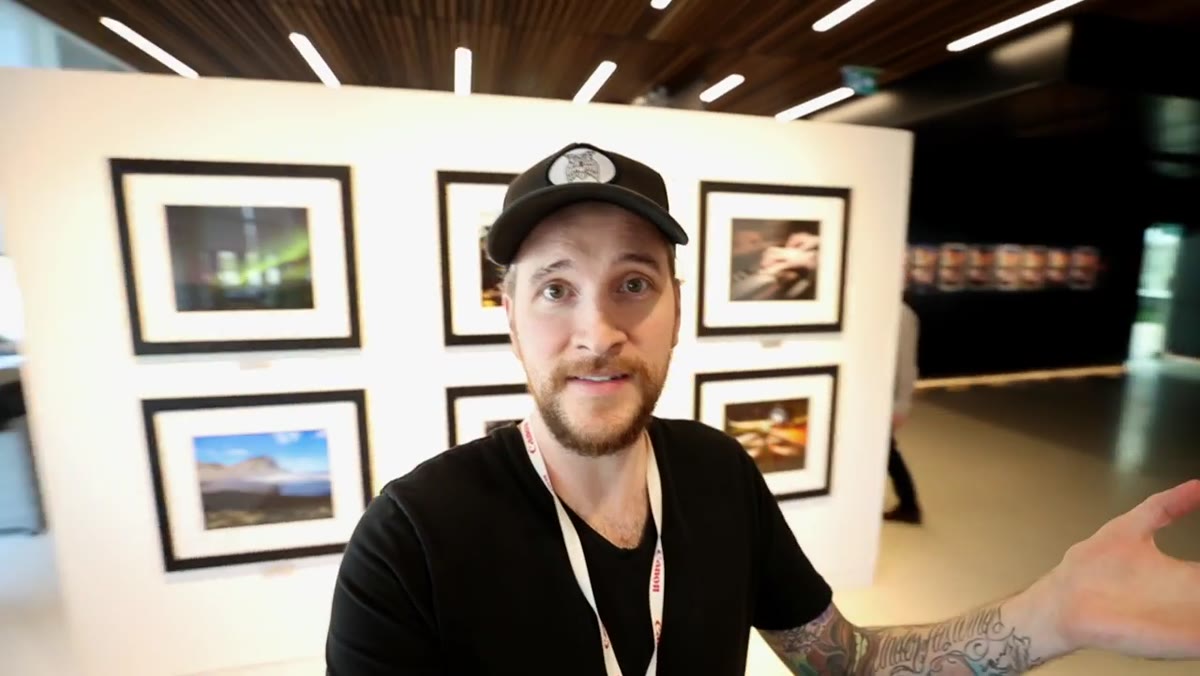
 Walking into the Canon showroom, wide shot of the space
When Peter and Gabriel walk into the Canon Canada showroom, the energy shifts immediately. He describes it as “the promised land” and starts moving through the space with obvious excitement, looking at everything as a potential frame. He wasn’t briefed to shoot there. He just started shooting because that’s the default mode.
Walking into the Canon showroom, wide shot of the space
When Peter and Gabriel walk into the Canon Canada showroom, the energy shifts immediately. He describes it as “the promised land” and starts moving through the space with obvious excitement, looking at everything as a potential frame. He wasn’t briefed to shoot there. He just started shooting because that’s the default mode.
This is a habit you can build deliberately. On my Sunday morning photo walks through Seattle, I give myself one rule: no location is too ordinary to investigate. A showroom, a parking garage, a coffee shop waiting area - these all have light, texture, and geometry worth looking at. Walk into any new space and spend sixty seconds just scanning it before you pull your phone or camera out. Where is the light coming from? What’s the strongest line in the room? That brief pause trains your eye over time.
Step 4: Charge Your Batteries. Then Charge Them Again.
 McKinnon acknowledging the dead battery situation on camera
This one stings because he says it himself, with good humor: he walked into a world-class camera showroom without a spare battery or a charger. He calls it a rookie move, and he’s right, but he also recovers gracefully because Canon staff had exactly what he needed. You will not always be that lucky.
McKinnon acknowledging the dead battery situation on camera
This one stings because he says it himself, with good humor: he walked into a world-class camera showroom without a spare battery or a charger. He calls it a rookie move, and he’s right, but he also recovers gracefully because Canon staff had exactly what he needed. You will not always be that lucky.
The fix is embarrassingly simple. After every single shoot, batteries go on the charger. Not tomorrow. Not when you remember. Right when you get home, before the bag gets unzipped for anything else. If you have multiple batteries, rotate them. Label them with tape and a marker (B1, B2, B3) so you always know which one was last charged and which one got pulled from the camera.
Step 5: Notice How Prints Change Your Relationship to Your Own Work
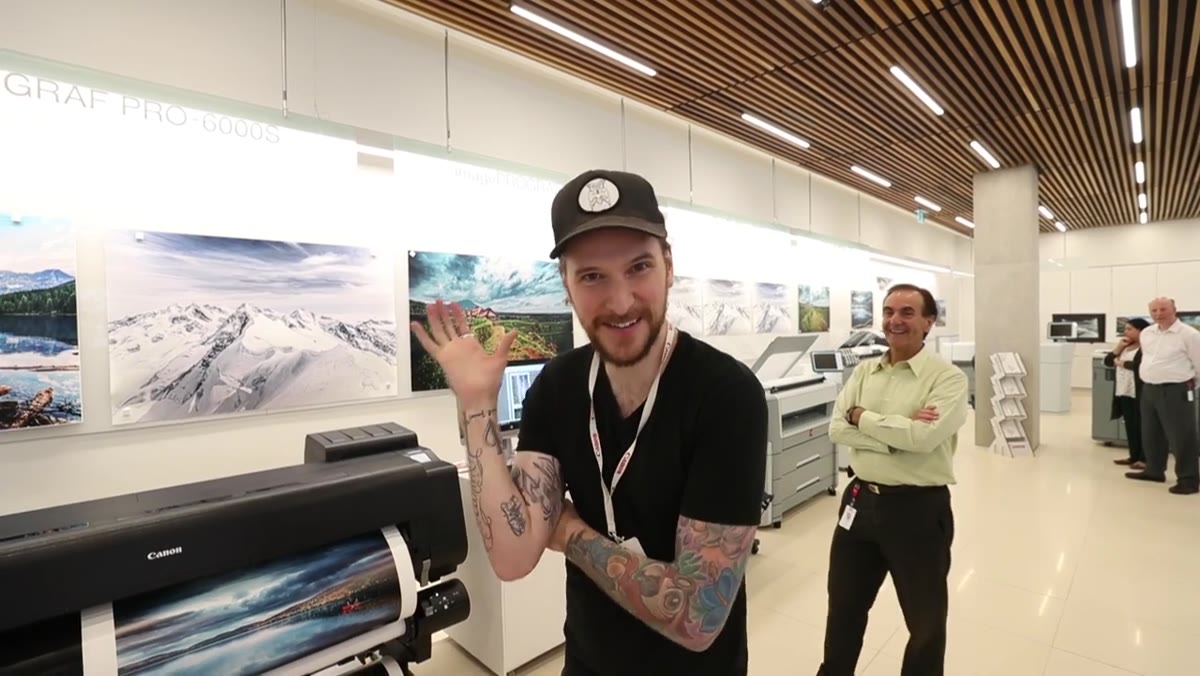 McKinnon seeing his photos printed large for the first time in the showroom
Near the end of the visit, Peter stands in front of large-format prints of his own images and says something genuinely worth paying attention to: seeing the photos this big brought back the exact feelings he had while taking them. He’d never seen them printed at that scale before. That reaction is real and it matters.
McKinnon seeing his photos printed large for the first time in the showroom
Near the end of the visit, Peter stands in front of large-format prints of his own images and says something genuinely worth paying attention to: seeing the photos this big brought back the exact feelings he had while taking them. He’d never seen them printed at that scale before. That reaction is real and it matters.
Most of us live entirely in the digital world with our photography. Everything lives on a screen, gets resized for Instagram, and is measured in likes. But printing forces you to see your images differently. Compression artifacts, soft focus, noise, and awkward compositions all become impossible to ignore at 24 inches wide. Print something this month, even a small 5x7 from a drugstore kiosk. You’ll learn more about your own shooting than from any preset or editing tutorial.
What I’d Add From My Own Experience
The through-line in everything Peter demonstrates here is that preparation and spontaneity aren’t opposites. They make each other possible. The reason he can be spontaneous in that showroom, shooting freely and reacting to the space, is because his gear habits are solid enough that he’s not thinking about the gear. He’s thinking about the image.
I learned this the hard way. A stranger at a coffee shop once asked how I got a particular shot I was editing on my laptop, and I realized I couldn’t explain it cleanly because I’d been problem-solving gear the whole time I was shooting. That conversation is actually what pushed me toward teaching: if I can build the habits clearly enough to explain them, I’ll actually own them myself.
Build the habits so small they feel automatic. Camera accessible. Batteries charged. Gear list maintained. Eyes open in every room. The creativity has space to show up when the logistics are handled.
The single most important thing I took from this video: your camera should be ready before you need it, not right when you need it. Those are two very different moments.
Watch the full tutorial on YouTube to see Peter’s full day and the Canon showroom walk-through for yourself.
Comments (3)
Clear and practical. No fluff. Appreciate that.
This is the kind of content that keeps me coming back.
Never thought of approaching it this way. Really creative.
Leave a Comment