There’s a camera sitting on my nightstand right now. Not in a bag, not on a shelf — on my nightstand, because it’s small enough that grabbing it on a Sunday morning photo walk feels like reaching for my keys. That’s not an accident. That’s design intentionality, and it’s something I’ve spent years chasing in gear. So when I came across Sean Tucker’s deep-dive into the Ricoh GR3x, I watched it twice. Not because I was shopping, but because Tucker articulates something I’ve tried to explain to students for years: the best camera isn’t the most powerful one, it’s the one that removes friction between you and the shot.
Watch the full tutorial on YouTube
In this Sean Tucker tutorial, he walks through why the GR3x represents a rare moment in camera manufacturing: a company actually listening to its user base and refining a beloved tool rather than chasing spec-sheet bragging rights. For anyone trying to figure out whether a compact fixed-lens camera belongs in their kit, or just wondering what thoughtful gear design looks like, this is worth your full attention.
Step 1: Understand What Problem This Camera Is Solving
 Camera introduced against a clean background
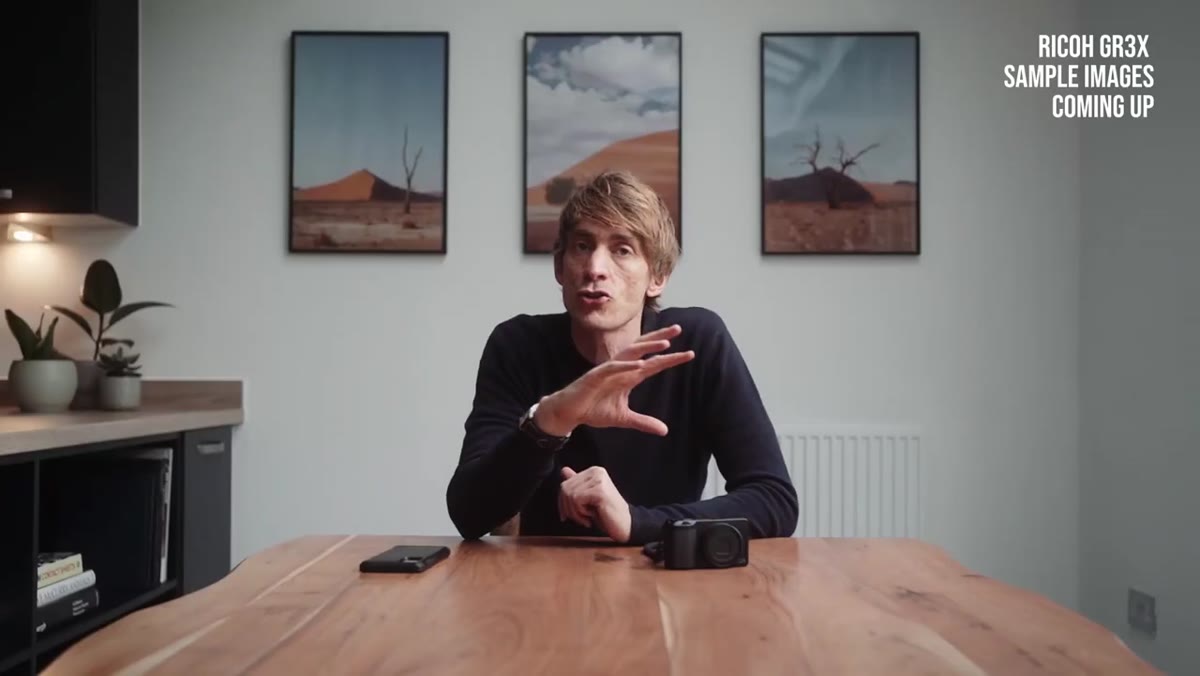
Before you evaluate any piece of gear, you need to name the problem it’s designed to fix. Tucker opens by framing the GR3x not as a replacement for a mirrorless system, but as a commitment device. It’s built for photographers who want to shoot more often, not just better. The constraint of a single focal length and a pocketable body forces creative decisions that a zoom lens lets you avoid.
Camera introduced against a clean background
Before you evaluate any piece of gear, you need to name the problem it’s designed to fix. Tucker opens by framing the GR3x not as a replacement for a mirrorless system, but as a commitment device. It’s built for photographers who want to shoot more often, not just better. The constraint of a single focal length and a pocketable body forces creative decisions that a zoom lens lets you avoid.
If you’ve ever left your camera home because the bag felt too heavy, or missed a moment fumbling through a menu, this is the conversation Tucker is having. The GR3x is an answer to the question: what’s the smallest, least intrusive camera that still produces serious image quality?
Step 2: Recognize the Significance of the Focal Length Choice
 Lens detail and focal length markings shown on screen
The GR3x shoots at 40mm equivalent, which is a meaningful departure from the original GR3’s 28mm. Tucker breaks down why this matters practically. At 28mm, you’re working wide, pulling in context and environment. At 40mm, you’re closer to how the eye naturally frames a scene. For street photography, portraiture, or travel shooting where you want subjects to feel present rather than placed, 40mm is more forgiving and more flattering.
Lens detail and focal length markings shown on screen
The GR3x shoots at 40mm equivalent, which is a meaningful departure from the original GR3’s 28mm. Tucker breaks down why this matters practically. At 28mm, you’re working wide, pulling in context and environment. At 40mm, you’re closer to how the eye naturally frames a scene. For street photography, portraiture, or travel shooting where you want subjects to feel present rather than placed, 40mm is more forgiving and more flattering.
This isn’t a minor tweak. Choosing between these two cameras means choosing a way of seeing. Tucker’s point is that Ricoh didn’t just add a number to a model name. They built a different creative tool for a different photographer. Ask yourself honestly which focal length matches how you already think in frames before you commit to either.
Step 3: Evaluate the Physical Design as a Feature, Not a Footnote
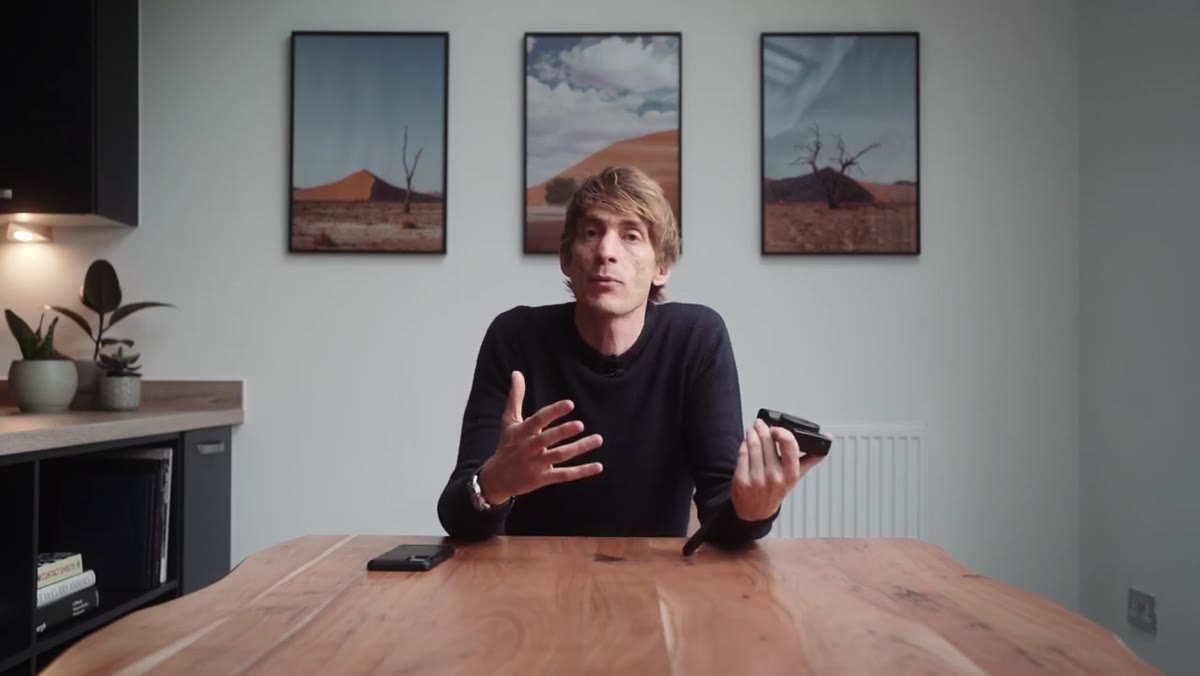 Hands holding the camera, demonstrating pocket size
Tucker spends real time on the body itself, and he’s right to. The GR3x fits in a jacket pocket. Not a camera bag pocket, not a vest pocket, an actual front jeans pocket if you’re not wearing something too slim-cut. This changes where you take it, which changes what you shoot, which changes your photography in ways that a better sensor never will.
Hands holding the camera, demonstrating pocket size
Tucker spends real time on the body itself, and he’s right to. The GR3x fits in a jacket pocket. Not a camera bag pocket, not a vest pocket, an actual front jeans pocket if you’re not wearing something too slim-cut. This changes where you take it, which changes what you shoot, which changes your photography in ways that a better sensor never will.
The controls are minimal by design. There’s no articulating screen, no in-body image stabilization added just to hit a checklist. What’s there is deliberate. Tucker notes that learning this camera means accepting its constraints and trusting that those constraints will teach you something. That’s a harder sell than a feature list, but it’s the more honest one.
Step 4: Understand the Snap Focus System
 Focus mode settings visible on the camera screen
One of the GR line’s most distinctive features is snap focus, and Tucker explains it clearly. Rather than hunting for autofocus lock, you pre-set a focus distance (say, 1.5 meters or 2.5 meters) and the camera fires immediately when you press the shutter. No hunting, no lag, no missed moment while the lens searches.
Focus mode settings visible on the camera screen
One of the GR line’s most distinctive features is snap focus, and Tucker explains it clearly. Rather than hunting for autofocus lock, you pre-set a focus distance (say, 1.5 meters or 2.5 meters) and the camera fires immediately when you press the shutter. No hunting, no lag, no missed moment while the lens searches.
To use it effectively, practice zone focusing. At f/8 on a 40mm equivalent lens, your depth of field is generous enough that anything between roughly 1.2 and 3 meters will be sharp if you’ve set your snap distance correctly. Tucker’s advice: set your snap distance before you start walking, not when the shot appears. The whole system rewards preparation over reaction.
Step 5: Work With the Built-In Image Effects Intentionally
 In-camera effects menu being navigated
The GR3x has in-camera processing options including high-contrast black and white modes that Tucker addresses directly. His take is nuanced: he doesn’t dismiss them as gimmicks, but he also doesn’t use them as a crutch. The value of shooting in a black and white picture style isn’t the final JPEG, it’s that seeing in monochrome through the viewfinder trains your eye to read light and shadow rather than color.
In-camera effects menu being navigated
The GR3x has in-camera processing options including high-contrast black and white modes that Tucker addresses directly. His take is nuanced: he doesn’t dismiss them as gimmicks, but he also doesn’t use them as a crutch. The value of shooting in a black and white picture style isn’t the final JPEG, it’s that seeing in monochrome through the viewfinder trains your eye to read light and shadow rather than color.
If you shoot RAW plus JPEG, you keep your options. The JPEG gives you the finished black and white for quick sharing. The RAW gives you full control in post if you change your mind. Tucker recommends this workflow for anyone experimenting with the image modes rather than committing to JPEG-only shooting while you’re still learning the camera’s character.
Step 6: Build a Practice Routine Around the Camera’s Strengths
 Photographer walking a street scene, camera in hand
Tucker’s closing argument is behavioral, not technical. A camera this size and this simple only pays off if you actually carry it. His suggestion is to attach it to a specific habit, whether that’s a morning walk, a lunch break, or a commute. The GR3x rewards the photographer who shoots a little every day over the one who takes it out for planned sessions.
Photographer walking a street scene, camera in hand
Tucker’s closing argument is behavioral, not technical. A camera this size and this simple only pays off if you actually carry it. His suggestion is to attach it to a specific habit, whether that’s a morning walk, a lunch break, or a commute. The GR3x rewards the photographer who shoots a little every day over the one who takes it out for planned sessions.
Set limitations deliberately. One focal length. One distance setting. One hour. The constraint is the exercise. Tucker frames this as the camera asking you to show up consistently rather than occasionally with perfect conditions.
One Thing I’d Add From My Own Experience
Tucker’s breakdown is thorough, but there’s something he gestures at without naming directly: cameras like this change your relationship to gear anxiety. I’ve watched students spend months paralyzed by choices between full-frame bodies with seventeen autofocus modes. The GR3x is the opposite of that energy. It’s a camera that says “just go outside.”
My most-engaged Instagram post ever was shot on a $200 phone, which tells you everything about how much gear matters relative to presence and intention. The GR3x isn’t a phone. The image quality is genuinely excellent. But its philosophy is the same: remove the excuse. When a camera fits in your pocket, you lose the ability to say you didn’t have it with you. That’s not a small thing.
The single most important takeaway from Tucker’s video is this: camera design is a values statement, and buying a camera should be a values decision. The GR3x exists because Ricoh asked its photographers what they actually needed, then built that thing instead of the thing that would look impressive on a spec sheet. That’s rare, and it’s worth paying attention to regardless of whether this particular camera ends up in your bag.
Watch the full tutorial on YouTube to hear Tucker walk through his full reasoning. He’s one of the more thoughtful voices in photography education, and this one is worth the time.
Comments
Leave a Comment