I’ll be honest with you: I did not expect a video about pens to make me rethink how I evaluate camera gear. But here I am. I stumbled onto this ranking video while procrastinating on a lens research rabbit hole, and by the end of it I had a whole new framework for how I assess whether a piece of kit actually earns its place in my bag. In Watch the full tutorial on YouTube, Peter McKinnon works through a tier ranking of the world’s most popular pens, and while the subject is decidedly analog, the evaluative instincts on display are pure photographer.
What struck me wasn’t which pens landed where. It was the criteria McKinnon used to judge them, and how casually he applied a framework that most of us spend years developing for our own gear. He separates feel from function, aesthetics from performance, and iconic status from actual usability. Those are exactly the distinctions I wish I had made clearly when I was starting out and spending money on equipment I thought I needed because it looked good in YouTube thumbnails.
This is a step-by-step breakdown of the evaluative logic from that video, translated directly into how you can think about photography gear. Whether you’re debating a new lens, a filter system, or even your first camera body upgrade, these steps will help you make a smarter call.
Step 1: Start With the Iconic Baseline
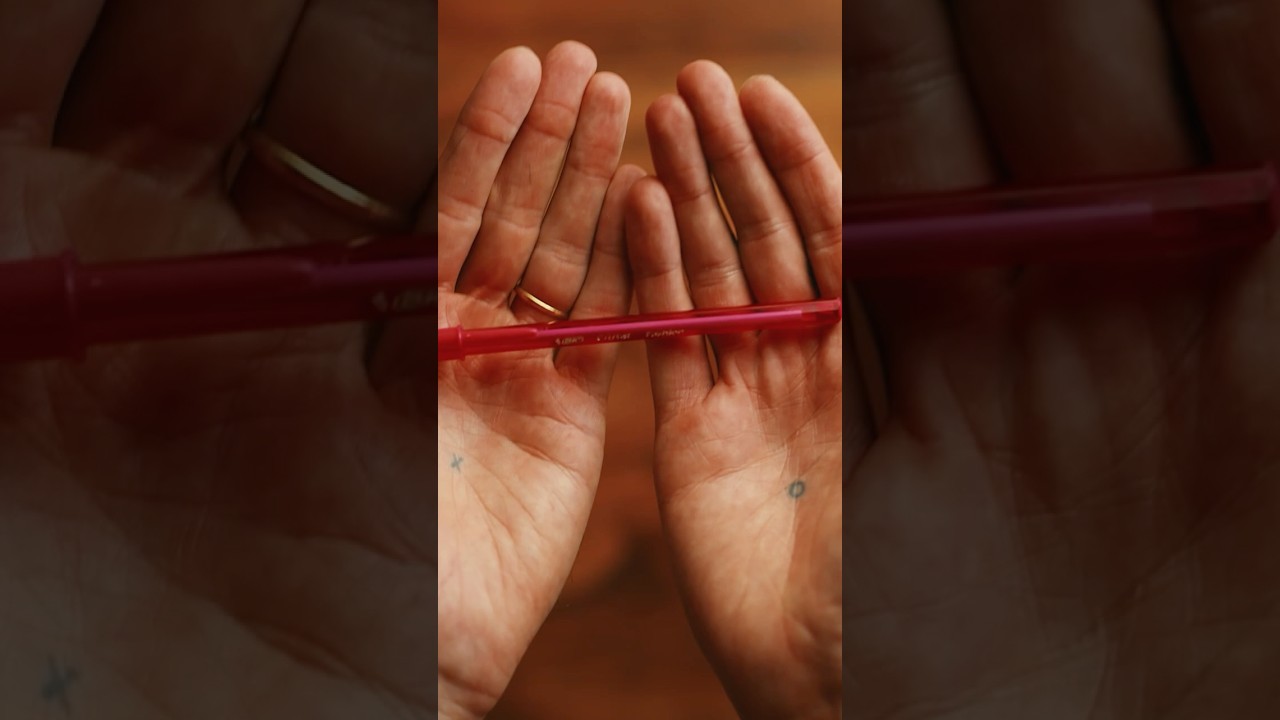
 Bic Crystal pen cap held up for inspection
McKinnon opens by holding up the Bic Crystal, a pen so ubiquitous it barely needs an introduction. His point is sharp: iconic does not automatically mean good. It means it has survived long enough to become a reference point. He gives it a top-tier placement not because it performs brilliantly but because understanding it is prerequisite to understanding everything else.
For photographers, your “Bic Crystal” is whatever camera you learned on. Maybe it was a Canon Rebel, a used Nikon D3400, or honestly, your iPhone. That tool sets your internal baseline. Before you evaluate anything new, you need to know what you’re comparing against, and you need to be honest about whether your baseline is actually serving you or just familiar.
Step 2: Separate Looks From Performance
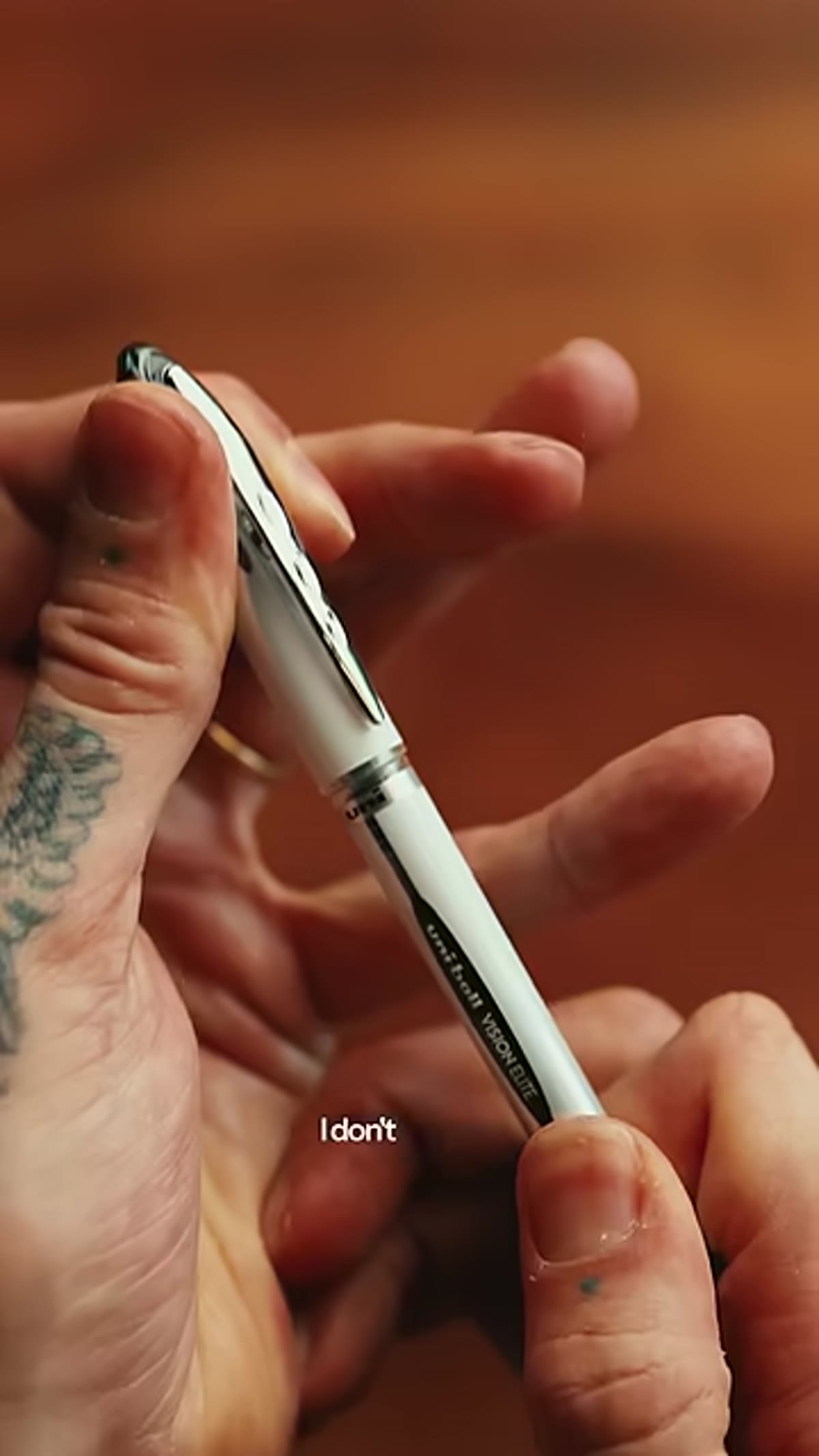 Uni-Ball Vision Elite pen being examined closely
The Uni-Ball Vision Elite gets marked down on aesthetics. McKinnon says it looks like it belongs next to a fax machine. But then he tests it, and it performs. The look did not predict the output. He lands it in a solid tier despite the visual unattractiveness.
This is a trap I see beginners fall into constantly. A lens with a sleek matte barrel and a satisfying click on the focus ring feels premium. But if the glass is mediocre wide open and you’re buying it for low-light street photography, the feel is irrelevant. Test before you commit. If you can’t test in person, look for sample images shot at the specific aperture and focal length you actually need, not the best-case marketing shots.
Step 3: Evaluate the Physical Experience of Use
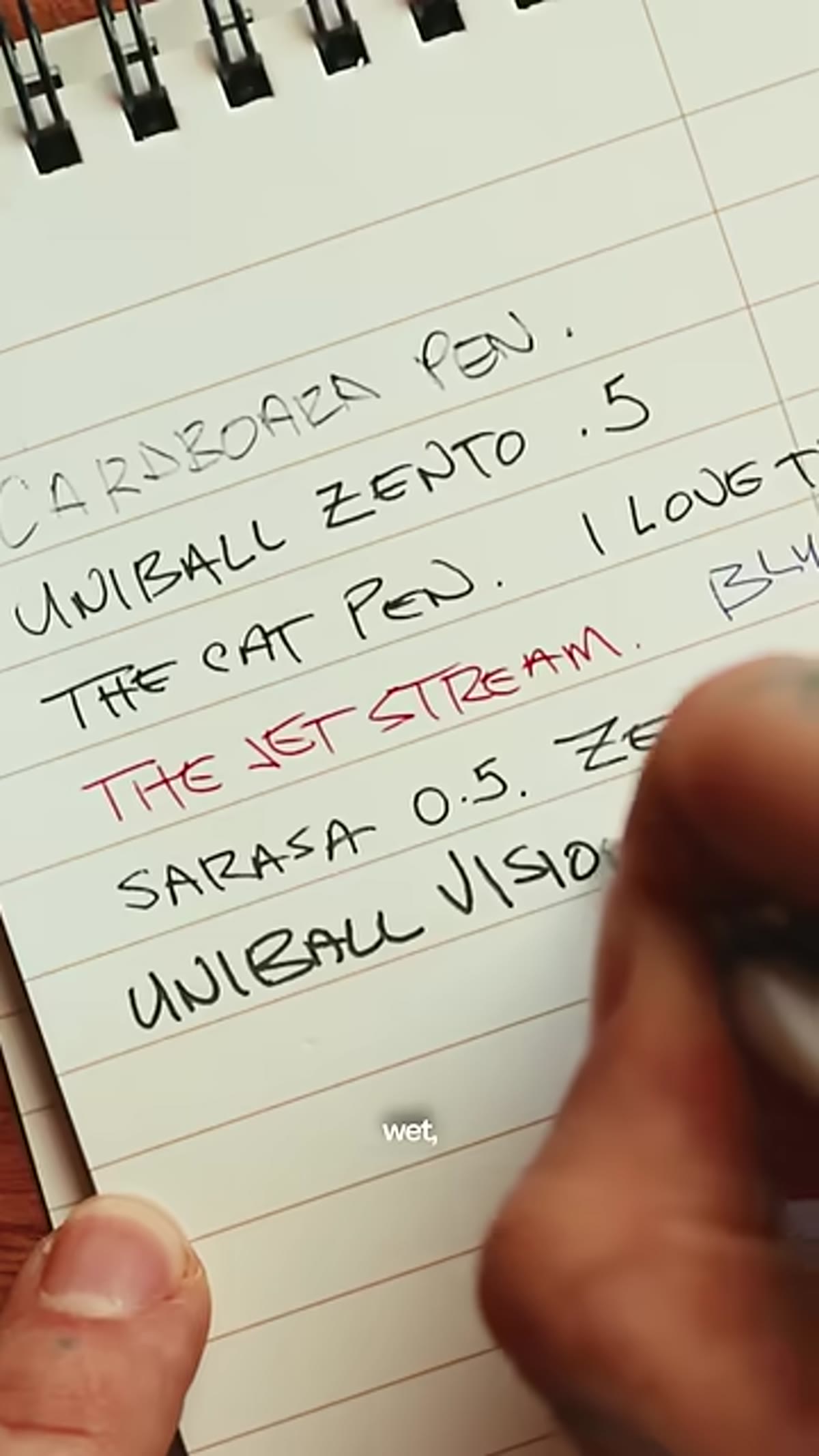 Writing test being performed on paper
McKinnon writes with each pen and describes the tactile feedback in vivid terms. He’s paying attention to how the tool feels in motion, not just how it looks sitting still. For one pen, the ink flow is thick and smooth and that quality alone bumps its ranking up regardless of its visual design.
In photography terms, this is the equivalent of actually shooting with something under your real conditions. How does the shutter button feel on a long walk? Does the grip fatigue your hand on a two-hour event shoot? Does the autofocus hunting drive you crazy in dim restaurant light? These are use-based questions, and they can only be answered by using the thing. Borrow before you buy whenever you can.
Step 4: Know When Performance Disqualifies Regardless of Pedigree
 Pilot Neo-Gel being tested with visible ink flow
The Pilot Neo-Gel gets an enthusiastic test, and McKinnon’s reaction is genuine surprise at how much ink the pen lays down. But it doesn’t translate into a high ranking. The ink flow is so heavy it crosses into impractical territory for his use case. The pen does something impressive, it just doesn’t do the right thing.
Translated: a 50mm f/1.2 is an impressive piece of glass. But if you shoot primarily landscapes in flat midday light and you’re rarely in situations that call for that wide an aperture, it may be solving a problem you don’t have. Performance specs only matter relative to your actual shooting context. Write down the three situations you shoot in most often before you evaluate any new piece of gear.
Step 5: Assign Tiers Based on Your Workflow, Not Consensus
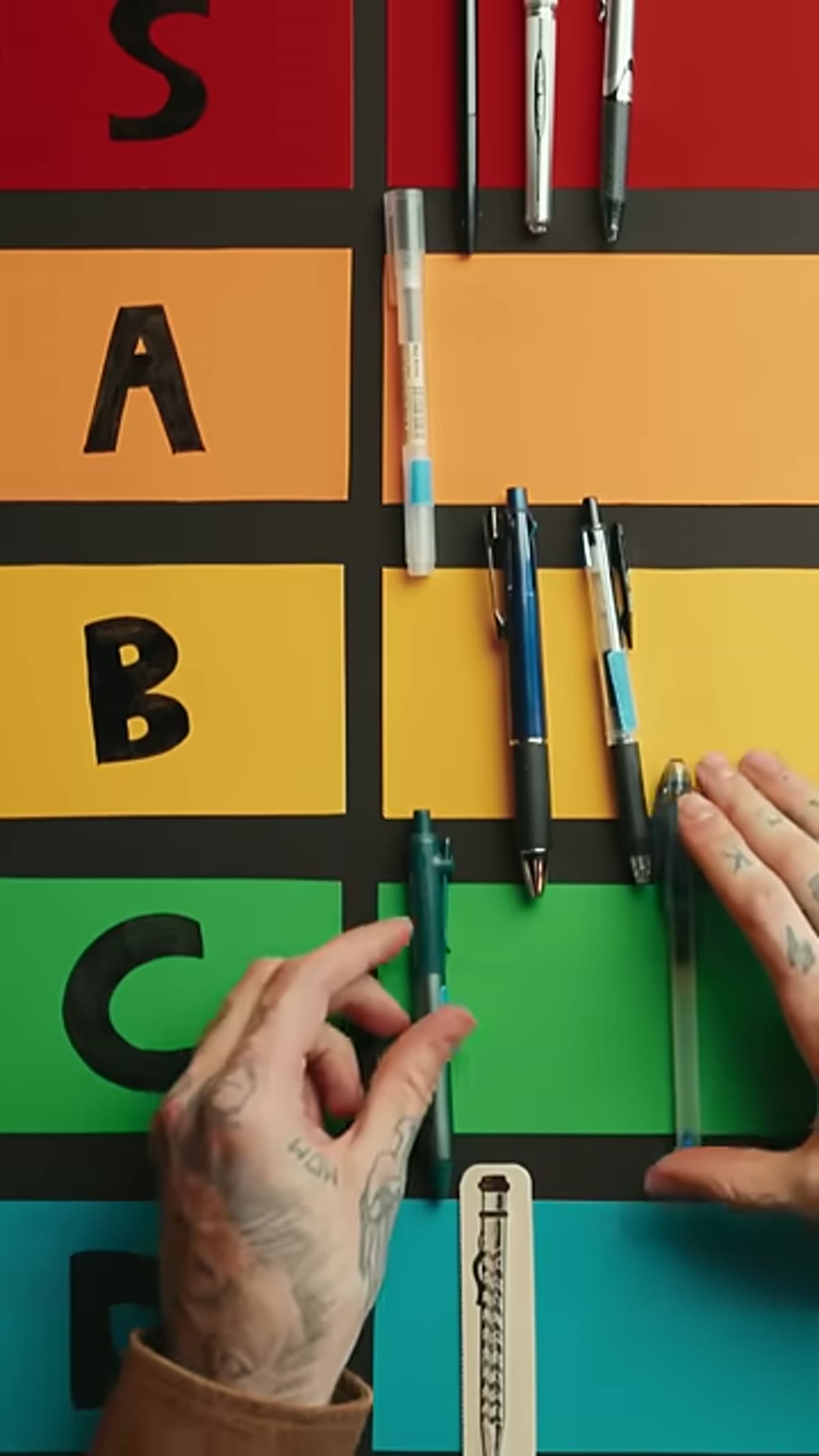 Tier ranking system visible on screen
McKinnon uses a clear tier system (S, A, B, C) and he makes placement decisions in real time based on his own handling experience. He doesn’t poll the audience. He doesn’t defer to brand reputation. He makes a call, explains it, and moves on.
This is probably the most transferable habit in the whole video. Photography forums will tell you one thing. YouTube comment sections will tell you another. Your actual Sunday morning photo walk will tell you the truth. Build your own tier list of the gear you already own, the stuff you reach for first, the stuff that sits in the bag, the stuff you’ve sold. That history is more useful than any review.
Step 6: Separate “My Favorite” From “Objectively Good”
 Final placement and camera reaction shot
McKinnon wraps his evaluation with a note that if a pen he ranked low happens to be your favorite, it’s nothing personal. He’s evaluating against performance criteria, not attacking someone’s preference. The two things can coexist: a tool can be beloved and still be limited.
I still shoot with my phone on Sunday morning walks sometimes, partly to stay honest with myself about what actually makes a photo work. The best image I ever posted was taken on a $200 Android, and the engagement it got was a useful reminder that the tool and the result are not the same thing. You are allowed to love a piece of gear that professionals would dismiss. Just understand what it is and what it isn’t.
What I’d Add From My Own Experience
The one thing this framework doesn’t address explicitly is the switching cost. When McKinnon moves between pens, there’s no muscle memory at stake. When you’ve been shooting with the same 24-70mm for three years and you’re considering a switch, there’s real time invested in knowing how that glass behaves. Factor in the relearning period honestly. A technically better lens might perform worse in your hands for the first six months simply because you don’t yet know its quirks.
Build a small evaluation ritual. Pick three shots you’ve already made successfully with your current gear, then ask whether the new tool would have made those specific shots better, easier, or whether it honestly wouldn’t have changed anything. If the answer is “it wouldn’t have changed anything,” that’s your answer.
The single most important takeaway here is this: iconic does not mean optimal, pretty does not mean functional, and the only tier list that matters is the one built from your own hands-on experience. Everything else is borrowed opinion.
Watch the full tutorial on YouTube and pay attention to how quickly McKinnon moves from first impression to verdict. That speed comes from a clear set of criteria. The goal is to build your own.
Comments
Leave a Comment