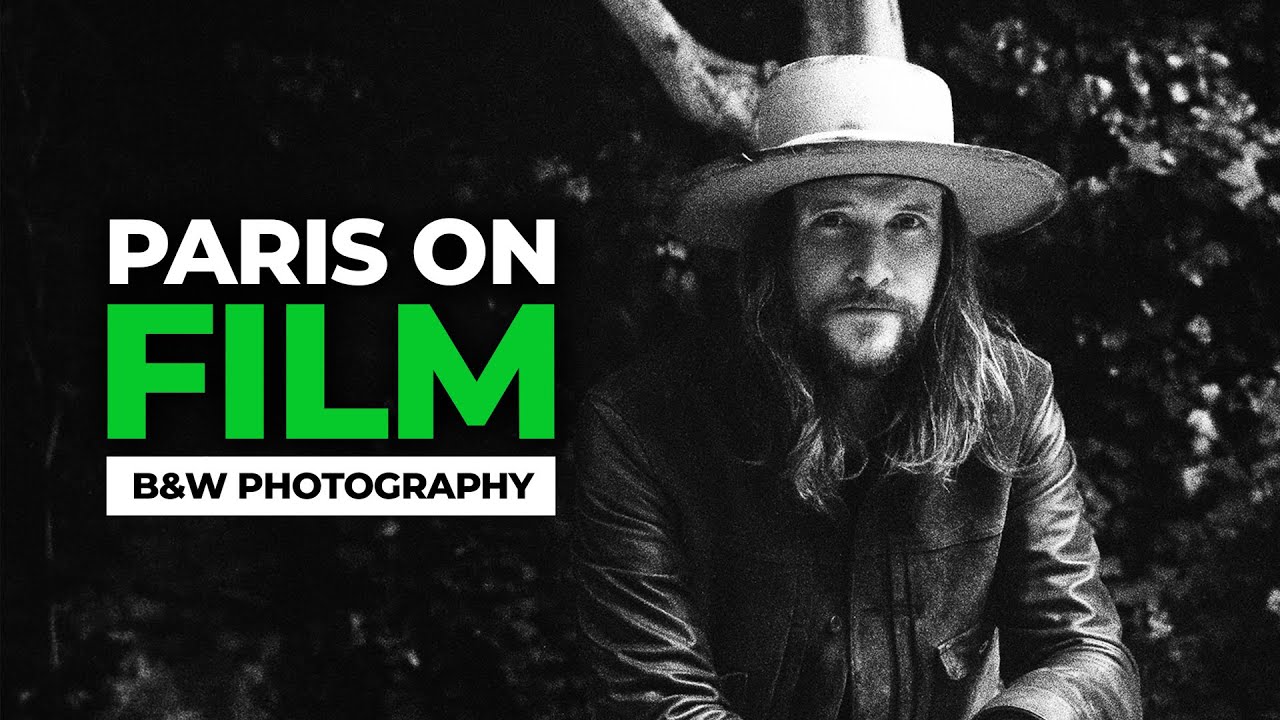
Every Sunday morning I take a photo walk around Seattle with whatever camera I feel like carrying. Sometimes it’s my mirrorless. Sometimes, and I know this will make some of you cringe, it’s just my phone. The point has never really been the gear. It’s the practice of showing up and being deliberate. So when I came across a recent Peter McKinnon tutorial where he shoots a single roll of 35mm black-and-white film through the streets of Paris, I felt that same philosophy land with real force. Watch the full tutorial on YouTube
Peter is upfront that street photography is not his specialty, which is exactly why the video works so well as a teaching tool. He’s not performing expertise. He’s working through the constraints of the medium in real time, and the lessons that surface are genuinely useful whether you ever pick up a film camera or not. What he discovers is that the limitation itself, only 36 frames, no chimping, no ISO adjustment mid-roll, is what forces better pictures. That idea is worth sitting with.
Here is a step-by-step breakdown of the approach he works through, and how you can apply it to your own shooting.
Step 1: Choose Your Film Stock Before You Leave the House
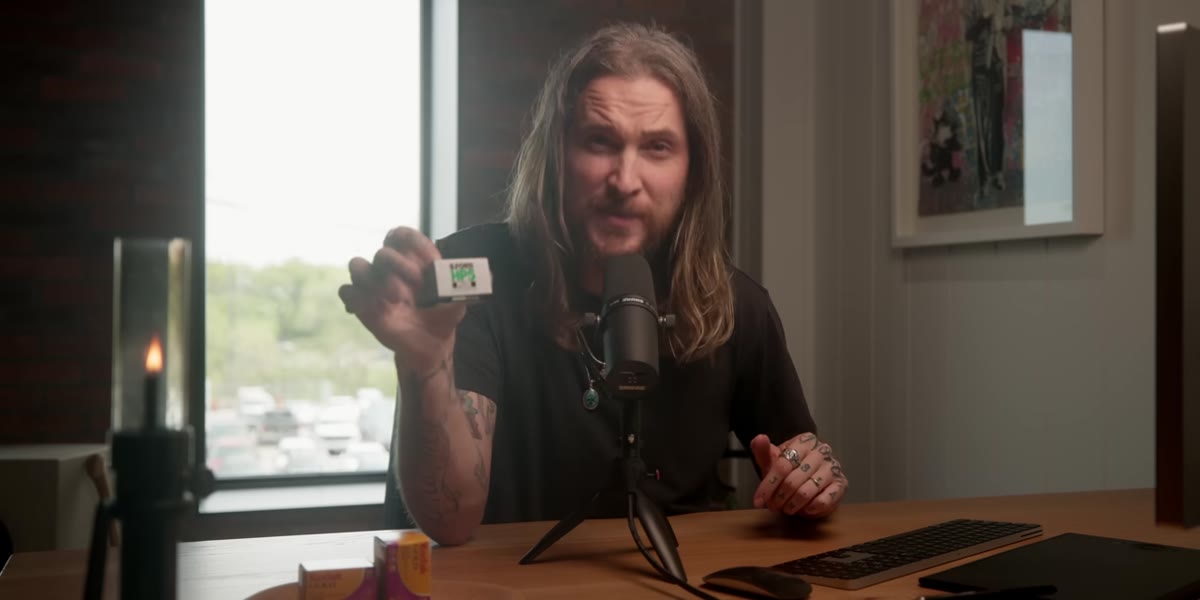 Two rolls of film held up showing 400 and 200 speed
With film, the ISO is baked into the physical roll. You cannot bump it up because the light changed. A 400-speed film like Ilford HP5 handles lower light and gives you more flexibility on overcast days or in shaded streets. A 200-speed stock is better suited to bright, sunny conditions. The decision you make at home is the decision you live with for the entire roll.
Two rolls of film held up showing 400 and 200 speed
With film, the ISO is baked into the physical roll. You cannot bump it up because the light changed. A 400-speed film like Ilford HP5 handles lower light and gives you more flexibility on overcast days or in shaded streets. A 200-speed stock is better suited to bright, sunny conditions. The decision you make at home is the decision you live with for the entire roll.
Before any shoot, ask yourself: Where am I going? What time of day? Will I be indoors or out? Pick the film stock that fits the worst-case lighting scenario you expect to encounter. In Peter’s case, Paris streets in available light pointed clearly toward HP5 400. If you are shooting digitally, use this same logic when deciding your starting ISO before you head out, rather than leaving it on Auto and forgetting about it.
Step 2: Go Out With a Plan, Not Just a Vibe
 Peter walking Paris streets with camera in hand
One of the clearest things Peter articulates is that winging it does not serve film photography well. Because you cannot endlessly review and reshoot, you need a loose framework before you press the shutter even once. What kind of light are you chasing? What subjects feel interesting to you today? Are you working on motion blur, or do you want sharp, decisive-moment frames?
Peter walking Paris streets with camera in hand
One of the clearest things Peter articulates is that winging it does not serve film photography well. Because you cannot endlessly review and reshoot, you need a loose framework before you press the shutter even once. What kind of light are you chasing? What subjects feel interesting to you today? Are you working on motion blur, or do you want sharp, decisive-moment frames?
This does not mean scripting every shot. It means arriving with intention rather than just hoping something interesting happens in front of you. I apply this to digital work too. On my Sunday walks I’ll pick one constraint for the morning, shallow depth of field only, or only shoot in shade, or only include a human element. That single rule forces creative problem-solving in a way that open-ended shooting rarely does.
Step 3: Meter Each Shot and Slow Down Your Composition
 Peter pausing to frame a shot on a Paris street
Film has no histogram. There is no blinking highlight warning. You expose it once and you live with the result. Peter describes taking time to actually meter each frame and think through the composition before committing, which is a habit that digital photography quietly eroded for most of us.
Peter pausing to frame a shot on a Paris street
Film has no histogram. There is no blinking highlight warning. You expose it once and you live with the result. Peter describes taking time to actually meter each frame and think through the composition before committing, which is a habit that digital photography quietly eroded for most of us.
In practice this means pausing before you raise the camera. Read the light, either with a handheld meter or by using your camera’s built-in meter carefully. Consider where the subject sits in the frame. Think about what the background is doing. On film, that few extra seconds of consideration pays off dramatically. On digital, it still pays off. It just feels less urgent because the cost of a bad frame is zero.
Step 4: Treat Every Frame as a Finished Photo, Not a Draft
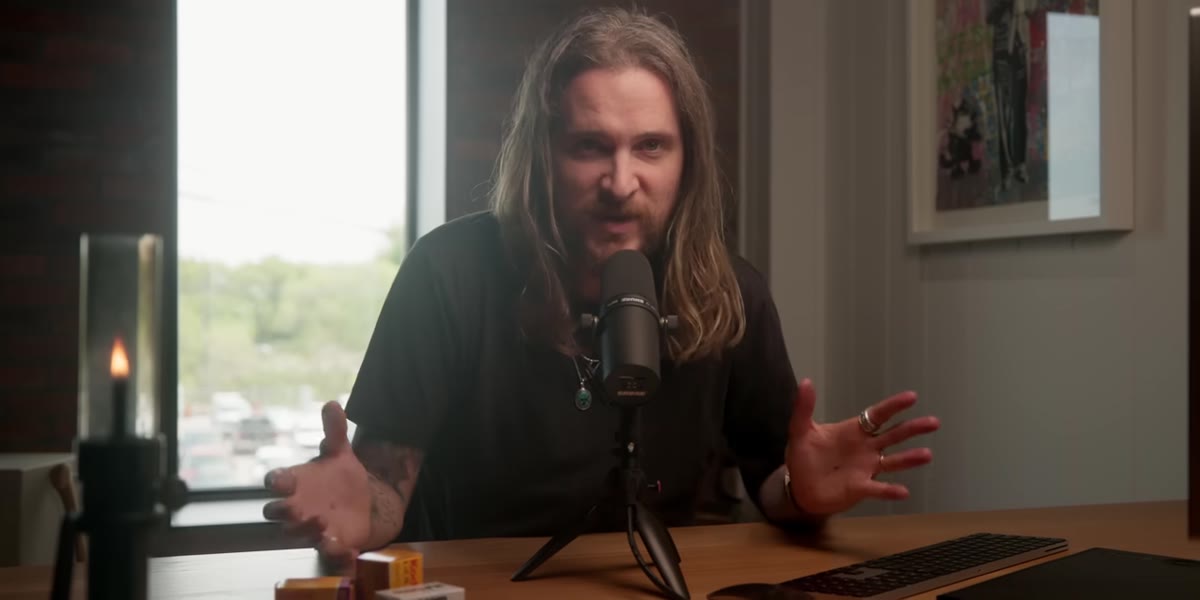 Close discussion of making every shot count on film
Here is the mindset shift that I think matters most. Peter comes back from Paris with 36 shots and says he could comfortably post more than 25 of them. That is an extraordinary hit rate. Compare that to a typical digital travel shoot where you might fire off several hundred frames and struggle to find a handful worth sharing.
Close discussion of making every shot count on film
Here is the mindset shift that I think matters most. Peter comes back from Paris with 36 shots and says he could comfortably post more than 25 of them. That is an extraordinary hit rate. Compare that to a typical digital travel shoot where you might fire off several hundred frames and struggle to find a handful worth sharing.
The difference is not luck. It is the psychological weight of each frame costing something. When every shot counts, you wait longer for the right moment. You reframe instead of just firing again. You walk closer instead of cropping later. Try applying this artificially to your digital camera: set a personal rule that you will only take 36 photos on your next outing. It sounds silly, but the way it changes your attention is immediate.
Step 5: Embrace the Style Shift That Comes With the Process
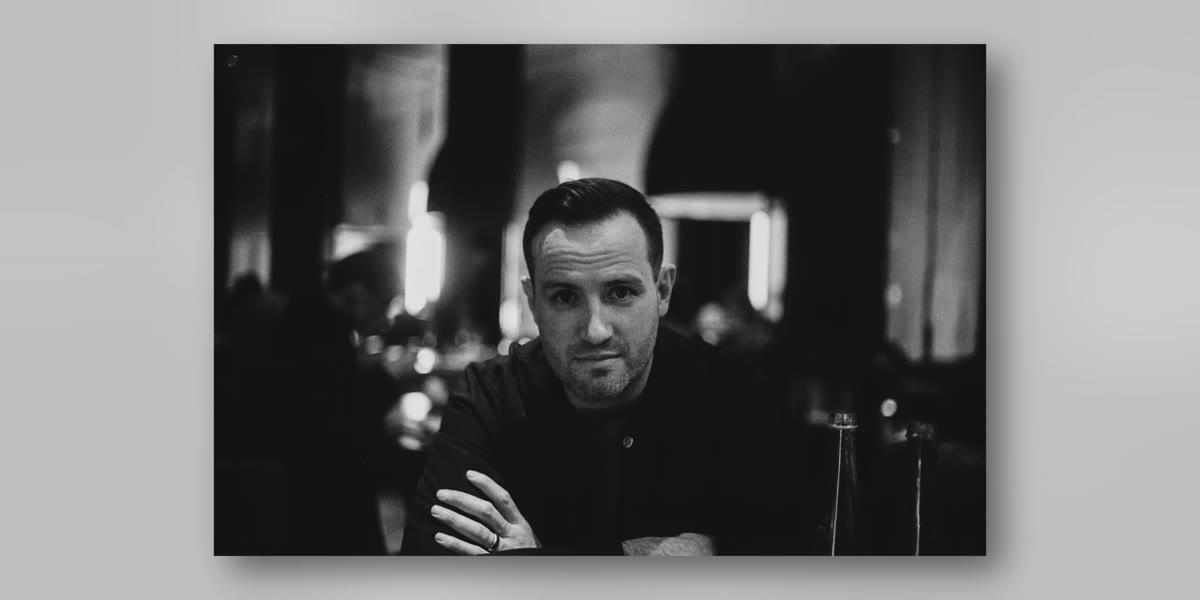 Peter describing how film changes his visual voice
Peter shares something that genuinely surprised him: a close friend looked at the Paris film photos and did not immediately recognize them as his work. The medium had changed his eye. Shooting film pushed him toward storytelling frames, life-in-motion moments, and quieter compositions, things he might have overlooked when working digitally.
Peter describing how film changes his visual voice
Peter shares something that genuinely surprised him: a close friend looked at the Paris film photos and did not immediately recognize them as his work. The medium had changed his eye. Shooting film pushed him toward storytelling frames, life-in-motion moments, and quieter compositions, things he might have overlooked when working digitally.
This is not a flaw. It is the medium working on you the way it is supposed to. When you remove the safety net of unlimited reshoot capacity, your brain starts solving for the shot differently. You look for the story in a frame rather than just the aesthetic surface. If your photography has started to feel repetitive or stale, a constraint like this can genuinely unlock a different way of seeing, no darkroom required.
What I’d Add From My Own Experience
I have been recommending a version of Peter’s 36-frame rule to beginners I work with for a couple of years now, and the most common pushback I hear is: “But what if I miss the shot?” My answer is always the same. Missing a shot you were not ready for is not a failure. It is information about what you need to practice next.
The photographers who grow fastest are not the ones who take the most photos. They are the ones who reflect on each session honestly. Did you miss focus because you were rushing? Were your compositions lazy because you did not bother to move your feet? Film makes that feedback loop impossible to ignore. The artificial constraint does the coaching for you.
If you want to try this without buying a film camera, shoot a full session in JPEG only, no editing, no second chances. You will feel the shift immediately.
The single most important takeaway here is this: limitation is a creative tool, not a punishment. Fewer frames, a fixed ISO, no instant review, these are not handicaps. They are the conditions that produce intentional, story-driven photography. Peter’s Paris roll is proof of that.
Go watch the full breakdown for yourself: Watch the full tutorial on YouTube
Comments
Leave a Comment