I’ve been shooting long enough to know that the shiniest opportunities aren’t always the ones that push your work forward. Last spring, I turned down a brand partnership that looked great on paper. Good money, decent product, but the creative direction would have had me producing images that felt nothing like mine. I said no and spent the next two weeks second-guessing myself constantly.
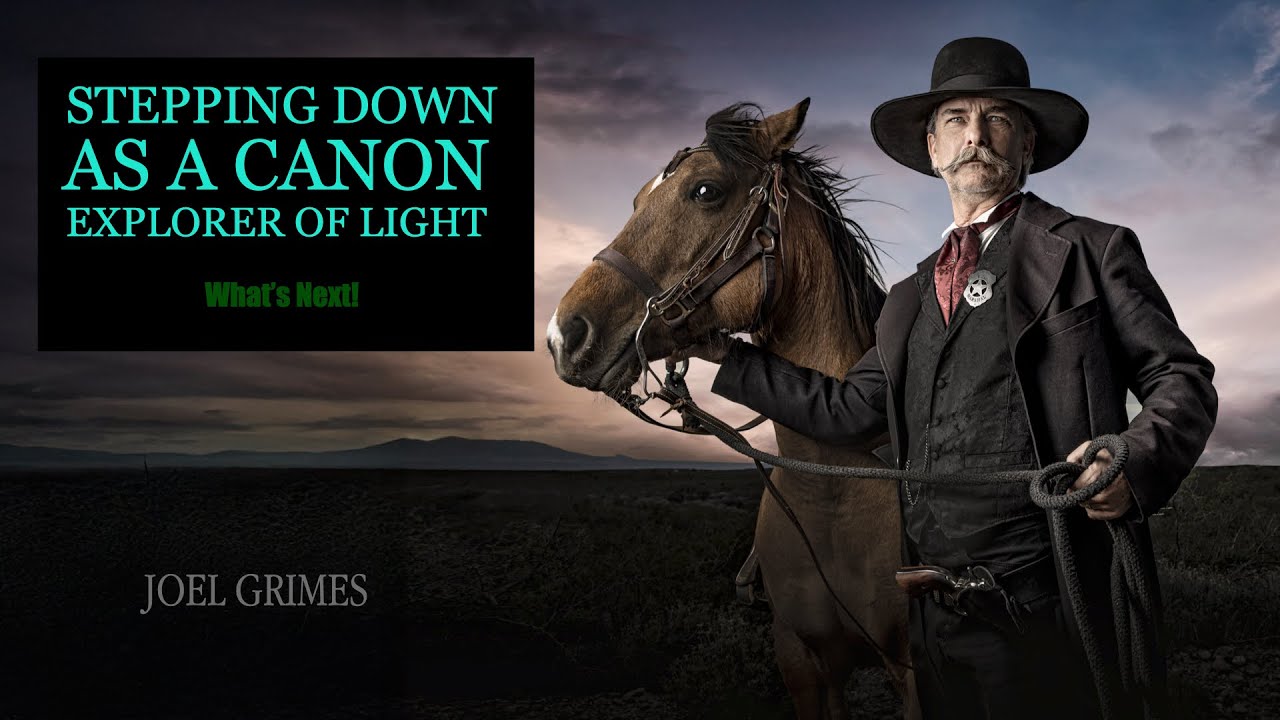
Then I watched Joel Grimes announce that he was stepping down as a Canon Explorer of Light after ten years, and something clicked into place.
In this video, Joel Grimes, one of the most technically accomplished commercial photographers working today, walks through his decision to leave a prestigious, decade-long ambassadorship with Canon. It would be easy to watch this as insider industry news. But if you listen closely, it’s actually a masterclass in how to think about your creative career at any level.
Why Prestige and Creative Freedom Don’t Always Travel Together
Joel’s role as a Canon Explorer of Light gave him access to gear, visibility, and credibility that most photographers would trade a lot to have. And yet, he stepped away. He’s careful not to frame it as a negative break. He’s clear that the relationship was a good one. But he’s equally clear that reaching this next chapter of his creative life required stepping out from under that umbrella.
This is the tension that nobody in photography talks about honestly enough. External validation, whether it’s a brand deal, a title, or a piece of gear, can become a ceiling disguised as a platform. The Explorer of Light designation signals to the industry that you’ve arrived. But Joel’s point, read between the lines, is that arriving can sometimes mean you stop moving.
For beginners especially, this is worth sitting with. The goal isn’t to get sponsored. The goal is to keep making work that means something to you, and to build a career sturdy enough to survive the moments when the external rewards dry up or stop fitting.
The Lesson Hidden in a Decade of Brand Partnership
Ten years is a long time to be aligned with any single identity. Joel reflects on what that journey gave him, and he’s genuinely grateful. The experiences, the community, the doors it opened. He isn’t performing bitterness. He’s modeling something harder to do, which is honest accounting.
What he got: access, credibility, a platform to share technical knowledge with a massive audience. What it cost: some degree of creative flexibility, the freedom to publicly experiment with other tools and workflows without complicating the relationship.
This is the real-world economics of brand ambassadorship that nobody puts in the brochure. When you represent a brand, you represent their narrative too. That’s not inherently bad. But it does mean that a portion of your public creative identity gets tied to someone else’s product roadmap.
For photographers thinking about their first partnership or sponsorship, here’s the practical question Joel’s video surfaces: what would you have to stop saying yes to in order to say yes to this deal? If you can answer that clearly, you can make a smart decision. If you can’t, you’re probably not ready to sign.
What He’s Moving Toward (and Why That Part Matters More)
Joel doesn’t just explain what he’s leaving. He talks about what he’s walking toward, and that’s where the video earns its place as something worth studying.
He talks about creative independence. About being able to follow his curiosity without checking it against partnership obligations. About teaching and sharing on his own terms. He frames this next chapter as expansive rather than diminished, and you can hear that he means it.
This reframe is a technique in itself. When photographers hit a transition, whether it’s losing a client, changing gear systems, or shifting genres, we tend to narrate it as loss. Joel models a different habit, cataloguing what opens up rather than fixating on what closes.
If you’re in a slow season right now, or if something that used to define your work no longer fits, try actually writing out what that transition makes possible. Not what it takes away. I did this after that partnership I turned down last spring. The list was longer than I expected.
Where I’d Push Back, Just a Little
I admire everything Joel puts forward here, and I want to be honest about one place where my own experience nudges back slightly.
Joel’s ability to step away from a decade-long ambassadorship and frame it as creative liberation is partly made possible by the career he built inside that decade. The name recognition, the audience, the body of work. Those don’t evaporate when the title does. For a photographer earlier in their career, a brand relationship can genuinely accelerate things in ways that are hard to replicate on your own.
I’m not saying take every deal. I’m saying that the calculus looks different depending on where you are. If you’re three years in and someone offers you meaningful exposure, the creative compromise might be a fair trade for that season. The key is knowing it’s a trade, going in with eyes open, and not letting the external identity quietly replace the internal one.
The Question That Stays With You
Joel Grimes spent ten years as one of the most recognized names in professional photography, then chose to start something new because the work mattered more than the title.
The single most useful thing this video offers isn’t career advice. It’s a question you should ask yourself regularly: is what I’m attached to still serving the photographer I’m trying to become?
Watch the full video to hear Joel tell this story in his own words. The sincerity in how he delivers it is worth more than any paraphrase I can offer here.
Comments (1)
Tried this technique this morning. Game changer for real.
Leave a Comment