I’ve been shooting portrait sessions for years, and one of the questions I still get tripped up by is this: how much of a “good photo” is technical skill versus personal vision? I had a client session last month where everything was correct on paper — the light was soft, my settings were dialed in, the location was beautiful — and the images still felt flat to me. Not bad. Just… mine-shaped. Like I’d made the same decisions I always make without stopping to ask if they were the right decisions for that person, that day.
That’s exactly why this video hit differently.
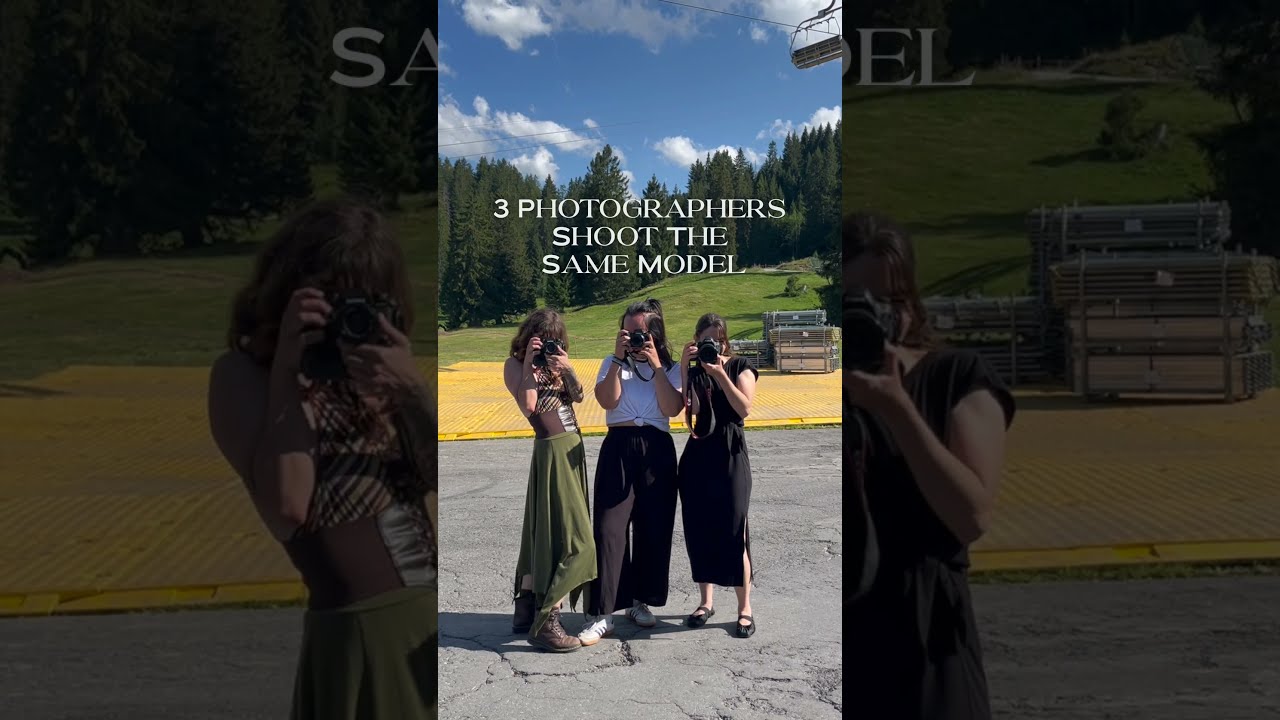
In this Jessica Kobeissi tutorial, Jessica puts three photographers — herself, Jasmin, and Peggy — in front of the same model, Lovis, in the same location. Same light. Same subject. Completely different images. Watching how three working photographers approach identical conditions and walk away with distinct bodies of work is one of the most instructive things I’ve seen for anyone trying to understand what creative voice actually means in practice.
The Setup: Same Conditions, Different Eyes
The premise is simple but the implications are significant. Each photographer gets a set amount of time with Lovis and shoots independently. No collaboration, no peeking at each other’s shots. The location is outdoor and natural, so there’s no studio lighting to hide behind. What separates the images is not gear or luck. It’s decision-making.
This format strips away every excuse. You can’t blame the model. You can’t blame the light. What you’re left with is a direct window into how each photographer thinks.
How Each Photographer Directed the Same Subject
Here’s where it gets genuinely useful for your own practice. Jasmin approaches the shoot with a gentle, detail-oriented direction style. She’s pulling for emotion through small adjustments — a slight turn of the face, a specific quality of gaze. Her images feel intimate and considered. She’s not just placing Lovis in front of something pretty; she’s building a quiet mood.
Peggy leans into a more editorial, stylized approach. Her framing choices are bolder and she seems comfortable with negative space and unconventional composition. She’s working the environment as an active element rather than a background.
Jessica’s own work here is warmer and more connection-forward. You can feel that she’s talking to Lovis throughout, keeping the energy collaborative rather than directed. The result is images that feel alive in a specific way — less posed, more caught.
Three photographers, three completely different relationships with the same person standing in the same place. That’s the lesson.
What This Reveals About Posing and Communication
One of the most practical takeaways from watching these three work is how differently they each use verbal communication to get expressions and posing. Posing is not just about where you put someone’s hands. It’s about what you say between frames.
When you watch Jasmin work, she’s precise and intentional. She gives a direction and waits for it to land. Peggy seems to let Lovis move more freely within a general shape she’s set up, adjusting from there. Jessica keeps a running conversation going, which keeps Lovis’s face relaxed and present.
For anyone who struggles with getting natural expressions from subjects, this comparison is worth studying closely. The photographers aren’t using wildly different posing techniques. The difference is pacing and tone. If you tend to go quiet between shots, your subject will fill that silence with tension. Keeping the exchange going, even small talk, keeps faces soft.
The Honest Limitation I’d Push Back On
I want to be real about where this format has a ceiling, because I think it matters. When you put three photographers in the same location, you’re testing creative instinct but not adaptability. In most real portrait sessions, part of the job is reading a location you’ve never seen and making decisions on the fly about where to move, what to use, what to avoid. The controlled comparison here removes that variable.
I’ve done photo walks in Seattle where the light changed three times in an hour and I had to throw out my original plan entirely. That kind of adaptive thinking is harder to showcase in a side-by-side format. So while this tutorial is genuinely excellent for understanding how vision shapes output, I’d pair it with practice that puts you in less controlled situations too. Give yourself an unfamiliar location and a time limit. See what decisions you make when there’s no one else’s work to compare to.
The Takeaway That Actually Changes How You Shoot
The single most important thing this tutorial illustrates is that there is no neutral way to photograph someone. Every decision you make, from how you frame the shot to what you say between frames to how much space you leave in the composition, is an expression of your point of view. Getting technically correct images is a baseline. Developing a perspective on how you want to see people is the actual work.
If your portraits have been feeling a little interchangeable lately, don’t reach for a new preset or a new lens first. Watch how three different photographers see the same person and ask yourself honestly: which of these approaches is closest to how I actually want to see my subjects? Then shoot toward that.
Watch the full tutorial on YouTube to see the final images from all three photographers side by side. The visual comparison is the whole point, and no amount of description does it justice.
Comments (2)
Bookmarked. Coming back to this one for sure.
Applied this to my portfolio shots and the improvement is noticeable.
Leave a Comment