The Uncomfortable Question I Keep Avoiding
Last month I was shooting a friend for her brand refresh, and about twenty minutes in I realized I was making the same three choices I always make. Same shooting angle, same light side of the face, same “look slightly off camera” direction. She looked great. The photos were fine. But fine isn’t what either of us was hoping for.
That’s the problem no one really talks about: developing a personal style is great, until that style becomes a rut you can’t climb out of mid-shoot.
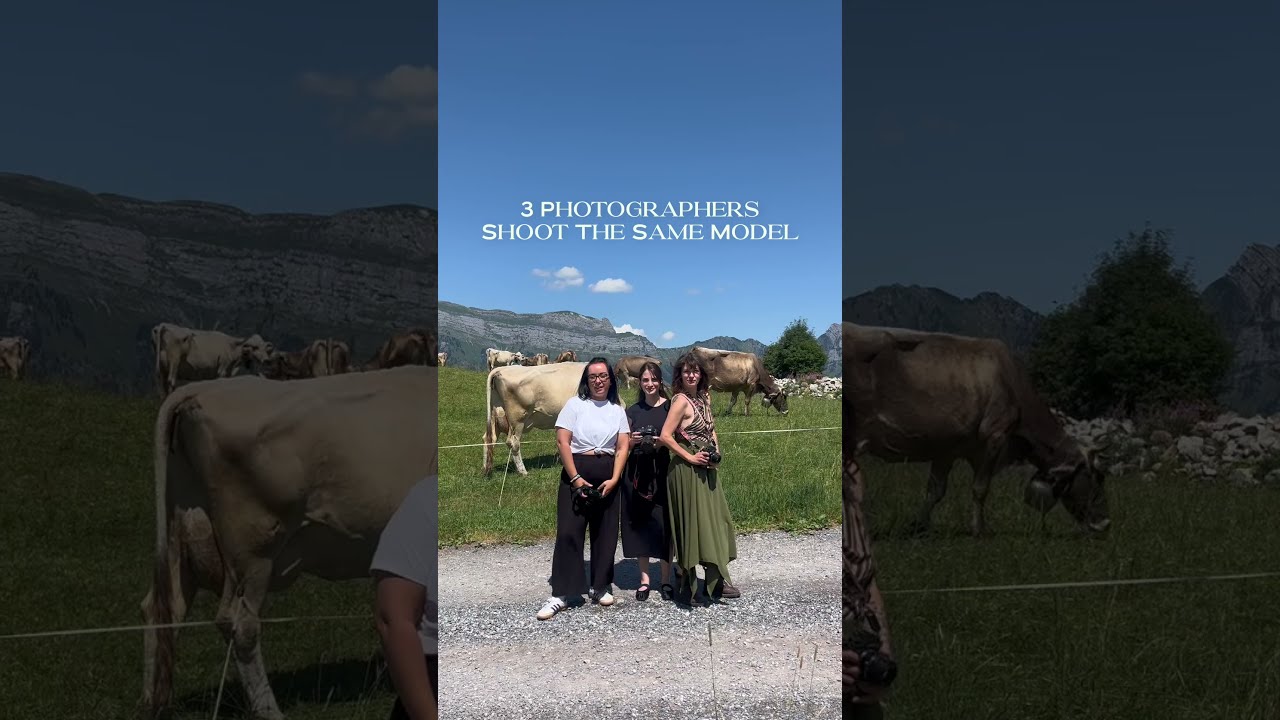
When I found Jessica Kobeissi’s video where she puts three photographers in front of the same model, I watched it twice. Watch the full tutorial on YouTube before or after reading this, because seeing the actual images side by side does something that words alone can’t.
The experiment is simple and kind of genius. Three photographers, one model (Lovis Lena), same location, same time of day. No collaborating, no peeking at each other’s shots. What comes out the other side is a masterclass in how much creative decision-making shapes a final image, even when all the variables look identical on paper.
How Each Photographer Approached the Same Starting Point
Jessica documents Jasmin and Peggy working through their shoots, and the differences show up immediately, before anyone even lifts a camera.
Jasmin comes in with clear direction for her subject. She’s communicating constantly, guiding the model’s chin, hands, and weight shifts in small increments. She’s working the light rather than just standing in front of it, moving herself and the model until the catchlights are exactly where she wants them. Her images land with a clean, editorial quality because she’s making micro-decisions the whole time.
Peggy takes a different approach. She’s more collaborative, letting the model move naturally and capturing within that movement. There’s an ease to her shooting rhythm that results in images with a softer, more candid feeling, even though they’re still clearly directed portraits.
The key technical difference you’ll notice watching: both photographers are working in natural light, but they’re treating it completely differently. Jasmin is positioning so the light wraps around the face and creates dimension. Peggy is letting the light fall more flatly and compensating with her framing and the model’s expression. Neither approach is wrong. They’re just different conversations with the same light source.
The Posing Decisions That Changed Everything
One of the most instructive moments in the video is watching how each photographer handles hands. Hands are where a lot of portraits quietly fall apart, and both Jasmin and Peggy make active choices rather than just leaving the model’s arms at her sides.
Jasmin tends to bring the hands toward the face or upper body, creating visual anchors that draw the eye upward. It’s a classic editorial move, and she executes it by asking the model to place rather than pose, which keeps the gesture from looking stiff.
Peggy works more with negative space around the body, letting the hands fall more naturally and using the model’s body language to carry the frame. The images feel less constructed as a result, which matches her overall aesthetic.
What both photographers do well: they keep the model talking or moving between shots. A static model gets stiff fast. Keeping a light conversation going, or asking them to shake out and reset, resets the energy of the face in a way that reads clearly in the final image.
What the Same Location Reveals About Creative Vision
Here’s the part I kept coming back to. The location doesn’t change. The model doesn’t change. The time of day doesn’t change. And yet if you covered the metadata and showed someone these three sets of photos, they might not guess they came from the same shoot.
That’s not a trick of editing. It’s a product of every small decision made before the shutter fires: where you stand, how close you get, what you ask the model to do with her face, whether you shoot wide and give the environment breathing room or go tight and make it all about expression.
The video makes a strong case that location and light are just raw materials. What you build with them is entirely up to you.
Where I’d Push This Further (Or Do It Differently)
The one thing I’d add if I were running this experiment for my own work: a constraint round. Give all three photographers a single specific directive, like “make her look like she’s waiting for someone” or “shoot only from below shoulder height,” and see how the results diverge from there.
Constraints are actually how I broke out of my own rut with that brand shoot I mentioned. I gave myself one rule: no shots where the subject is looking at the camera. It forced me into angles and moments I wouldn’t have found otherwise, and three of those frames ended up being my client’s favorites.
Watching this video reminded me that personal style isn’t something you protect. It’s something you keep testing.
The One Thing Worth Taking Into Your Next Shoot
Your creative decisions, not your gear and not your location, are what make your photos look like yours. The single most useful exercise you can do is put yourself in the same constraints as another photographer and see where you diverge.
Watch the full tutorial on YouTube to see the actual images from all three photographers side by side. The visual comparison does more for understanding creative vision than any written breakdown can.
Comments
Leave a Comment