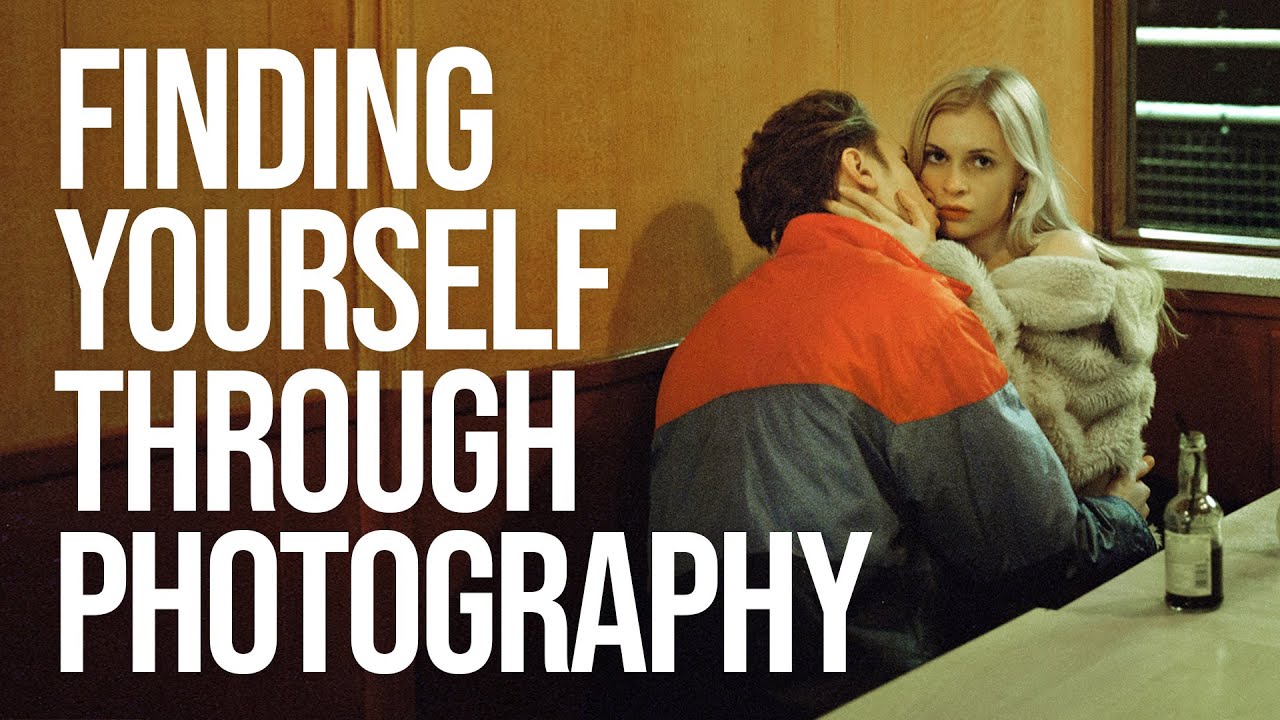
There’s a specific kind of restlessness I feel when I visit a new city and I can’t quite put my finger on what makes it itself. I’ve been in that situation more times than I can count, standing on a corner in some neighborhood I don’t know, camera in hand, unsure whether I’m seeing something worth capturing or just projecting my own expectations onto ordinary streets. It’s not a technical problem. My settings are fine. The light is workable. The problem is I don’t know what I’m looking for yet, and that uncertainty makes me hesitant and slow.
That’s exactly what Watch the full tutorial on YouTube this Sean Tucker conversation with photographer Ian Howorth cracked open for me. Howorth spent his childhood in Peru, his teenage years in Miami, and eventually landed in England, feeling like an outsider in every single one of those places. Rather than waiting until he understood England to photograph it, he made the not-understanding the whole point. The result is a body of work called Arcadia that is quietly stunning, and his approach to building it is something any photographer can apply regardless of their gear or location.
What follows is a breakdown of the mindset and method Howorth describes in the interview, translated into steps you can actually use on your next project.
Step 1: Start Before You Feel Ready
 Ian Howorth speaking candidly about feeling like an outsider in England
Howorth didn’t wait until he had a clear vision for a project before he started shooting. He arrived in England feeling genuinely puzzled by the place, and he pointed his camera at that puzzlement directly. The strangeness of thin grass blades compared to Miami, the compactness of market towns, the particular quality of light, all of it was fair game precisely because it confused him.
Ian Howorth speaking candidly about feeling like an outsider in England
Howorth didn’t wait until he had a clear vision for a project before he started shooting. He arrived in England feeling genuinely puzzled by the place, and he pointed his camera at that puzzlement directly. The strangeness of thin grass blades compared to Miami, the compactness of market towns, the particular quality of light, all of it was fair game precisely because it confused him.
If you’re approaching an unfamiliar subject or location, the gap between what you expect and what you find is not a creative problem to solve before you shoot. It’s the subject itself. Pick up your camera on day one, not after you’ve done your research.
Step 2: Use the Camera as a Tool for Personal Inquiry, Not Just Documentation
 Sean Tucker explaining how photography helped him process his own identity
Both Tucker and Howorth frame their cameras as instruments for working through questions, not just recording answers. Tucker describes using photography to figure out what he’s drawn to in a new environment and what that reveals about himself. Howorth echoes this, treating each frame as a way of asking, “What is this place, and where do I stand in relation to it?”
Sean Tucker explaining how photography helped him process his own identity
Both Tucker and Howorth frame their cameras as instruments for working through questions, not just recording answers. Tucker describes using photography to figure out what he’s drawn to in a new environment and what that reveals about himself. Howorth echoes this, treating each frame as a way of asking, “What is this place, and where do I stand in relation to it?”
Before your next shoot, write down one question you have about your subject. Not a visual question like “how should I frame this,” but a genuine human question like “why does this neighborhood feel tense” or “what are people here proud of.” Let that question guide where you point your lens.
Step 3: Let Your Outsider Perspective Be a Strength, Not a Liability
 Ian Howorth describing his move from Miami to Yorkshire and his sense of difference
Howorth makes a point that I think gets overlooked in conversations about documentary or street photography: people who grew up inside a culture often stop seeing it. They stop noticing the things that are quietly strange or quietly beautiful because familiarity flattens everything. The outsider, by contrast, notices the blades of grass.
Ian Howorth describing his move from Miami to Yorkshire and his sense of difference
Howorth makes a point that I think gets overlooked in conversations about documentary or street photography: people who grew up inside a culture often stop seeing it. They stop noticing the things that are quietly strange or quietly beautiful because familiarity flattens everything. The outsider, by contrast, notices the blades of grass.
This applies even if you’ve lived somewhere your whole life. Go to the part of your city you never visit. Take the bus route you’ve never ridden. Shoot the neighborhood your friends make fun of. You’ll see more because your autopilot is off, and that’s when interesting photographs happen.
Step 4: Commit to Film (or Any Medium That Slows You Down)
 Ian Howorth discussing his transition to film photography for the Arcadia project
Howorth shoots the Arcadia project on film, and while this isn’t a manifesto for abandoning digital, his reason matters. Film slows the process down in a way that forces real commitment to each frame. You can’t spray and pray with 36 exposures. Every click costs something, even if it’s small, and that cost changes how you look before you shoot.
Ian Howorth discussing his transition to film photography for the Arcadia project
Howorth shoots the Arcadia project on film, and while this isn’t a manifesto for abandoning digital, his reason matters. Film slows the process down in a way that forces real commitment to each frame. You can’t spray and pray with 36 exposures. Every click costs something, even if it’s small, and that cost changes how you look before you shoot.
You don’t have to switch formats to get this benefit. Try limiting yourself to 36 shots per session, no matter what you’re shooting on. Or shoot in a single fixed focal length for a month. Artificial constraints break lazy habits.
Step 5: Build a Body of Work Around a Single Throughline
 Sean Tucker describing his immediate reaction to the cohesion of Ian’s Arcadia book
Tucker says he was struck not just by individual images in Arcadia but by the mood running through all of them, a quiet wistfulness, a sense of space, a particular kind of English melancholy. That consistency didn’t happen by accident. Howorth was returning to the same emotional territory repeatedly, which is what makes the work feel like a statement rather than a collection.
Sean Tucker describing his immediate reaction to the cohesion of Ian’s Arcadia book
Tucker says he was struck not just by individual images in Arcadia but by the mood running through all of them, a quiet wistfulness, a sense of space, a particular kind of English melancholy. That consistency didn’t happen by accident. Howorth was returning to the same emotional territory repeatedly, which is what makes the work feel like a statement rather than a collection.
Think about the feeling you want your body of work to carry, not the subject matter but the emotional register. Write it down in three words. Then evaluate every image you shoot against those three words. Does this belong? If not, set it aside regardless of whether it’s technically a good shot.
Step 6: Revisit the Same Places Over Time
 Ian Howorth describing returning to locations across different seasons and years
One session in a place gives you surface impressions. Returning gives you something deeper. Howorth went back to the same corners, villages, and landscapes across seasons and years, and the accumulated visits are what gave him the material to build something coherent.
Ian Howorth describing returning to locations across different seasons and years
One session in a place gives you surface impressions. Returning gives you something deeper. Howorth went back to the same corners, villages, and landscapes across seasons and years, and the accumulated visits are what gave him the material to build something coherent.
On my Sunday morning photo walks here in Seattle, I’ve circled the same waterfront neighborhood dozens of times. The first dozen visits felt redundant. By the time I was on visit twenty, I was seeing things I had genuinely never noticed, small rituals people perform, the way the light changes a specific wall in October versus March. Repetition is a research method.
Step 7: Edit Ruthlessly and Thematically, Not Just Technically
 Sean Tucker discussing the mood and editorial cohesion of the Arcadia project as a whole
Howorth’s book works because someone, at some point, made hard choices about what to leave out. A technically sharp image that doesn’t serve the emotional throughline of the project belongs in the archive, not the book. This is where a lot of photographers stall, treating every good shot as a shot that must be included somewhere.
Sean Tucker discussing the mood and editorial cohesion of the Arcadia project as a whole
Howorth’s book works because someone, at some point, made hard choices about what to leave out. A technically sharp image that doesn’t serve the emotional throughline of the project belongs in the archive, not the book. This is where a lot of photographers stall, treating every good shot as a shot that must be included somewhere.
When editing a project, sort your selects by feeling first, then by technical quality second. Pull out everything that feels tonally consistent, then look for the sharpest, best-exposed images within that group. You’ll end up with fewer pictures and a stronger story.
My Own Addition: Photograph the Questions, Not Just the Answers
I’ve been doing a version of Howorth’s approach for a while now without having a name for it. When I moved to Seattle, I spent the first year shooting things I didn’t understand about the city rather than things I found beautiful. The resulting work is messy and personal and not particularly polished, but it’s honest in a way my more composed travel work isn’t.
The trap I see beginners fall into is waiting until they know enough to shoot with confidence. Howorth’s work is a reminder that productive confusion is a creative state, not a problem to fix before you start. If you feel uncertain about a place or subject, that uncertainty is doing something for your photography that expertise can’t replicate. Work with it.
The single most important lesson from this conversation: your camera is not just a recording device. It is a tool for figuring out what you think and feel about the world around you, and that function is available to you whether you’re in a foreign country or photographing the street where you grew up.
Watch the full tutorial on YouTube and spend time with Ian Howorth’s Arcadia project if you can find it. The images will do more for your understanding of quiet, deliberate documentary photography than most instructional videos ever could.
Comments
Leave a Comment