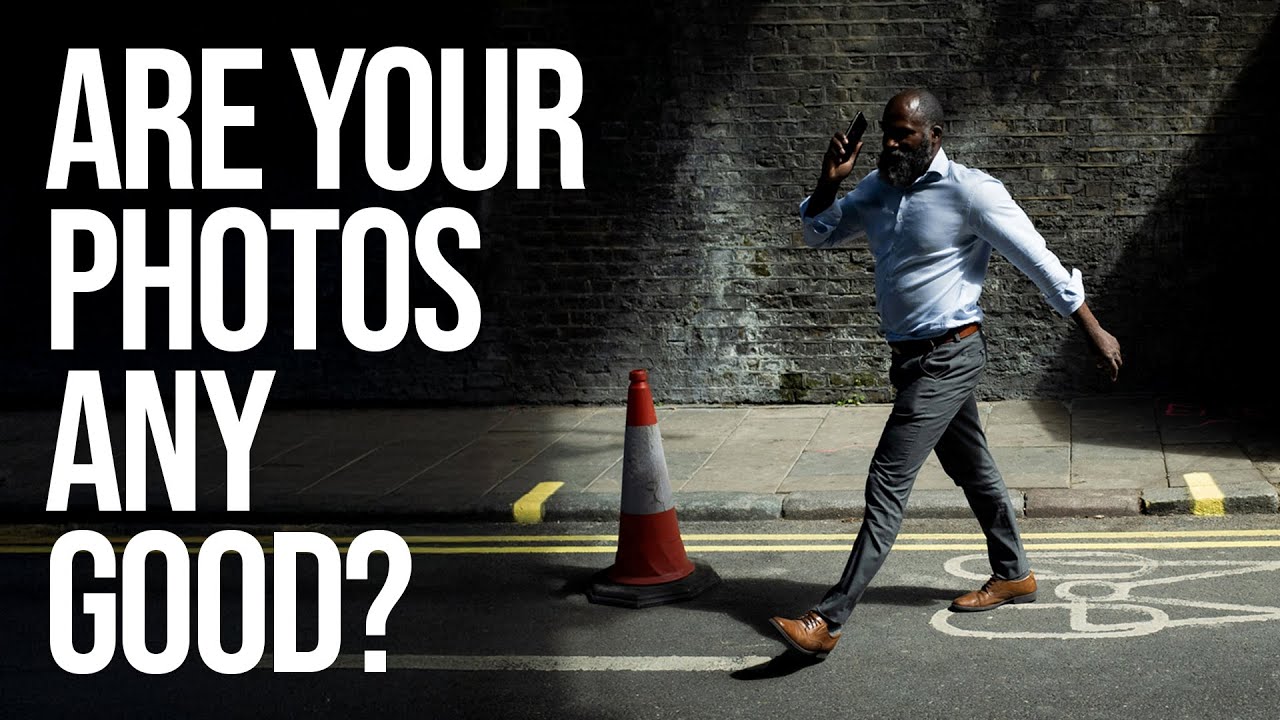
Every Sunday morning I take a photo walk through my neighborhood in Seattle. No agenda, no client brief, no pressure. Just me and whatever camera I grabbed on the way out the door. And for the first two years I was doing this, I kept coming home and feeling vaguely unsatisfied without being able to explain why. The shots weren’t technically wrong. The exposure was fine, the composition was decent. But something wasn’t clicking, and I didn’t know how to name the gap between what I was making and what I actually wanted to make.
When I found this Sean Tucker tutorial, Watch the full tutorial on YouTube, it put language to something I’d been circling around for years. Tucker’s premise is straightforward: the usual ways photographers measure their own progress, whether that’s collecting technical skills, chasing follower counts, or asking peers for feedback, are all fundamentally unreliable. What he offers instead is a self-contained framework built around three words that function as internal checkpoints. The framework applies whether you shoot street, portrait, travel, or anything else. And honestly, it applies whether you’re holding a mirrorless body or, as I’ve proven to myself more than once, a $200 phone.
The core argument Tucker makes early in the video is worth sitting with before you get to the practical steps. He’s not saying feedback is worthless. He’s saying that all art is subjective, which means any opinion you collect, from a professional reviewer, a friend, or a stranger in the comments, is exactly that: opinion, not fact. Even expensive professional reviews reflect the reviewer’s own taste. So if you’re serious about improving, you need a compass that doesn’t depend on someone else’s north.
Step 1: Recognize Why External Validation Fails You
 Tucker explaining why subjective feedback creates contradictory opinions
The first practical step Tucker walks you through is understanding the specific ways outside feedback misleads you, so you can stop reflexively chasing it. He identifies three main sources: professional reviews (expensive and opinionated), friends (biased and inconsistent), and anonymous online comments (take with a very large grain of salt, his words). He also flags a fourth trap: measuring yourself by technical skill accumulation. Knowing every camera setting and every compositional rule doesn’t automatically produce compelling images. Tucker is careful here to point out that some of the most intuitive photographers who shoot on full auto make genuinely arresting work, while some of the most technically proficient photographers produce images that feel hollow.
Tucker explaining why subjective feedback creates contradictory opinions
The first practical step Tucker walks you through is understanding the specific ways outside feedback misleads you, so you can stop reflexively chasing it. He identifies three main sources: professional reviews (expensive and opinionated), friends (biased and inconsistent), and anonymous online comments (take with a very large grain of salt, his words). He also flags a fourth trap: measuring yourself by technical skill accumulation. Knowing every camera setting and every compositional rule doesn’t automatically produce compelling images. Tucker is careful here to point out that some of the most intuitive photographers who shoot on full auto make genuinely arresting work, while some of the most technically proficient photographers produce images that feel hollow.
The action item at this stage is a mindset reset, not a camera setting. Write down the last three times you asked someone if your photography was good. What did you do with the feedback? Did it actually change how you shoot, or did it just temporarily change how you felt about your work? That distinction matters.
Step 2: Introduce the First Word - Intention
 Tucker introducing the concept of intentional image-making
Tucker’s first checkpoint word is intention. The question is direct: are you making the work you actually mean to make? He uses his own street photography as the case study, the kind that features solitary figures moving through urban spaces and strong light-and-shadow contrast. He points out that he started shooting that style intuitively, because he liked how it looked. The shift toward intentional work happened when he started understanding why those images worked, not just that they did.
Tucker introducing the concept of intentional image-making
Tucker’s first checkpoint word is intention. The question is direct: are you making the work you actually mean to make? He uses his own street photography as the case study, the kind that features solitary figures moving through urban spaces and strong light-and-shadow contrast. He points out that he started shooting that style intuitively, because he liked how it looked. The shift toward intentional work happened when he started understanding why those images worked, not just that they did.
To apply this to your own shooting, try this exercise before your next session. Write one sentence describing the image you want to come home with. Not a vague goal like “something moody,” but a specific visual idea: a person in a pool of window light, a wide shot that makes a city feel empty, a macro that shows texture as abstract shape. Then go shoot. Afterward, compare what you made to what you intended. The gap between those two things is your actual curriculum right now.
Step 3: Examine Whether Your Aesthetic Choices Are Deliberate
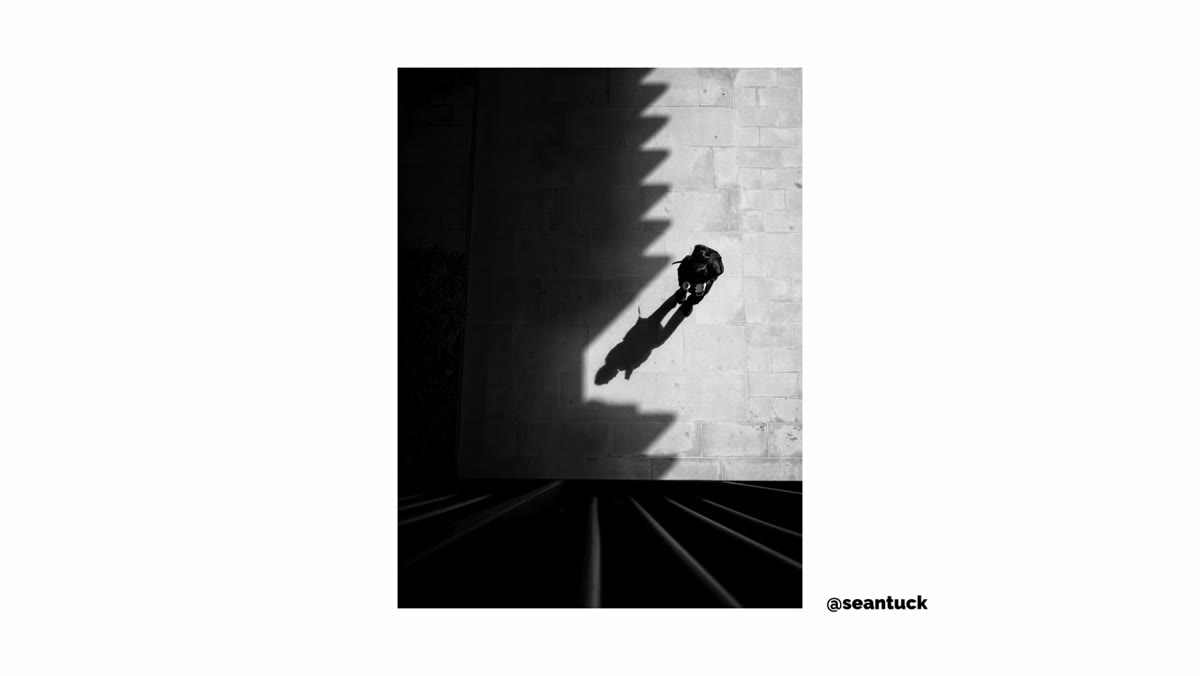 Tucker discussing the graphical, high-contrast look of his street work
Tucker’s second insight within the intention framework is about aesthetic ownership. He describes a specific moment when he realized his images had a strong graphic quality, high contrast, geometric, almost flat in some ways, and he chose to lean into that rather than smooth it out. Early on he wasn’t sure if that look was a stylistic choice or just an accident of how he was processing. Making it deliberate changed everything.
Tucker discussing the graphical, high-contrast look of his street work
Tucker’s second insight within the intention framework is about aesthetic ownership. He describes a specific moment when he realized his images had a strong graphic quality, high contrast, geometric, almost flat in some ways, and he chose to lean into that rather than smooth it out. Early on he wasn’t sure if that look was a stylistic choice or just an accident of how he was processing. Making it deliberate changed everything.
Ask yourself whether the consistent visual qualities in your work are intentional or incidental. If you always shoot with a wide aperture, is that because shallow depth of field serves the story you’re telling, or because you like that your lens can do that? If you tend toward desaturated edits, is that a considered choice or just the preset you defaulted to three years ago? Neither answer is wrong, but knowing which it is puts you in control.
Step 4: Use the Three-Word Framework as a Repeating Review Process
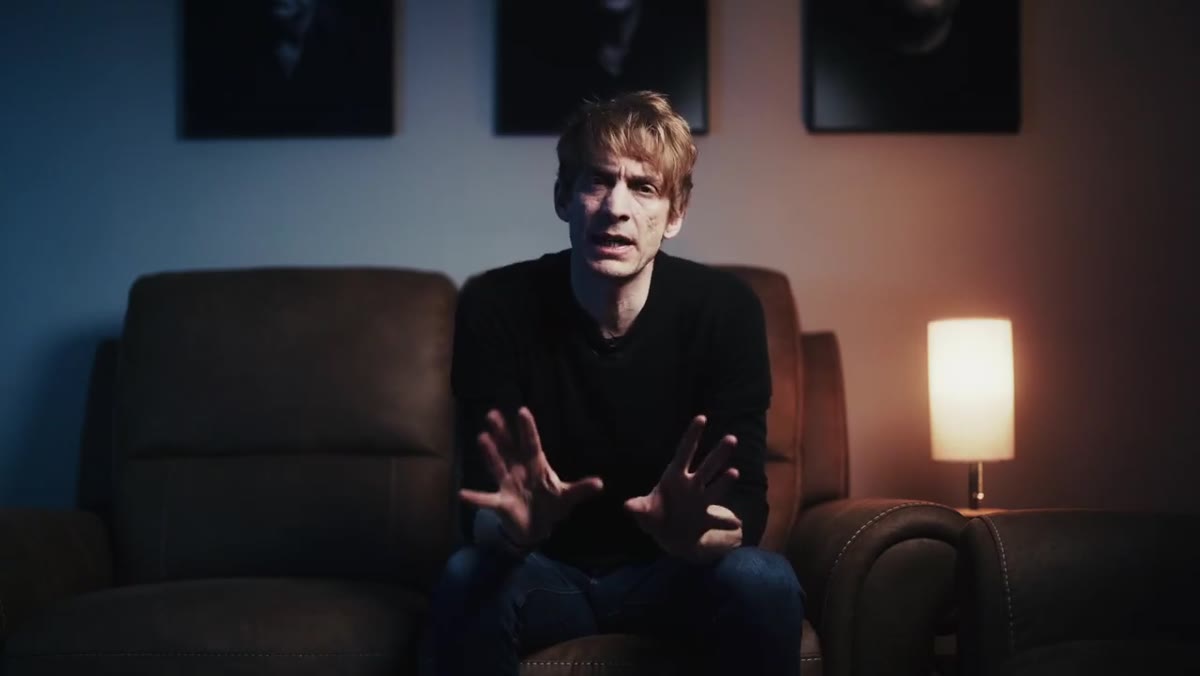 Tucker outlining the three-word structure as a self-assessment method
Tucker frames the three-word system not as a one-time evaluation but as a repeating loop you run against your work regularly. Intention is the first word, and the video continues to build the full framework from there. The structure is designed to work without any external input, which means you can run it on a Tuesday afternoon after a solo shoot, no critique group required.
Tucker outlining the three-word structure as a self-assessment method
Tucker frames the three-word system not as a one-time evaluation but as a repeating loop you run against your work regularly. Intention is the first word, and the video continues to build the full framework from there. The structure is designed to work without any external input, which means you can run it on a Tuesday afternoon after a solo shoot, no critique group required.
Build a simple habit around this: at the end of every shooting session, pull up your selects and ask the intention question first. Did I make what I meant to make? If yes, what specifically made that possible? If no, where did the drift happen - in the field, in the edit, or back at the idea stage before you even left? Keeping a short shooting journal, even just a few notes in your phone, makes this review process much faster over time because you start to see your own patterns.
What I’d Add From My Own Experience
Tucker’s framework is brilliant because it takes the measurement of creative progress out of other people’s hands and puts it back in yours. The one thing I’d layer on top of it is the value of shooting the same subject repeatedly over time. I’ve photographed the same corner of Pike Place Market so many times that I can now see, concretely, whether my intention and my output are converging or still diverging. Repetition gives you a controlled variable. When the location doesn’t change, the only thing that’s changing is your eye and your decision-making, which makes growth much easier to spot.
I’d also push back gently on the idea that technical skills don’t matter at all. Tucker doesn’t quite say that, but it’s easy to read him that way. What he’s actually saying is that technical skill in isolation isn’t a useful measure of artistic quality. Technique in service of intention is a different thing entirely, and it’s worth pursuing with real rigor.
The single most useful thing Tucker says in this video is that the number one sign of a good artist is that they are making the work they intend to make. Not work that other people like. Not technically perfect work. Work they mean. Start measuring yourself against that standard and the question “am I any good?” starts to feel a lot less urgent.
Watch the full tutorial on YouTube to hear Tucker walk through all three words and see how he applies this framework to his own portfolio.
Comments (1)
Simple but effective. Sometimes that's all you need.
Leave a Comment