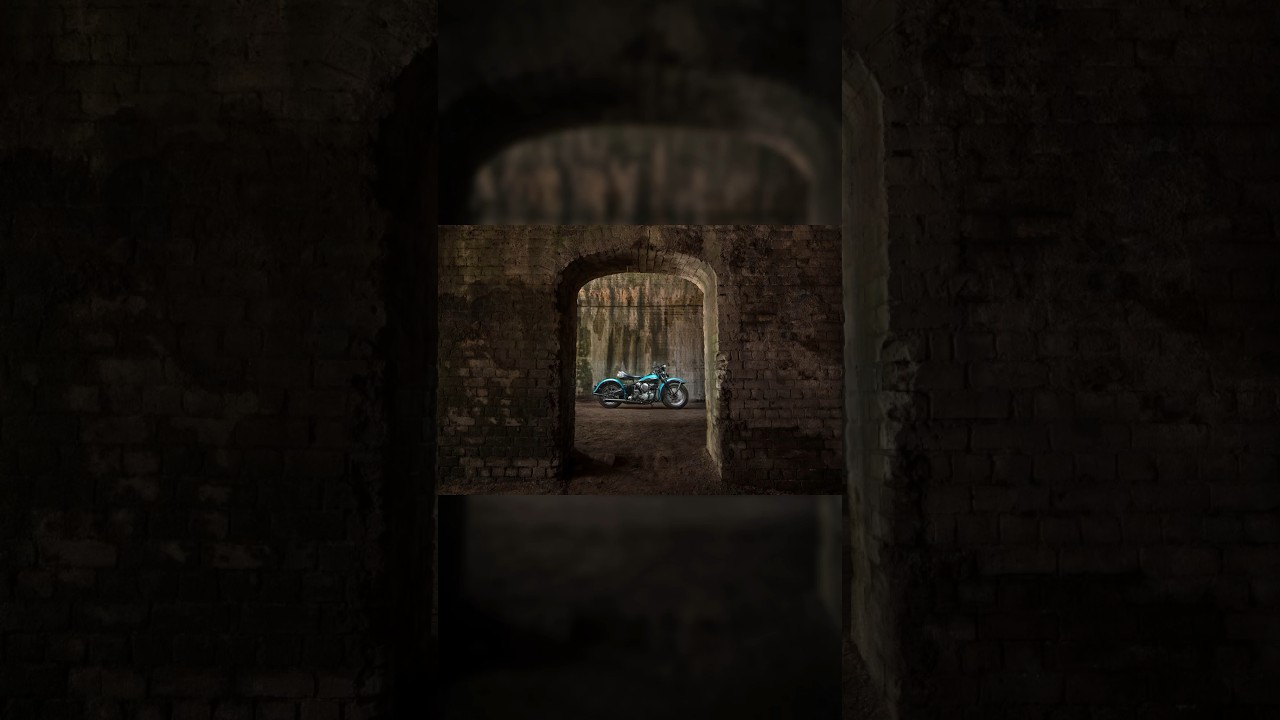
I’ve been doing Sunday morning photo walks for years now, and I’ll be honest: for a long time, I was mostly just reacting. I’d see something interesting, raise the camera, and hope the frame felt right. Sometimes it did. Often it didn’t. I’d get home, cull through a hundred shots, and find maybe three that actually held up — and I couldn’t always explain why those three worked and the others didn’t.
That’s the gap this tutorial fills.
In this Joel Grimes tutorial, he walks through the compositional thinking he brings to creative projects — specifically how to build a frame with intention rather than instinct. Grimes is known for his high-contrast commercial work, but what comes through here is how systematic his eye actually is. This isn’t about rules for rules’ sake. It’s about giving yourself a repeatable process so composition stops being a guessing game.
Why Most Beginners Compose by Accident
The default way most of us learn composition is by hearing “rule of thirds” once and then kind of vaguely gesturing our subjects toward an imaginary grid forever. That’s not a framework. That’s a superstition.
What Grimes is getting at is something more deliberate: before you shoot, you should be able to identify what the frame is doing. Where is the eye entering? Where is it going? What’s stopping it from falling out the side? These aren’t questions most beginners ask because no one frames it that way early on. Once you start asking them, though, you can’t stop.
The Core of His Compositional Approach
Grimes builds his compositions around clear visual hierarchy. The idea is that every element in your frame should serve one of three roles: it’s either the primary subject, a supporting element that leads attention toward the subject, or background that provides context without competing.
The practical step he emphasizes is this: before you even think about your camera settings, identify your anchor point. That’s the single element in the scene that everything else will be organized around. It might be a person’s face, a building facade, a splash of color — doesn’t matter. Pick one thing and make every other decision serve it.
From there, he works with leading lines deliberately. Not just “oh there’s a road, I’ll stand at the end of it” — but actively scanning the scene for any diagonal, curve, or edge that can pull the eye from the frame’s entry point toward the anchor. If a line leads somewhere unhelpful, he repositions. He’ll take multiple steps left or right, adjust his height, change his distance to the subject. The goal is to get those environmental lines working for the anchor, not just existing alongside it.
He also talks about negative space as an active tool, not an afterthought. Leaving breathing room on one side of your subject isn’t just aesthetic preference — it’s directional. It tells the viewer where to look next, or where the subject is heading. A tight crop with no negative space can feel powerful or suffocating depending on what you’re going for. Knowing which one you want before you shoot is the difference between a choice and an accident.
The Framing Pass He Does Before Every Shot
One thing I found genuinely useful: Grimes describes doing a deliberate scan of the frame edges before he releases the shutter. He’s checking for distractions — anything bright, busy, or oddly cropped at the border that could pull attention away from the anchor. A blown-out patch of sky in the corner. A pole growing out of someone’s head. A hand getting clipped at the wrist.
This takes maybe three seconds once it’s a habit. Most of us skip it entirely and catch the distractions in post, when it’s too late to fix them without a difficult crop or clone. Making it a pre-shot ritual changes your keeper rate noticeably.
Where I’d Push This Further (or Apply It Differently)
This framework is almost perfectly suited to planned, setup-style shooting — portraits, architecture, travel scenes where you have a moment to think. Where it gets harder is in fast, documentary-style work. Street photography, candids, events where the moment evaporates in a second.
My approach there is to pre-compose when possible. If I’m on a photo walk and I see a great patch of light or an interesting background, I’ll set up the frame first — anchor point identified, leading lines considered, edges checked — and then wait for something or someone to move into it. You’re essentially laying a compositional trap. It’s not always possible, but when it works, you get the spontaneity of the moment inside a deliberately constructed frame. That’s the best of both worlds.
The Single Thing That Changes Your Work Fastest
If you take one thing from Grimes’s approach, make it this: name your anchor before you shoot. Out loud if you have to. Just that one habit forces every other decision to become intentional rather than reactive, and your frame starts making sense in a way that “trying to follow the rule of thirds” never quite delivers.
Watch the full tutorial to see Grimes demonstrate this visually in real time — the way he physically moves around a scene to test compositions is something written instructions can only get you so far on.
Comments
Leave a Comment