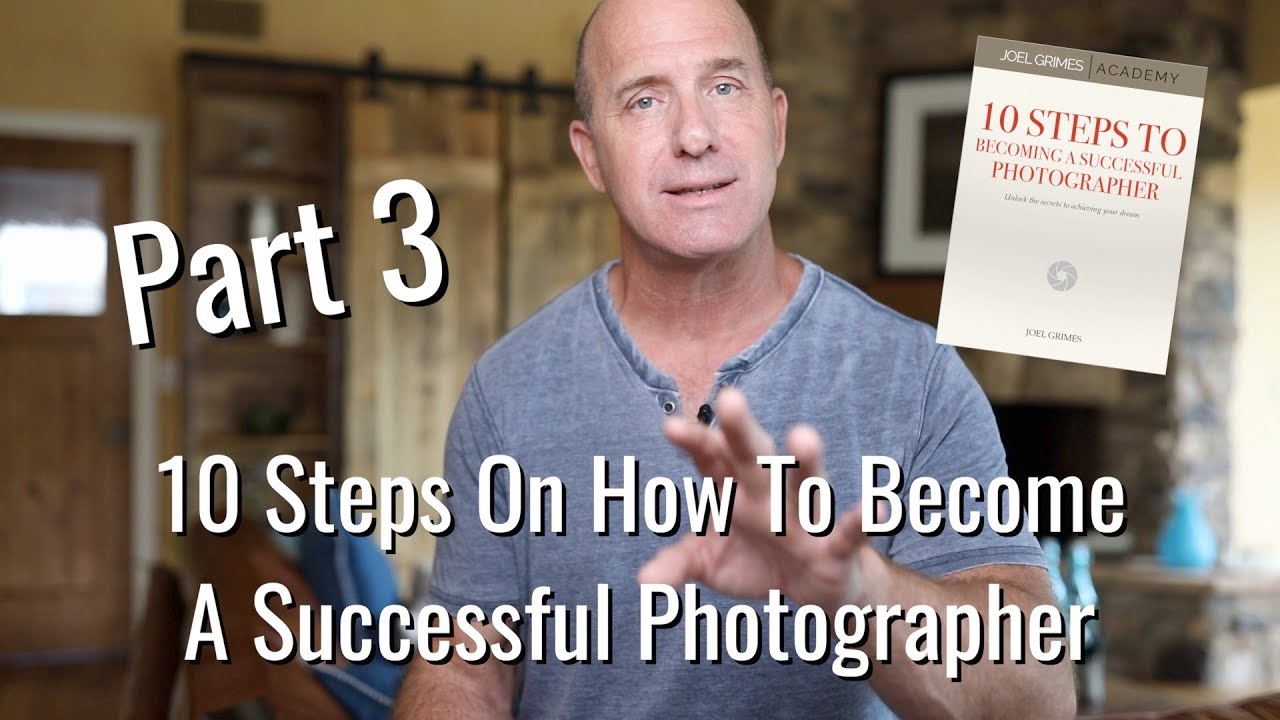
I’ll be honest with you: when I first started teaching photography, I assumed the hardest part would be explaining things like exposure triangles or composition rules. What I didn’t expect was how often students would ask me questions I had no good answer to, things like “How do I actually get clients?” or “Why do I feel so stuck even though my photos are getting better?” Those aren’t technical questions. They’re business and mindset questions, and most photography education just skips right past them.
That’s why I keep coming back to Joel Grimes’ tutorial series on becoming a successful photographer. Watch the full tutorial on YouTube and you’ll see pretty quickly that this isn’t a gear video or a Lightroom walkthrough. It’s a frank conversation about the thinking patterns that actually determine whether a photographer builds a career or stays stuck. Part three of the series focuses on two specific steps: understanding human behavior when pitching clients, and staying creatively driven rather than money-driven. Both of these hit me somewhere uncomfortable, which is usually a sign they’re worth writing about.
If you’ve ever made a cold call that went badly and then avoided making another one for six months, this breakdown is for you.
Step 1: Recognize That Being Good at Photography Is Not Enough
 Joel speaking directly to camera about early photography mindset
Grimes opens by admitting something that took him years to unlearn: he believed that if he just got technically excellent at photography, success would follow naturally. That assumption quietly derails a lot of talented photographers. Technical skill earns you the right to be taken seriously, but it doesn’t get you in the door. Knowing your craft is table stakes. The work of building a career happens in conversations, relationships, and how you show up when things feel awkward or uncomfortable.
Joel speaking directly to camera about early photography mindset
Grimes opens by admitting something that took him years to unlearn: he believed that if he just got technically excellent at photography, success would follow naturally. That assumption quietly derails a lot of talented photographers. Technical skill earns you the right to be taken seriously, but it doesn’t get you in the door. Knowing your craft is table stakes. The work of building a career happens in conversations, relationships, and how you show up when things feel awkward or uncomfortable.
If you’re at the point where your images are solid but your bookings are inconsistent, that gap is almost never about your photography. It’s about the business layer you haven’t fully developed yet. Grimes is refreshingly direct about this, and it reframes the rest of the steps that follow.
Step 2: Understand What the Person You’re Pitching Is Actually Dealing With
 Joel listing pressures faced by art directors and photo editors
Before you make a single pitch, take five minutes to think about the world the other person is living in. An art director at an ad agency is managing a boss with high demands, a limited budget, impossible deadlines, and probably some version of a crisis on any given day. A photo editor is juggling multiple shoots, contributor relationships, and editorial calendars simultaneously. These are not people who are sitting around hoping a photographer will call.
Joel listing pressures faced by art directors and photo editors
Before you make a single pitch, take five minutes to think about the world the other person is living in. An art director at an ad agency is managing a boss with high demands, a limited budget, impossible deadlines, and probably some version of a crisis on any given day. A photo editor is juggling multiple shoots, contributor relationships, and editorial calendars simultaneously. These are not people who are sitting around hoping a photographer will call.
Grimes suggests reframing the cold call entirely. Instead of thinking “I need to convince them to hire me,” shift to “I need to understand the problems they’re trying to solve.” That one change in perspective makes the conversation less about selling and more about listening. And it also takes some of the personal sting out of a rough reception, because a curt response at 3pm on a Tuesday probably has nothing to do with you or your work.
Step 3: Position Yourself as a Problem-Solver, Not a Salesperson
 Joel explaining the mindset of showing up to help, not to sell
The practical script Grimes suggests is simple: introduce yourself, say you’d like to come in and show your portfolio, and make clear you’re interested in understanding their needs, not just landing a job. The framing is “I’m here to make your life easier,” and that’s not a manipulation tactic. It’s actually true. A reliable, talented photographer who communicates well and delivers on time genuinely does make a client’s life easier.
Joel explaining the mindset of showing up to help, not to sell
The practical script Grimes suggests is simple: introduce yourself, say you’d like to come in and show your portfolio, and make clear you’re interested in understanding their needs, not just landing a job. The framing is “I’m here to make your life easier,” and that’s not a manipulation tactic. It’s actually true. A reliable, talented photographer who communicates well and delivers on time genuinely does make a client’s life easier.
When you walk into a portfolio showing or a discovery call with that mindset, the energy is different. You’re not auditioning. You’re consulting. That shift tends to make you calmer, more curious, and frankly more attractive to work with. Clients hire people they trust, and trust starts with the sense that someone is thinking about their problems, not just their own invoice.
Step 4: Don’t Let a Bad First Interaction Write Someone Off Permanently
 Joel describing rude contacts who later became long-term clients
This is the part that genuinely surprised me when I first heard Grimes say it. Some of the people who were the coldest or most dismissive on initial contact ended up becoming long-term clients he worked with for ten or fifteen years. That’s not because he kept bothering them until they gave in. It’s because he showed up consistently as someone trying to help, and eventually there was a moment when they needed exactly what he offered.
Joel describing rude contacts who later became long-term clients
This is the part that genuinely surprised me when I first heard Grimes say it. Some of the people who were the coldest or most dismissive on initial contact ended up becoming long-term clients he worked with for ten or fifteen years. That’s not because he kept bothering them until they gave in. It’s because he showed up consistently as someone trying to help, and eventually there was a moment when they needed exactly what he offered.
The takeaway here is practical: keep a simple follow-up system. A spreadsheet, a CRM, even a notes app will do. Log the contact, the date, and the general temperature of the conversation. Give it a few weeks or a month and reach out again, briefly, with something useful: a new project you completed, a relevant piece of your work, or just a check-in. Persistence done respectfully is not the same as pestering.
Step 5: Stay Driven by the Creative Process, Not the Payday
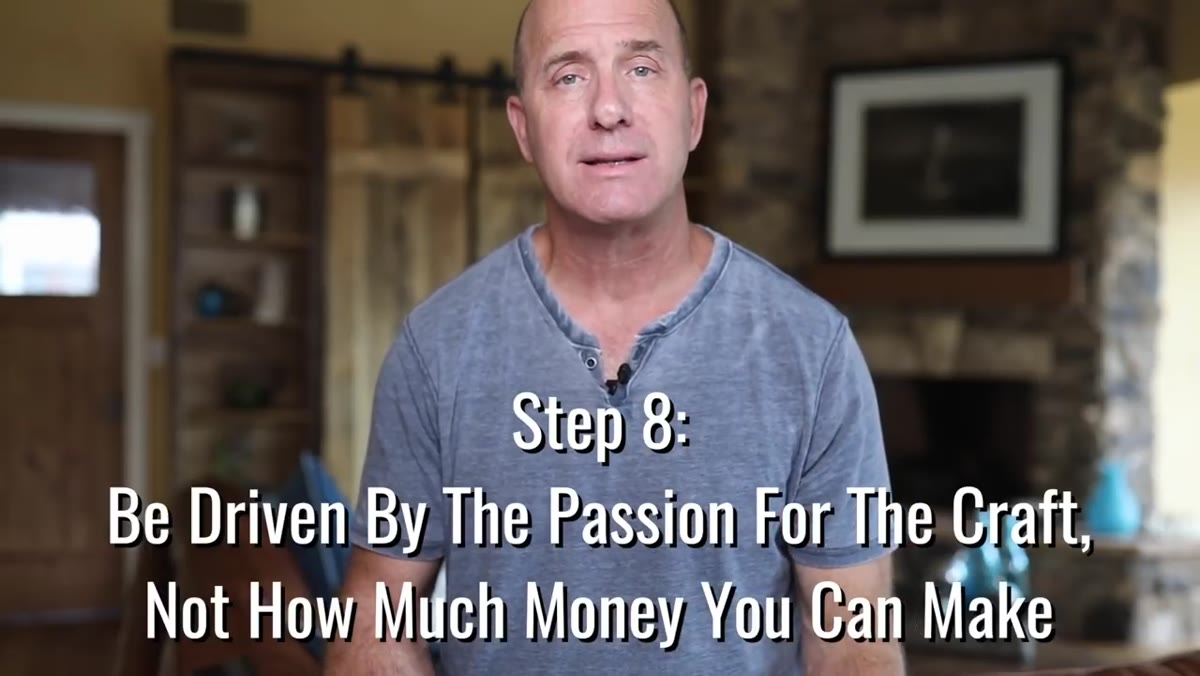 Joel transitioning to step eight about creative motivation
Grimes introduces his eighth step in the series here: be driven by the creative process rather than how much money you can make. This one requires some honesty with yourself. If you find yourself only excited about assignments with big budgets, or only motivated when a project is high-profile, that’s worth examining. The photographers who build long careers are almost always the ones who are genuinely obsessed with making images, not just with getting paid to make them.
Joel transitioning to step eight about creative motivation
Grimes introduces his eighth step in the series here: be driven by the creative process rather than how much money you can make. This one requires some honesty with yourself. If you find yourself only excited about assignments with big budgets, or only motivated when a project is high-profile, that’s worth examining. The photographers who build long careers are almost always the ones who are genuinely obsessed with making images, not just with getting paid to make them.
That creative obsession is also what makes your work distinctive over time. When you’re shooting because you love solving visual problems, you experiment more, you take more risks, and your portfolio develops a genuine point of view. That point of view is what makes a client remember you, choose you, and come back to you.
What I’d Add From My Own Experience
The human behavior piece Grimes describes applies well beyond cold calls. I think about it every time I’m on a shoot with a client who seems distracted or difficult. Nine times out of ten, something is going on that has nothing to do with me. Maybe they’re stressed about the final product, maybe something went sideways earlier that day. When I remember that my job is to make things easier for them, I stop taking it personally and start asking better questions. That shift has salvaged more than a few tricky shoots.
The creative motivation point hits differently the longer you’re in this industry. I still go on a photo walk every Sunday morning, and not because I’m building content or working on a project. I go because I like looking at the world through a viewfinder. That habit keeps the work feeling like something I chose, not something that’s happening to me.
The single most important idea from this tutorial is the reframe: you are not calling to ask for something. You are calling to offer a solution to someone who probably needs it. Carry that into every pitch, every follow-up, every client relationship, and it changes how you show up.
Watch the full tutorial on YouTube to hear Grimes walk through all of this in his own words. He’s been doing this for decades and he earns every bit of the directness he brings to it.
Comments (1)
Quality content like this is rare. Keep it up.
Leave a Comment