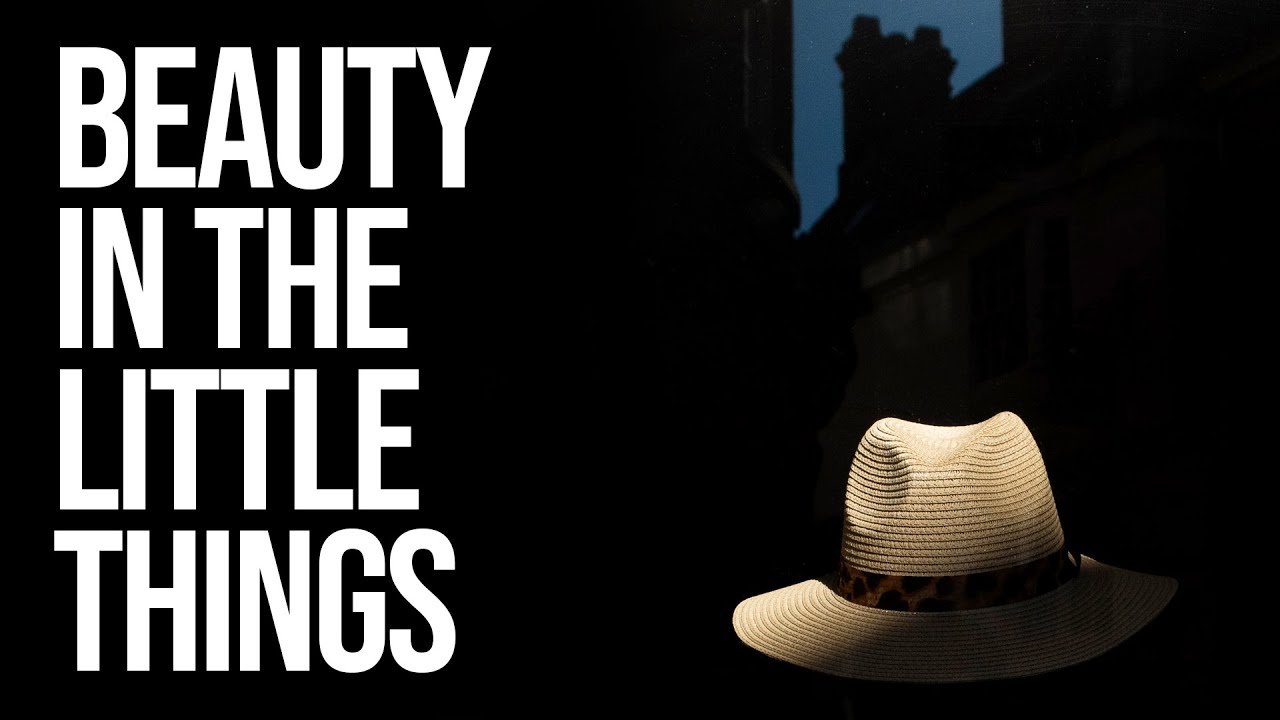
Every Sunday morning I do a photo walk around Seattle, rain or shine. And for the first couple of years, I came home frustrated on the weeks when the streets were quiet. No interesting faces, no decisive moments, nothing that felt like “real” street photography. I’d basically trained myself to believe that people were the whole point, and without them I had nothing to shoot.
That belief cracked wide open when I watched Sean Tucker’s tutorial on shooting street photography without people in the frame. Watch the full tutorial on YouTube - it’s worth your full attention. Tucker makes the case that the traditional definition of street photography is unnecessarily narrow, and that the objects, textures, light, and remnants humans leave behind are just as capable of telling a compelling urban story as any candid portrait. Once I started applying his framework, my quiet Sunday mornings became some of my most productive shooting sessions.
What I want to do here is walk you through the core technique Tucker lays out, with enough detail that you can apply it on your next walk without needing to pause and rewind constantly.
Step 1: Expand Your Definition of What Street Photography Is
 Sean Tucker asking whether street photography requires people
Before you can photograph this way, you have to give yourself permission to do it. Tucker argues that street photography doesn’t have to mean candid portraits or busy intersections. His working definition covers any candid image taken on the street, which opens the door to textures, colors, graphic shapes, light-and-shadow patterns, and the small overlooked details that most people walk past without registering.
Sean Tucker asking whether street photography requires people
Before you can photograph this way, you have to give yourself permission to do it. Tucker argues that street photography doesn’t have to mean candid portraits or busy intersections. His working definition covers any candid image taken on the street, which opens the door to textures, colors, graphic shapes, light-and-shadow patterns, and the small overlooked details that most people walk past without registering.
The practical shift here is mental. On your next walk, don’t just scan for people. Start asking yourself: what has someone left here? What does this surface or object tell me about the humans who use this space? You’re not abandoning street photography. You’re widening the lens.
Step 2: Study the Still Life Tradition for Compositional Confidence
 Tucker referencing historical still life photographers including Edward Weston
Tucker grounds this approach in a long photographic history. He points to photographers like Edward Weston, who used dramatic lighting to reveal sensuous, almost abstract shapes in something as ordinary as a bell pepper, and Joel Meyerowitz, who later in his career turned away from busy streets and photographed simple inanimate objects against plain backgrounds with extraordinary results.
Tucker referencing historical still life photographers including Edward Weston
Tucker grounds this approach in a long photographic history. He points to photographers like Edward Weston, who used dramatic lighting to reveal sensuous, almost abstract shapes in something as ordinary as a bell pepper, and Joel Meyerowitz, who later in his career turned away from busy streets and photographed simple inanimate objects against plain backgrounds with extraordinary results.
Why does this matter practically? Because studying still life photography teaches you to think carefully about light direction, background simplicity, and the sculptural quality of everyday objects. Before your next walk, spend 20 minutes looking at Weston’s pepper series or Meyerowitz’s Morandi-influenced work. You’ll start seeing ordinary street objects as subjects with form, texture, and weight rather than just clutter.
Step 3: Look for Objects That Imply a Human Presence
 Tucker discussing remnants and remains of human activity in urban spaces
This is the core creative idea in Tucker’s approach, and it’s the one that changed my shooting most directly. The goal isn’t just to photograph a pretty object. It’s to find objects that raise questions. Who left this here? What were they doing? What’s about to happen?
Tucker discussing remnants and remains of human activity in urban spaces
This is the core creative idea in Tucker’s approach, and it’s the one that changed my shooting most directly. The goal isn’t just to photograph a pretty object. It’s to find objects that raise questions. Who left this here? What were they doing? What’s about to happen?
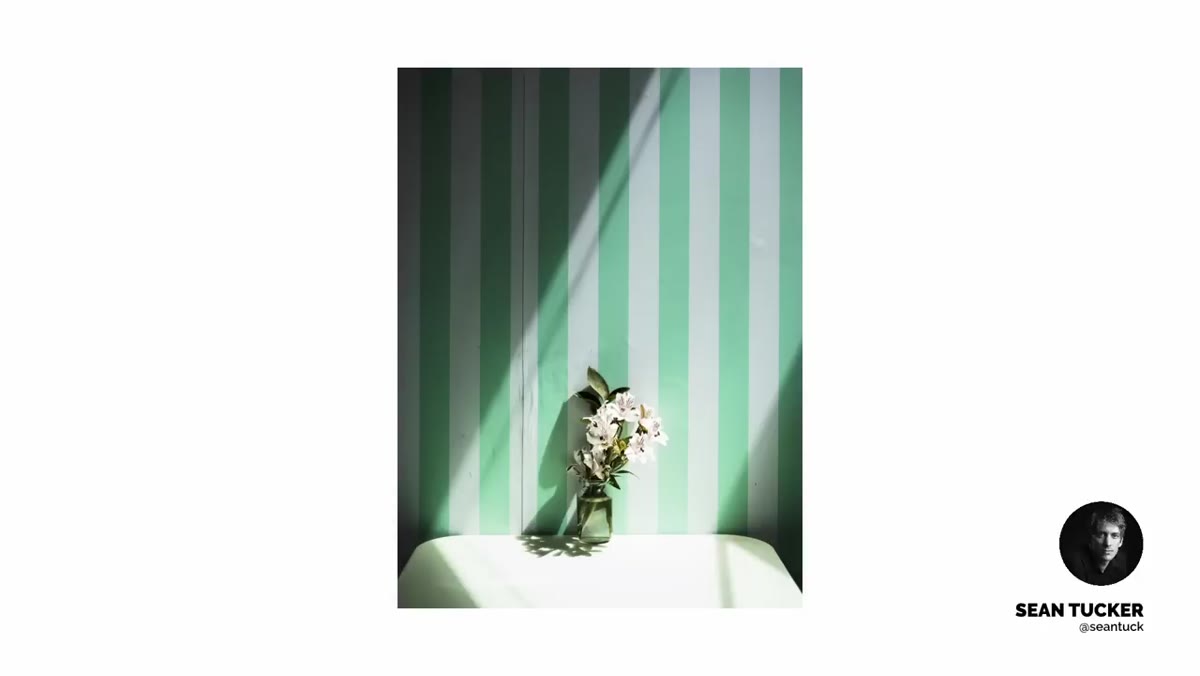
Tucker describes a shot he took outside a café in Soho: an empty table, a vase of flowers, a shaft of sunlight cutting across the striped siding behind it. No people. But the image hums with anticipation because you feel someone is about to sit down. That sense of implied narrative is what separates an interesting people-free street photo from a snapshot of random stuff. Ask yourself before you press the shutter: does this object have a story attached to it, even if the person who made that story is gone?
Step 4: Use Light as Your Primary Storytelling Tool
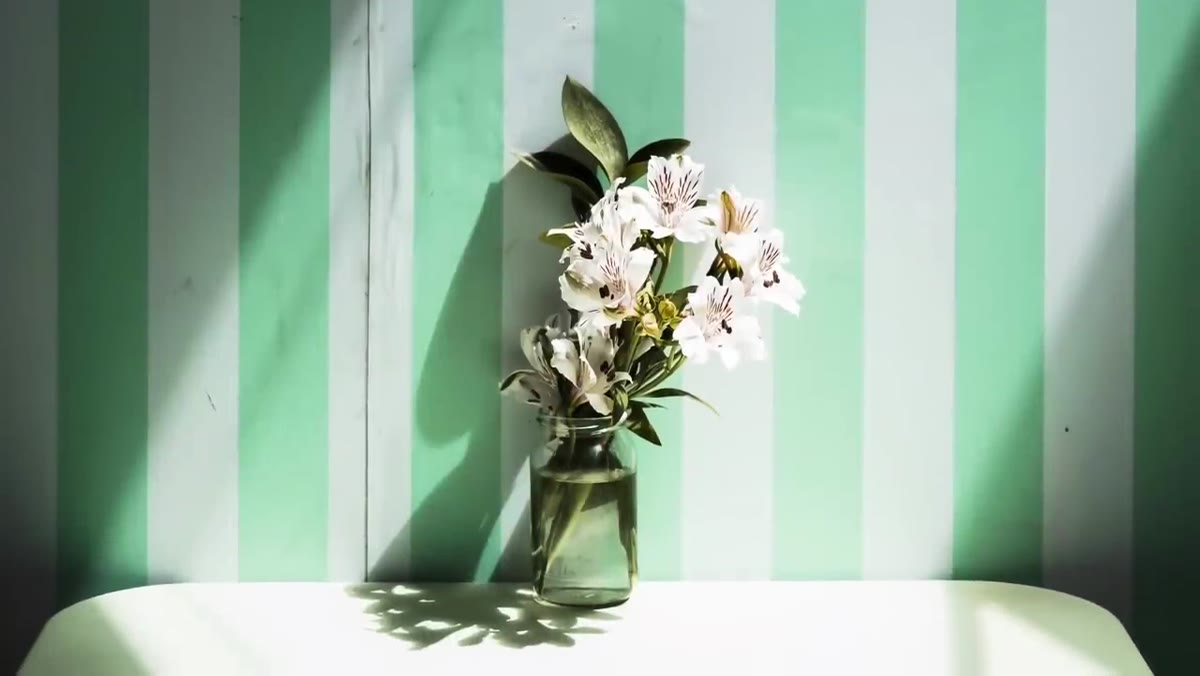 Tucker’s Soho café image showing shaft of sunlight on flowers and striped backdrop
Tucker’s café example works as well as it does because of that single shaft of light. It isolates the subject, adds warmth, and creates a sense of the moment being specific and fleeting. In people-free street photography, light does even more heavy lifting than usual because you can’t rely on expression or gesture to carry emotion.
Tucker’s Soho café image showing shaft of sunlight on flowers and striped backdrop
Tucker’s café example works as well as it does because of that single shaft of light. It isolates the subject, adds warmth, and creates a sense of the moment being specific and fleeting. In people-free street photography, light does even more heavy lifting than usual because you can’t rely on expression or gesture to carry emotion.
Practically, this means timing matters. Mid-morning and late afternoon give you directional, raking light that creates shadow and texture. Overcast days flatten everything, which can work for graphic, high-contrast compositions but often kills the mood for this style. On your walk, follow the light first and the subject second. When you see a compelling patch of light, stop and look for what it’s falling on, rather than finding an object and hoping the light cooperates.
Step 5: Let the Background Do Work
 Tucker noting the textured degrading striped siding behind the café flowers
In Tucker’s Soho shot, the degrading striped siding isn’t just a backdrop. It adds texture and context and makes the flowers pop without competing with them. Background choice in people-free street work is closer to studio still life thinking than traditional street photography thinking.
Tucker noting the textured degrading striped siding behind the café flowers
In Tucker’s Soho shot, the degrading striped siding isn’t just a backdrop. It adds texture and context and makes the flowers pop without competing with them. Background choice in people-free street work is closer to studio still life thinking than traditional street photography thinking.
When you find a subject, take five seconds to move around it and consider what different angles put behind it. A cluttered wall can kill an otherwise strong image. A simple geometric surface, a wash of shadow, or a band of contrasting color can elevate it. You don’t need to carry anything with you or set anything up. You just need to find the angle where the world behind your subject is doing you a favor.
Step 6: Look for Objects That Tell a Larger Story About Place or People
 Tucker describing Joshua K. Jackson’s image of a deck chair floating in a lake
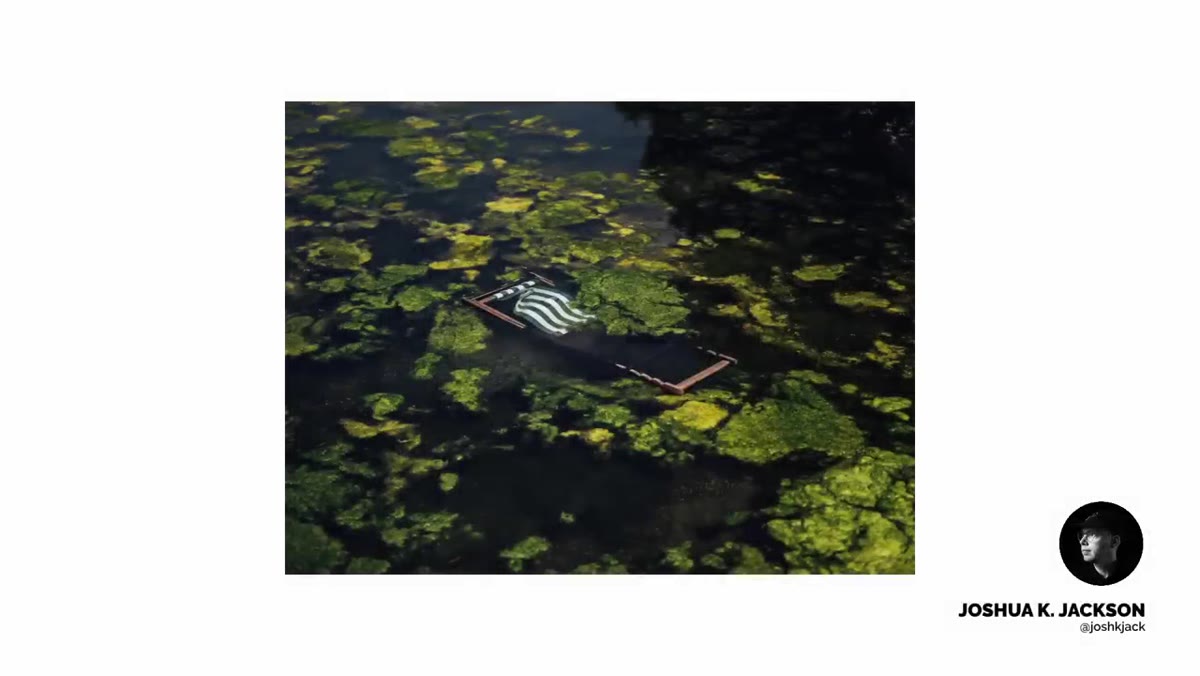
Tucker shares an image from his collaborator Joshua K. Jackson: a deck chair that someone has apparently thrown into a lake, floating quietly among the algae. There are no people in the frame, but the photo is full of personality. It’s funny, a little melancholy, and completely unexplained in the best possible way.
Tucker describing Joshua K. Jackson’s image of a deck chair floating in a lake
Tucker shares an image from his collaborator Joshua K. Jackson: a deck chair that someone has apparently thrown into a lake, floating quietly among the algae. There are no people in the frame, but the photo is full of personality. It’s funny, a little melancholy, and completely unexplained in the best possible way.
The lesson is to stay alert for objects that feel out of place, abandoned, misused, or oddly poetic. Discarded things, forgotten things, things that seem to have arrived somewhere through an interesting chain of human decisions. These are your subjects. They don’t need to be beautiful. They need to make someone ask a question.
My Extension: Shoot One Subject, Multiple Angles
One thing Tucker’s tutorial prompted me to try on my own walks is treating a single found object the way a studio photographer would treat a portrait session: shooting it from multiple angles, distances, and focal lengths before moving on. Most of the time I grab one frame and keep walking. But slowing down and working a subject the way you’d work a person often reveals a composition you’d have completely missed.
I’ve done this with something as unglamorous as a rusted drain cover on a wet Seattle sidewalk. Three angles in, I found a frame where the reflection in the standing water turned it into something that looked almost architectural. That image has been in my portfolio ever since. Don’t rush the subject. Give it the same attention you’d give a stranger worth photographing.
The single most important thing Tucker’s tutorial teaches is this: the street is full of stories even when it’s empty of people. Your job is to find the objects that carry traces of human life and photograph them with the same care and intention you’d bring to any portrait.
Watch the full tutorial on YouTube and see Tucker and Jackson’s example images side by side. The contrast between their two visual styles alone is worth the watch.
Comments
Leave a Comment