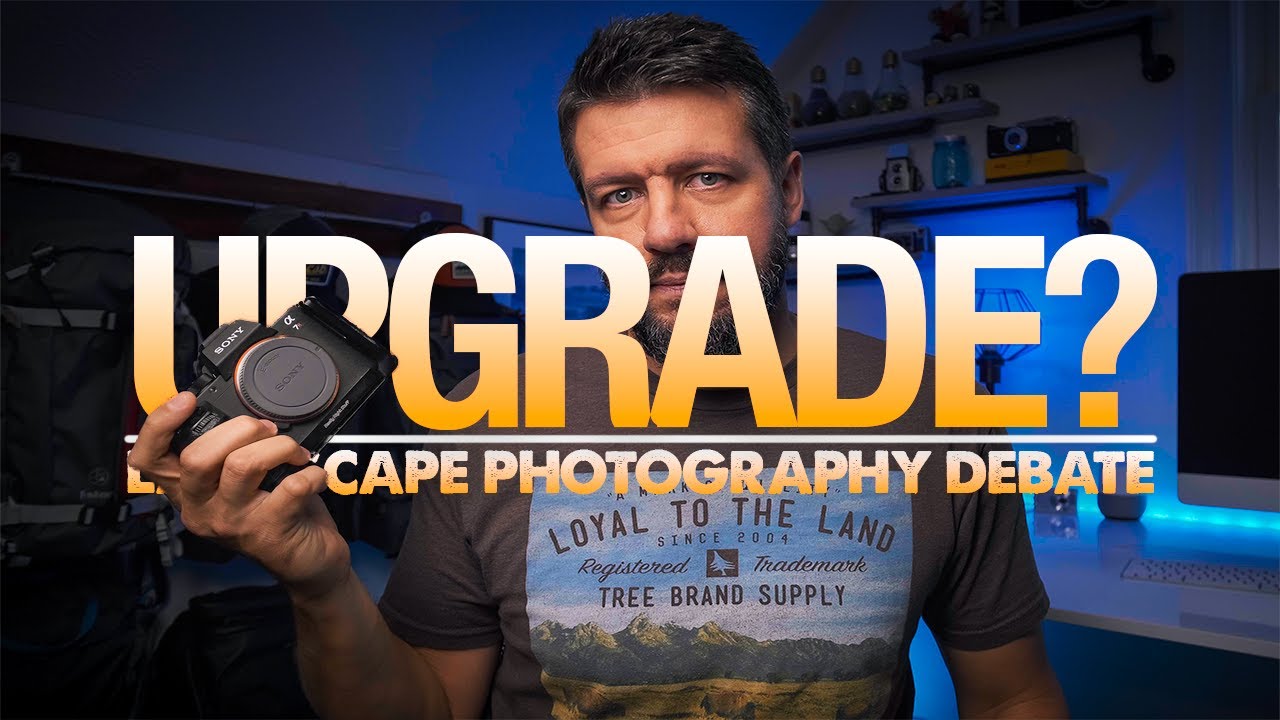
Every few months I get the same DM: “Sarah, should I upgrade to the [newest body]?” And honestly, for a long time I didn’t have a great answer. I’d mumble something about how gear doesn’t matter, which is true but not actually helpful when someone is staring at a $3,500 price tag and trying to figure out if it’s worth it. What I needed was a real framework, not a platitude.
That’s exactly what I found in this Mark Denney tutorial, where he walks through his own decision process around upgrading his nearly four-year-old Sony a7R II to the a7R IV. Watch the full tutorial on YouTube. What makes it worth your time isn’t the specific Sony bodies involved. It’s the way Denney treats the upgrade question like a business problem instead of a gear lust problem. He builds a case, runs the numbers, and then asks whether the math actually justifies the move. I’ve started using his approach every time I feel that familiar itch to upgrade something, and it has saved me from at least two impulsive purchases.
The walkthrough below pulls out each step of his reasoning so you can apply it to your own situation, whatever camera system you’re shooting with.
Step 1: Identify What’s Actually Prompting the Question
 Mark Denney introducing the upgrade debate topic
The first thing Denney does is name the real trigger. It wasn’t a vague feeling that his camera was old. It was specific: viewers kept asking about it in his comments. That distinction matters. If you can’t point to a concrete reason you want to upgrade, whether it’s a technical limitation you keep bumping into, a job requirement, or a capability gap, you’re probably just experiencing gear envy. That’s normal, but it’s not a reason to spend thousands of dollars.
Before you do any research or read any spec sheets, write down the actual problem you’re trying to solve. One sentence. If you can’t write that sentence, stop right there.
Step 2: Look at the Upgrade Path Honestly, Not Just the New Body
 Discussion of Sony a7R III and IV announcement specs
When the a7R III was announced, Denney looked at the specs and felt nothing. The improvements weren’t significant enough to move the needle for his specific style of shooting. He moved on. But when the a7R IV came out, the jump felt meaningful enough to actually start the process. His point is that “new” and “worth upgrading to” are two completely different things.
This step is about comparing your current body to the target body, not to whatever is newest right now. Pull up a side-by-side spec comparison. Look only at the specs that affect how you actually shoot. If you’re a landscape photographer who shoots mostly at low ISO on a tripod, improved autofocus tracking probably doesn’t move the needle for you. Circle what matters to your workflow. Ignore the rest.
Step 3: Calculate the True Out-of-Pocket Cost
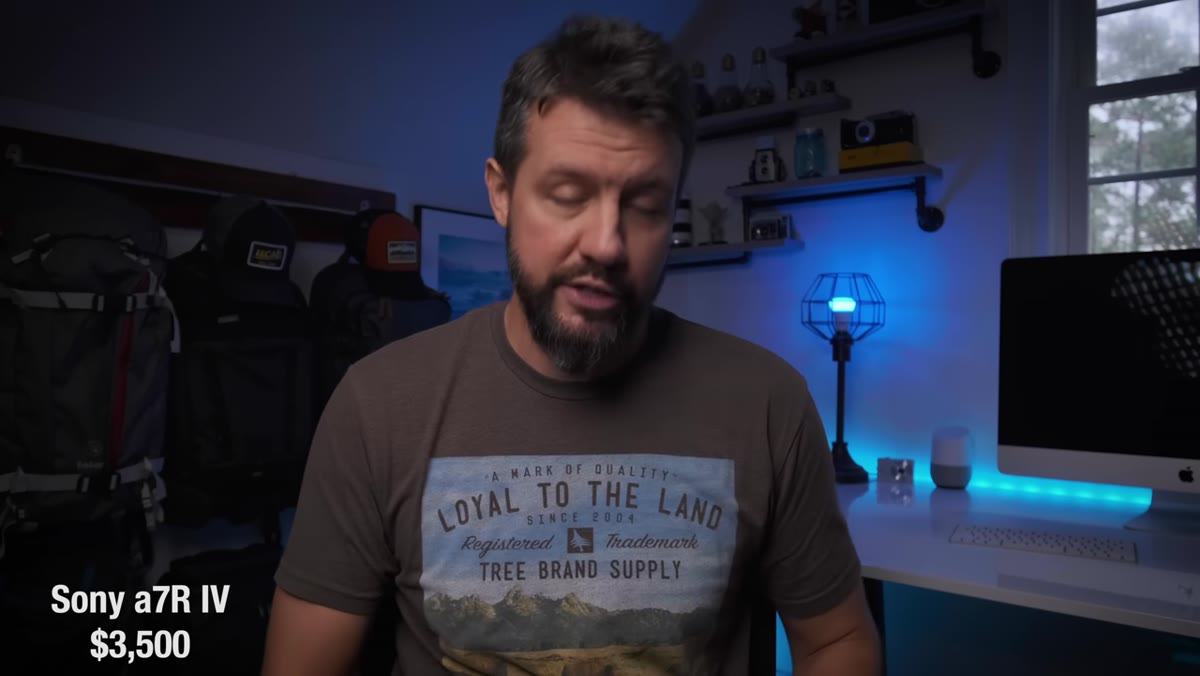 Denney calculating the net cost after selling current body
This is where most upgrade conversations get dishonest. People quote the retail price of the new body without subtracting what they’d recover from selling the old one. Denney ran the actual numbers: the a7R IV body cost $3,500. After researching realistic resale prices for his a7R II in its current condition, he estimated he’d recover around $800. That left a true out-of-pocket cost of roughly $2,700.
That reframing changes the conversation entirely. It’s no longer “do I want a $3,500 camera” but “is a $2,700 improvement worth it.” Research your camera’s actual resale value on the used market, not what you hope it’s worth. Check completed listings on eBay or current prices on MPB or KEH. Use that number, not the optimistic one.
Step 4: Evaluate Each Benefit Against Your Real Shooting Habits
 Denney listing landscape-specific benefits of the a7R IV
Once Denney had the net cost established, he went through the upgrade’s benefits one by one and asked whether each one would actually change how he shoots. Better battery life? He currently carries five batteries and has built a system around swapping them. It would be convenient to carry two instead of five, but would it meaningfully improve his photos or his experience in the field? He decided it was nice-to-have, not need-to-have.
Go through your wish list the same way. For each benefit, ask: does this solve a problem I run into regularly, or does it solve a problem I might theoretically run into someday? The benefits that survive that filter are the ones that actually justify cost.
Step 5: Apply a “What Else Could This Money Do” Test
 Denney discussing careful financial decision-making for large purchases
Denney is refreshingly honest that he doesn’t have unlimited funds and takes large purchases seriously. That honesty leads naturally to a question he implies throughout: what else could $2,700 do for his photography? A new lens. Travel to a location he’s been putting off. A better editing workstation. Sometimes the upgrade that actually improves your photos isn’t the camera body at all.
Write out two or three alternative uses for the same amount of money and evaluate each one on the same scale. Which investment would have the biggest impact on the photos you’re actually making right now? For a lot of photographers, especially those shooting with mid-range or entry-level gear, a better lens or a weekend in a new location will produce more growth than a sensor upgrade.
What I’d Add: The Skill Ceiling Check
Before any gear upgrade, I run one extra test on myself. I look at my last 100 photos and ask whether the limiting factor was actually the equipment. Nine times out of ten, the answer is no. The waterfall shot I nearly ruined a family vacation over wasn’t a camera problem. It was a composition and patience problem, and no sensor resolution would have fixed it.
This isn’t about beating yourself up. It’s about being honest that most cameras sold in the last five years, including your current one, are capable of producing work that exceeds what most of us are asking of them. If you’re not regularly hitting the ceiling of what your current body can do in terms of dynamic range, resolution, or low-light performance, you haven’t outgrown it yet. I still take some of my favorite shots on my phone, partly to remind myself that the eye matters more than the body holding the sensor.
The single most important thing Denney demonstrates is that the upgrade question deserves the same rigor you’d bring to any significant financial decision. Run the real numbers. Isolate the benefits that apply to your work. Test each one against your actual habits. And before you finalize anything, ask what else that money could do for your photography.
If you want to see how he walks through this reasoning in his own voice and for his own specific situation, it’s well worth 10 minutes of your time. Watch the full tutorial on YouTube.
Comments (1)
The tip about should you upgrade your camera was the missing piece for me. Thank you.
Leave a Comment