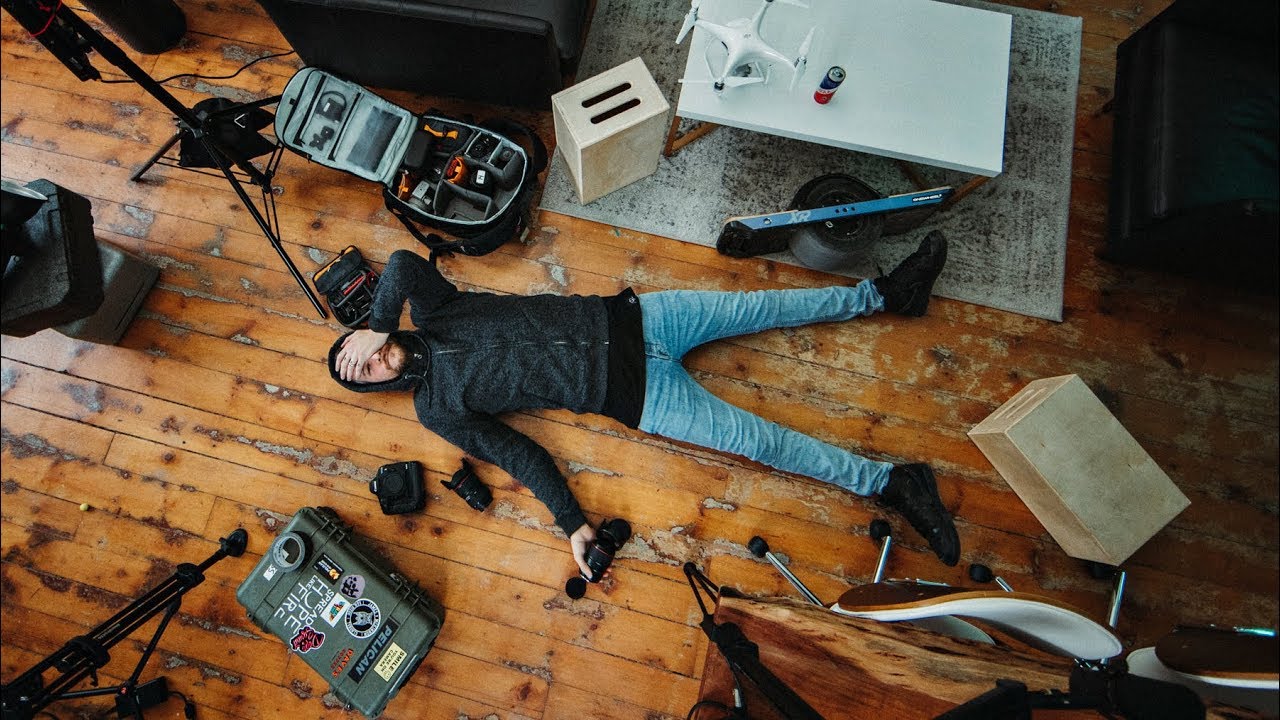
Every working photographer hits that wall. You pick up the camera, look through the viewfinder, and feel absolutely nothing. No pull, no curiosity, no itch to shoot. I had one of those stretches last winter where my Sunday photo walks started to feel like a chore. I was shooting the same corners of Seattle I’d walked a hundred times, importing cards full of “fine” images, and wondering what the point was.
That’s exactly when I found myself watching a Peter McKinnon tutorial on handling creative burnout, and it reframed something I thought was a personal failing into a solvable problem. McKinnon calls it “photographer’s block,” and if you’ve ever felt it, you know the description is accurate. In this Peter McKinnon tutorial, he lays out three concrete strategies for breaking through that block, plus a bonus idea that quietly became my favorite of the bunch. Here’s how to work through all of them.
Step 1: Shake Up Your Gear Setup
 Peter describing switching out lenses and camera bodies
The first move McKinnon recommends is changing what’s actually in your hands. If you’ve been shooting with the same lens for six months, your eye has gotten lazy. It already knows what every scene is going to look like before you even raise the camera. Swapping to a different focal length forces your brain to problem-solve again.
Peter describing switching out lenses and camera bodies
The first move McKinnon recommends is changing what’s actually in your hands. If you’ve been shooting with the same lens for six months, your eye has gotten lazy. It already knows what every scene is going to look like before you even raise the camera. Swapping to a different focal length forces your brain to problem-solve again.
If buying new glass isn’t in the budget right now, the limitation approach works just as well. Strip your kit down to one body and one lens, and load only your smallest memory cards. When you only have 30 or 40 shots before you run out of space, you stop spray-and-praying and start actually thinking about each frame. That constraint mimics shooting on film, and it’s a surprisingly fast way to feel engaged again. McKinnon also suggests trading full kits with a photographer friend for a week. You use their gear, they use yours. Different ergonomics, different glass characteristics, a different optical personality to figure out. It’s cheap, collaborative, and almost always produces something unexpected.
Step 2: Change Your Physical Environment
 Peter pointing camera in different directions around his studio
If the gear swap doesn’t crack things open, the problem might be the scenery. McKinnon’s second strategy is straightforward: point yourself somewhere new. Not necessarily somewhere dramatic or expensive, just somewhere different from your usual spots.
Peter pointing camera in different directions around his studio
If the gear swap doesn’t crack things open, the problem might be the scenery. McKinnon’s second strategy is straightforward: point yourself somewhere new. Not necessarily somewhere dramatic or expensive, just somewhere different from your usual spots.
He frames it the way I’d describe rearranging furniture in a small apartment. Same square footage, but suddenly it feels like a different space, and you notice things you’d stopped seeing. The photographic version of this is setting yourself a small concrete challenge: shoot five images outside this week instead of inside, or commit to one neighborhood you’ve never walked through. The goal isn’t to find a more beautiful location. It’s to remove the muscle memory that’s making you shoot on autopilot. Novelty is almost always the faster route back to presence.
Step 3: Walk Away From the Camera Entirely
 Peter explaining stepping back from social media and photography
This one sounds counterintuitive, but McKinnon’s third strategy is to put the camera down completely. Not just for an afternoon. For a real, deliberate break.
Peter explaining stepping back from social media and photography
This one sounds counterintuitive, but McKinnon’s third strategy is to put the camera down completely. Not just for an afternoon. For a real, deliberate break.
Part of what feeds photographer’s block is the constant noise of social media. Every scroll is another person’s beautiful portfolio, another viral shot, another reminder of everything you haven’t made lately. That comparison loop is exhausting and quietly corrosive to your sense of originality. McKinnon’s prescription is to step away from it entirely. Read a book, learn a completely different skill, take a walk without your phone. The point isn’t to abandon photography. It’s to give your visual appetite a chance to get hungry again. I’ve found that the longer I stay away from shooting during a real block, the sharper the urge is when it comes back. You stop feeling like you’re chasing creativity and start feeling like you can’t help but make something.
Step 4: Start a New Account Around a Separate Obsession
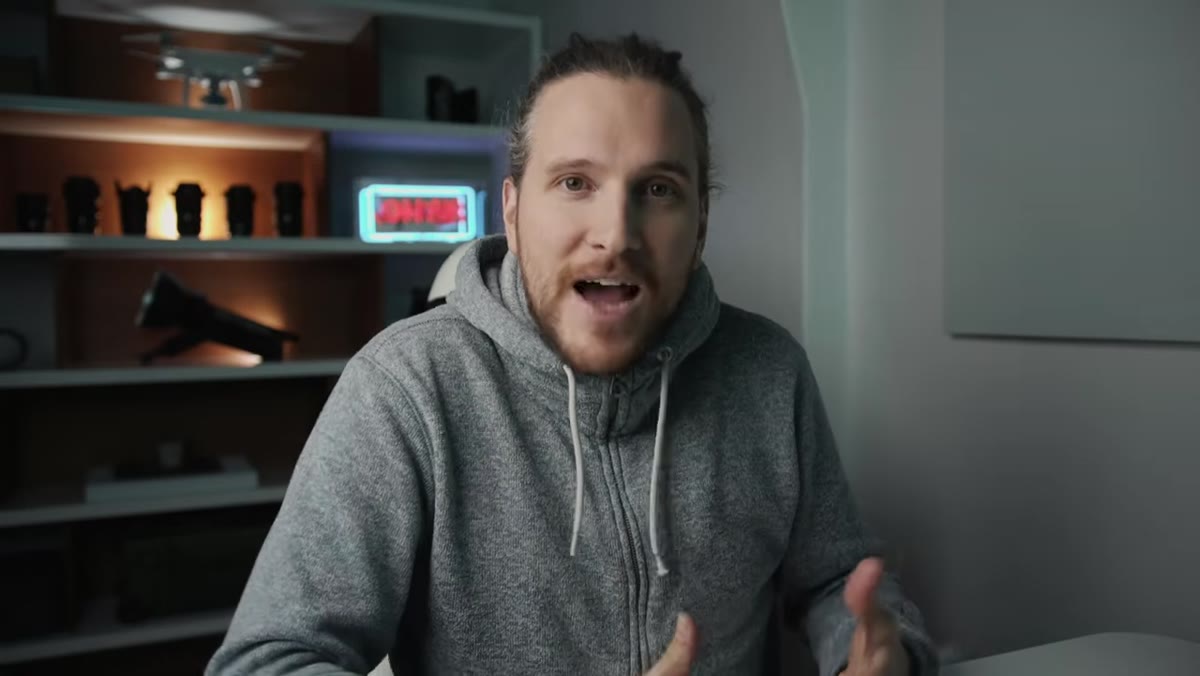 Peter talking about creating new Instagram accounts for different interests
McKinnon’s bonus strategy is the one I think about most often. His idea is to take your existing photography skills and redirect them toward something entirely separate from your main creative identity. He’s a collector, so he started a dedicated account for that, building a whole new aesthetic around objects he was already interested in.
Peter talking about creating new Instagram accounts for different interests
McKinnon’s bonus strategy is the one I think about most often. His idea is to take your existing photography skills and redirect them toward something entirely separate from your main creative identity. He’s a collector, so he started a dedicated account for that, building a whole new aesthetic around objects he was already interested in.
This works because it removes the pressure of your main body of work. There’s no existing audience expecting a certain style, no archive to live up to. You’re just experimenting. Think about what you’re into outside of photography and ask whether it has a visual dimension. Coffee, plants, vintage clothing, running shoes, your dog’s extremely judgmental face. Build a small contained project around it. The photography skills transfer immediately, but the subject matter gives you beginner’s mind. That combination is where a lot of surprisingly good work comes from.
What I’d Add From My Own Experience
The through-line in all four of McKinnon’s strategies is that photographer’s block is almost always a sameness problem, not a talent problem. You’re not running out of skill. You’re running out of novelty, and your brain is registering that flatness as creative failure. The fix, every single time, is to introduce friction somewhere in the process.
I’d add one more tool to McKinnon’s list: make a playlist. I know that sounds unrelated, but I’ve built playlists for specific shooting moods over the years, and putting one on before a walk genuinely changes what I notice. Music shifts your emotional register, and your emotional register changes what you find interesting to look at. It’s a small thing, but small things are sometimes all you need to get moving again. The Sunday photo walk I mentioned almost falling out of love with? I started pairing it with a new playlist every week. It’s been going strong for two years.
The single most important thing to take from McKinnon’s tutorial is this: photographer’s block isn’t a sign that you’ve lost it. It’s a sign that something in your routine needs to change, and that’s almost always within your control. Whether that means trading lenses with a friend, driving somewhere unfamiliar, or genuinely stepping away for a week, the solution is usually simpler than the stuck feeling makes it seem.
Watch the full tutorial on YouTube to hear McKinnon walk through all of this in his own words. It’s under four minutes and worth every one of them.
Comments
Leave a Comment