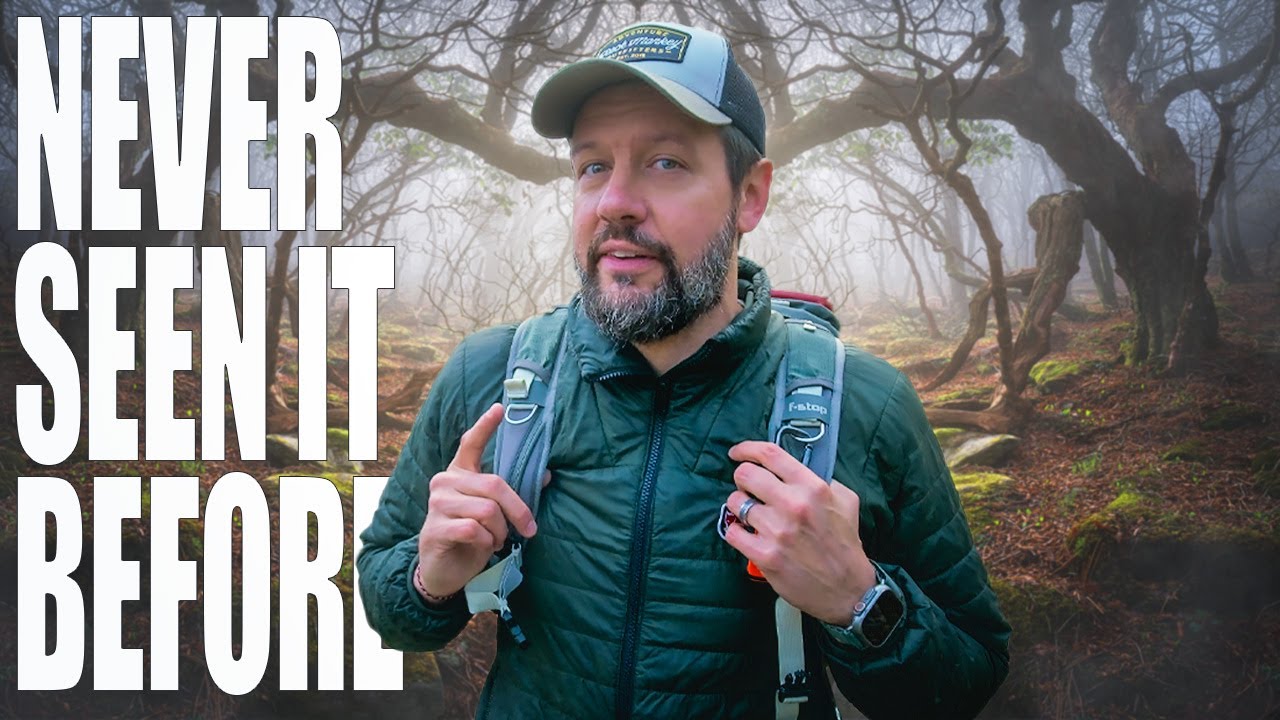
There’s a habit I picked up early in my photography life that quietly held me back for years. I’d find a good location, nail a shot I was happy with, and then mentally file that place away as “done.” Visited. Captured. Move on. It wasn’t until I started paying attention to how working landscape photographers approach their locations that I realized how much I was leaving behind every single time.
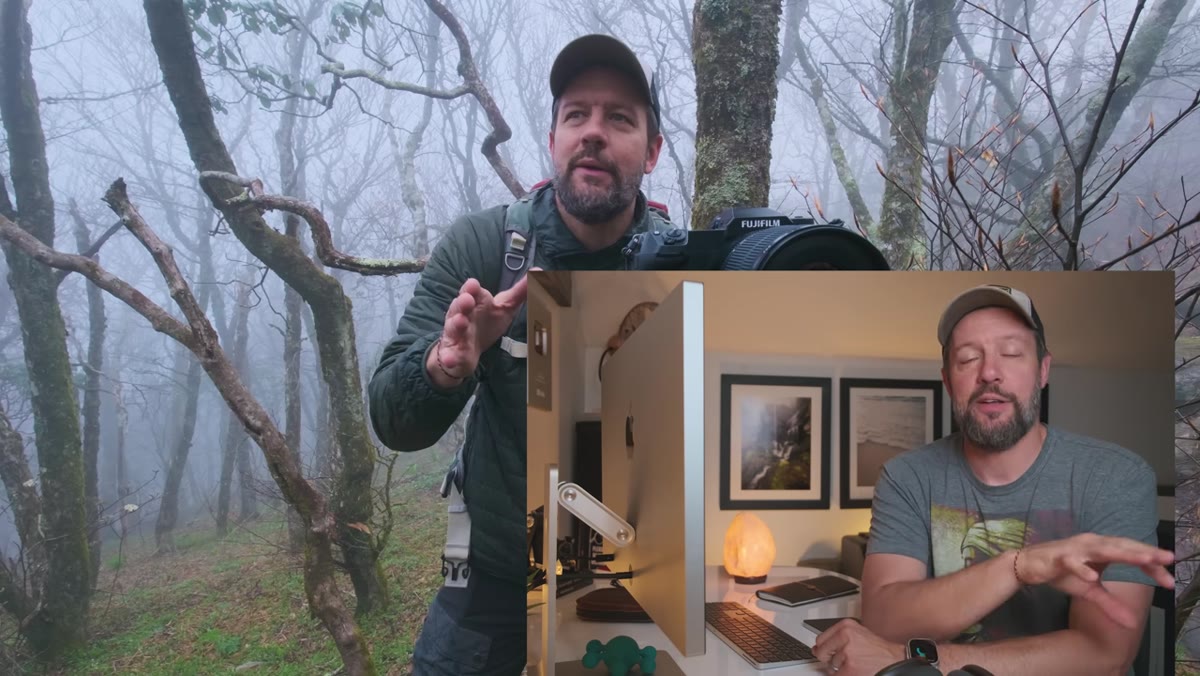
In this Mark Denney tutorial, Watch the full tutorial on YouTube, Denney shoots in the foggy Blue Ridge Mountains of North Carolina and builds his entire session around one deceptively simple idea: photograph a place like you’ve never seen it before. That means resisting your own visual memory, fighting the pull of your previous “hero shot,” and training yourself to look at a familiar scene with fresh eyes every single time you show up. It sounds philosophical, but the way he puts it into practice is very concrete and very repeatable.
I do a photo walk every Sunday morning around my neighborhood in Seattle. I’ve walked the same blocks hundreds of times. This principle is now the only reason those walks still produce anything interesting. Here’s how Denney breaks it down in the field.
Step 1: Treat Every Return Visit as a Scout Mission
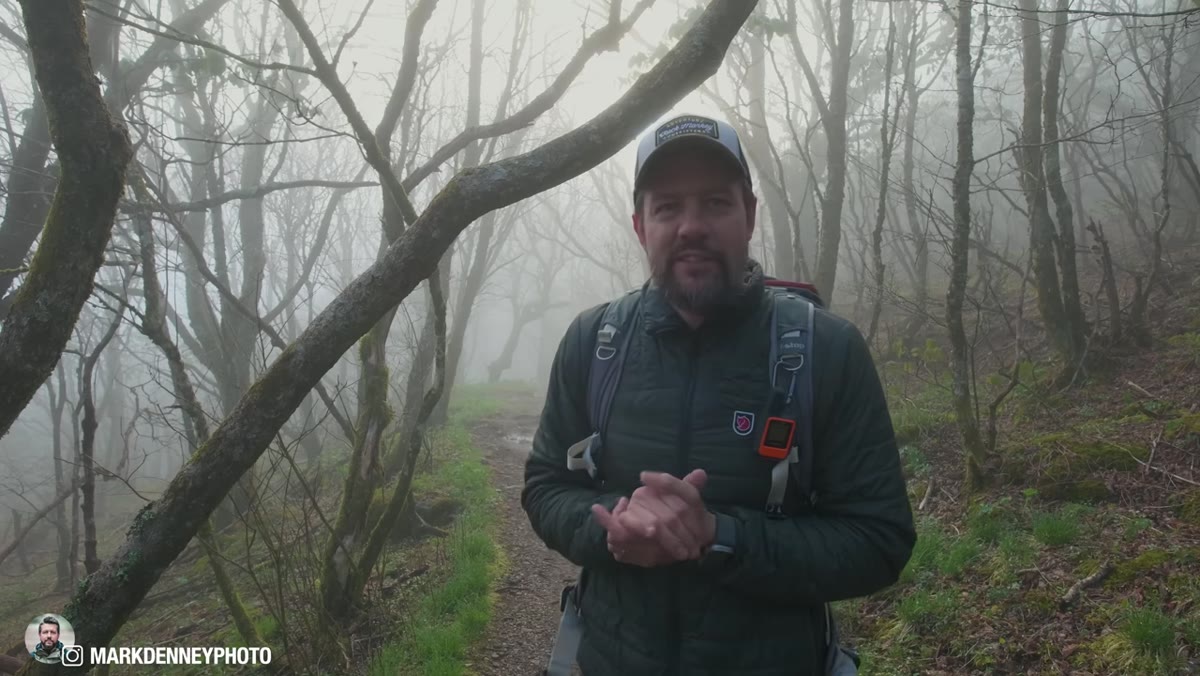 Denney arriving at foggy mountain location in early morning
Before you even take the camera out of the bag, Denney reframes what it means to revisit a location. He deliberately shows up to a place where he already has a well-known, popular photo, but he goes back with the mindset of someone who has never been there. He calls it a scouting mission, even though he knows the terrain. This mental reset is the whole game. The moment you walk in thinking “I’ve got this place figured out,” you stop seeing it.
If you’re returning somewhere you’ve shot before, try this: don’t look at your old photos before you go. Let your eyes recalibrate to what’s actually in front of you, not what you remember being there. Seasons, light, weather, and even your own growth as a photographer guarantee that the scene is different from what you captured last time.
Step 2: Use Seasonal Change as a Compositional Reset
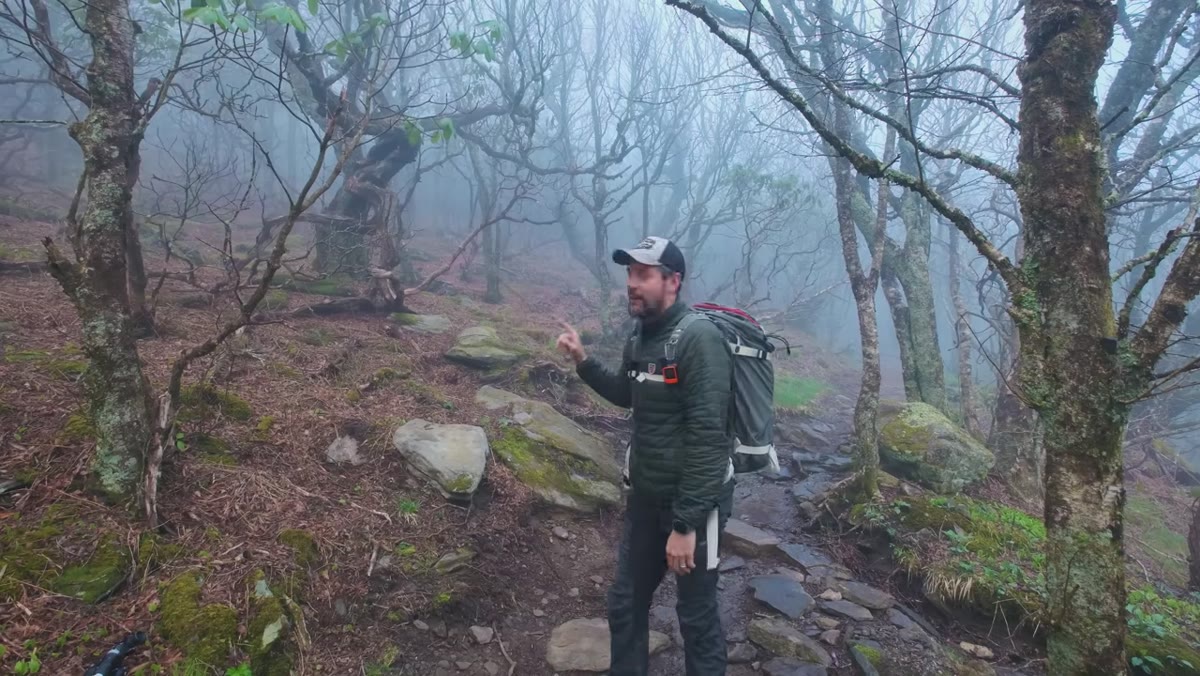 Denney standing near the tree from his previous popular photo
Denney revisits the tree from what he describes as his most-shared photo. In summer, it was lush, moss-covered, and full of green canopy. On this winter morning, it’s bare and stark, surrounded by brown undergrowth. His reaction is genuine surprise at how dramatically a single subject can shift in character. What looked like a soft, verdant portrait now has the bones of something more austere and graphic.
This is a practical tip, not just an observation. When you’re planning shoots, build a habit of noting what season you captured a location and scheduling a return in a contrasting season. You’re not chasing the same photo under different lighting. You’re after an entirely different photograph of the same place. Think of seasonal variation as a free lens change that alters the entire emotional register of your image.
Step 3: Prioritize Fleeting Conditions Before the “Perfect” Shot
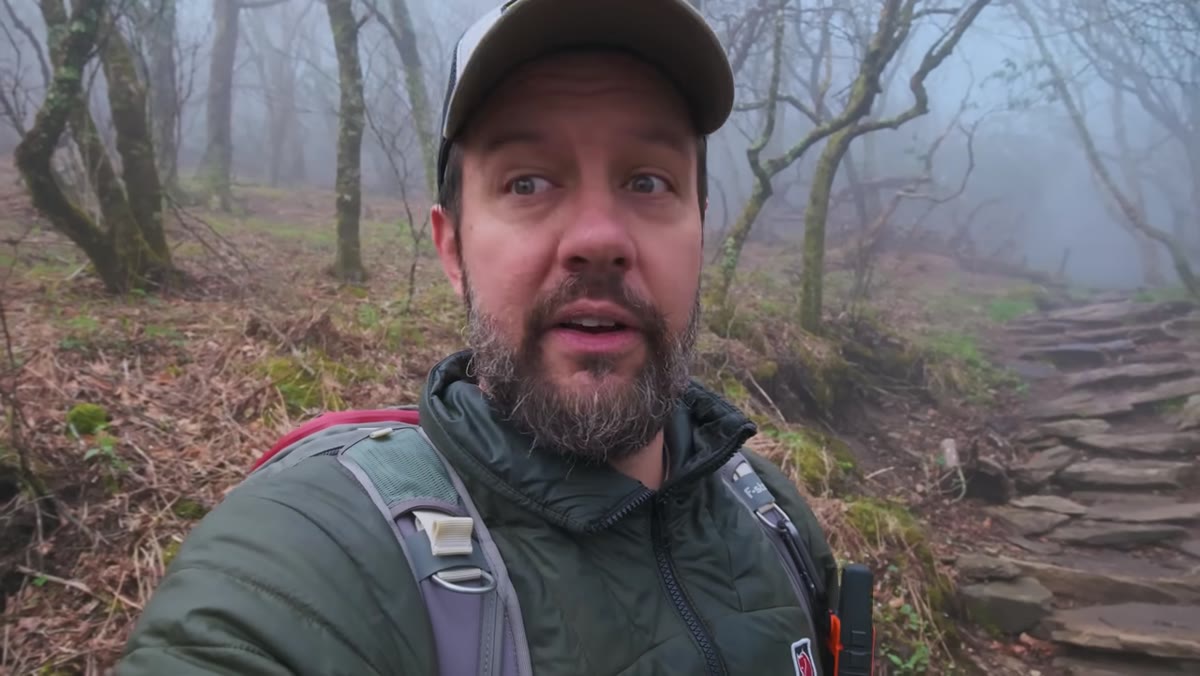 Denney assessing the fog layer while sunlight begins to rise
Denney notices the fog starting to thin as the sun rises and immediately makes a field decision: get something on the sensor now, even if the composition isn’t ideal yet. This is a discipline that separates working photographers from perfectionists who come home empty-handed. The light and atmosphere you showed up for won’t wait for you to finalize your framing.
His approach is to get a working shot locked in quickly so the conditions are captured, then use that as a foundation to refine. Think of it as buying yourself time. If the fog burns off completely, you still have an image. If it holds, you now have a baseline and can experiment freely. Don’t let the pursuit of the perfect frame cost you the moment that made you get out of bed in the first place.
Step 4: Build Compositions That Reward an Unusual Angle
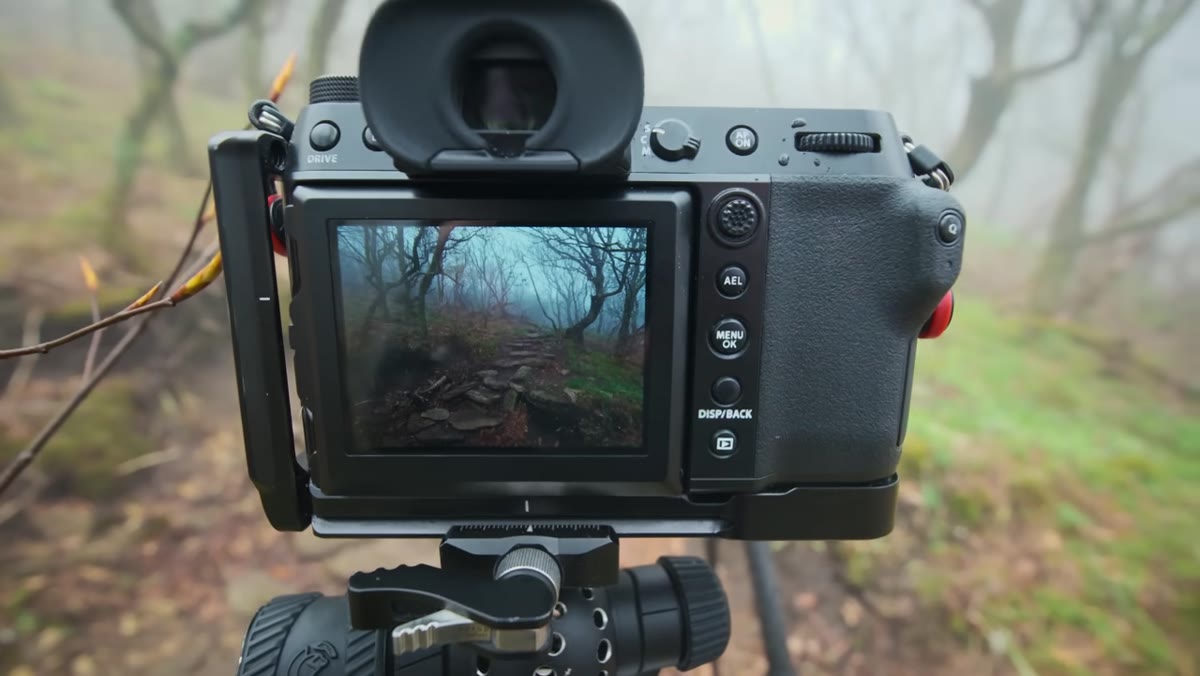
 Denney positioning camera low and to the side of the stone path
Rather than standing in the middle of the pathway and shooting straight ahead, the way any passing hiker would see it, Denney positions himself on the hillside to one side. He angles the stone path so it enters the frame from the bottom left and tracks toward the upper right. The goal is explicit: show the viewer something they would never see just walking through the scene themselves.
This is the visual translation of the “photograph it like you’ve never seen it” principle. Get physically lower, higher, further to the side, or closer to the ground than feels natural. If your first instinct is to stand at eye level and center your subject, that instinct is almost always the one that produces the most forgettable image. Move before you shoot.
Step 5: Zoom Out to Preserve Cropping Latitude
 Denney zooming out slightly to include more of the chaotic woodland edges
Denney runs into a common woodland photography problem: the interesting focal point, a specific grouping of trees, is surrounded by visual clutter he doesn’t want in the frame. Rather than wrestling endlessly with framing in the field, he pulls back slightly and gives himself extra room around the edges. The idea is to capture more than you need and make the final composition decisions in post-processing.
This is not a lazy workaround. It’s a professional habit. When you’re in dynamic conditions with changing light, fog, or moving elements, spending five extra minutes trying to get the crop perfect in-camera can cost you the image entirely. Shoot a little loose, lock in the moment, and make precise decisions at your desk when the pressure is off. Just make sure your resolution supports it.
What I’d Add From My Own Experience
The mental side of this technique is harder than it sounds, especially at locations you love. I spent three consecutive evenings on a vacation trying to recreate a waterfall shot I’d seen another photographer take, and I missed dinner every night. I was so attached to someone else’s image of the place that I couldn’t see what was actually in front of me. Denney’s framing of “photograph it like you’ve never seen it” is really asking you to release your attachment to a predetermined outcome, and that’s a skill you have to practice deliberately, not just understand intellectually.
One thing that helps me: before I frame a single shot, I spend five minutes just standing and looking without raising the camera. No viewfinder, no phone screen. Just watching. It’s uncomfortable at first. But it forces your eye to stop looking for the image you already have in your head and start seeing what’s actually there.
The single most transferable idea from this tutorial is that familiarity is a creative liability, and the fix is a conscious choice to look again, every time. It costs nothing, requires no gear, and it works whether you’re shooting in the Blue Ridge Mountains or walking the same Seattle street you’ve walked a hundred times before.
Watch the full tutorial on YouTube to see Denney work through these decisions in real time in the field. Watching him think out loud while the fog rolls in is worth it on its own.
Comments
Leave a Comment