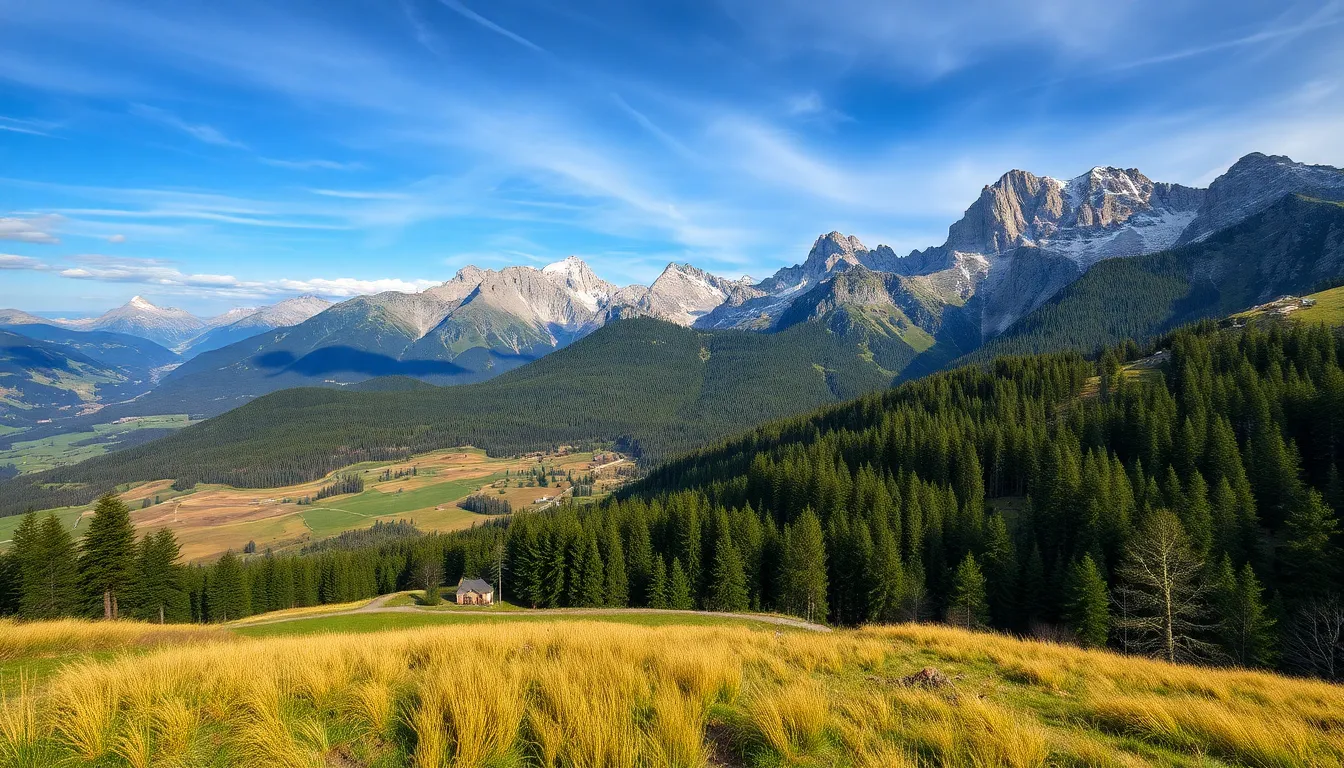
Master Landscape Photography: Essential Techniques for Stunning Outdoor Images
Landscape photography drew me in because it promised something simple: go outside, point my camera at beautiful scenery, and capture what I see. What I quickly discovered was that translating what my eyes perceive into a compelling photograph requires intentional technique and planning. I’m here to share what I’ve learned so you can skip the frustrating early mistakes and start creating images you’re proud of.
Understanding Why Composition Matters More Than Gear
I’ve seen photographers with expensive equipment produce flat, forgettable images, while others with modest cameras create images that stop people mid-scroll. The difference isn’t the camera—it’s composition. Your camera is simply a tool to execute your vision.
The strongest landscape photographs guide the viewer’s eye through the frame intentionally. Here are the three composition principles I rely on most:
-
Rule of thirds — Divide your frame into nine equal sections using two horizontal and two vertical lines. Place key elements (horizons, focal points, leading lines) along these lines or intersections rather than dead center.
-
Leading lines — Use natural elements like rivers, roads, fences, or ridgelines to draw viewers into your image. These lines should lead toward your main subject, not away from it.
-
Foreground, middle ground, background — Include elements at multiple depths to create dimension. A compelling foreground (wildflowers, rocks, trees) prevents your image from feeling flat and gives scale to distant mountains.
Camera Settings That Work in Landscape Work
Unlike portrait or street photography, landscape work rewards specific technical choices. I typically shoot in manual mode because I need precise control over depth of field.
Aperture is your priority. I almost always use f/8 to f/16 to ensure sharp focus from foreground to background—this is called deep depth of field. At f/5.6 or wider, your background softens, which defeats the purpose of landscape photography.
Shutter speed comes second. I adjust it to achieve proper exposure once aperture is locked. On bright days, I might use 1/250 second; on overcast days or at dawn, 1 second or longer. This is why a sturdy tripod isn’t optional—it’s essential.
ISO should be your lowest possible value. I keep it at 100 or 200 to minimize noise, since landscape images often display at large sizes where grain becomes visible.
Timing and Light Make the Difference
I used to think any clear day was good for landscape photography. I was wrong. Light quality transforms ordinary scenes into memorable ones.
The hour after sunrise and the hour before sunset—what photographers call the “golden hour”—offers warm, directional light that sculpts landscape features beautifully. Clouds catch fire. Shadows add dimension. The same scene photographed at noon under harsh sun looks washed out and flat by comparison.
Overcast days aren’t wasted days either. Soft, diffused light from clouds eliminates harsh shadows and flatters scenes with water, forests, or detailed textures. I’ve taken some of my favorite photographs on gray, unpromising-looking mornings.
Planning Beats Luck Every Time
The most successful landscape photographers I know don’t rely on stumbling upon beautiful light. They plan. I use Google Earth and landscape photography websites to scout locations beforehand. I check weather forecasts and moon phases. I arrive early and stay late.
Here’s my pre-shoot checklist:
- Scout the location visually (in person or online)
- Check sunrise/sunset times and weather conditions
- Plan compositions and focal points
- Arrive 30 minutes before ideal light to prepare
- Shoot multiple compositions and angles
Start Where You Are
You don’t need exotic locations to practice. The best landscape photographers develop their skills near home first. A local park, a nearby forest, or hills within driving distance are perfect for learning. Commit to visiting the same location across different seasons and times of day. You’ll develop intuition about light, composition, and the landscape itself.
Landscape photography rewards patience and intentionality. Start with these fundamentals, practice regularly, and you’ll quickly see dramatic improvement in your work.