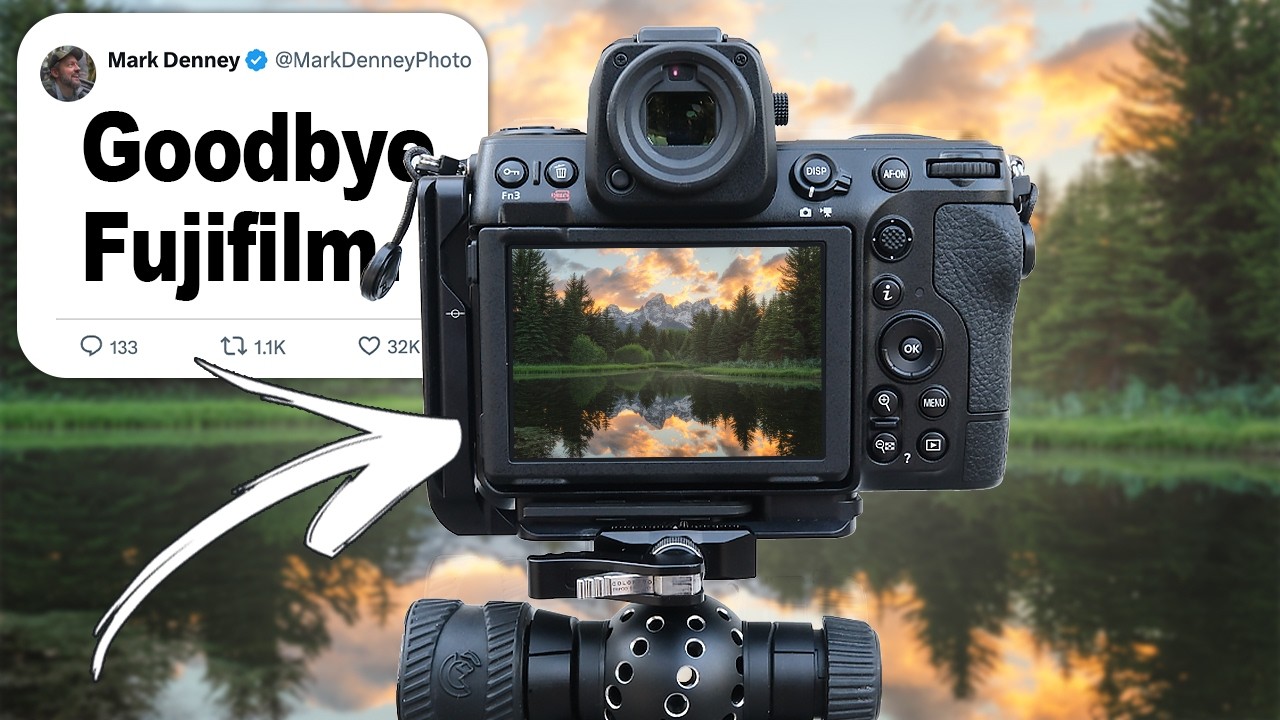
There’s a question I ask myself every time I come home from a Sunday photo walk with shots I’m not excited about: was it the light, was it me, or was it my gear? Usually the honest answer is me. But occasionally, gear really does get in the way, and the tricky part is that it happens so gradually you don’t notice until you’re reviewing your portfolio and realizing you stopped shooting entire categories of images you used to love.
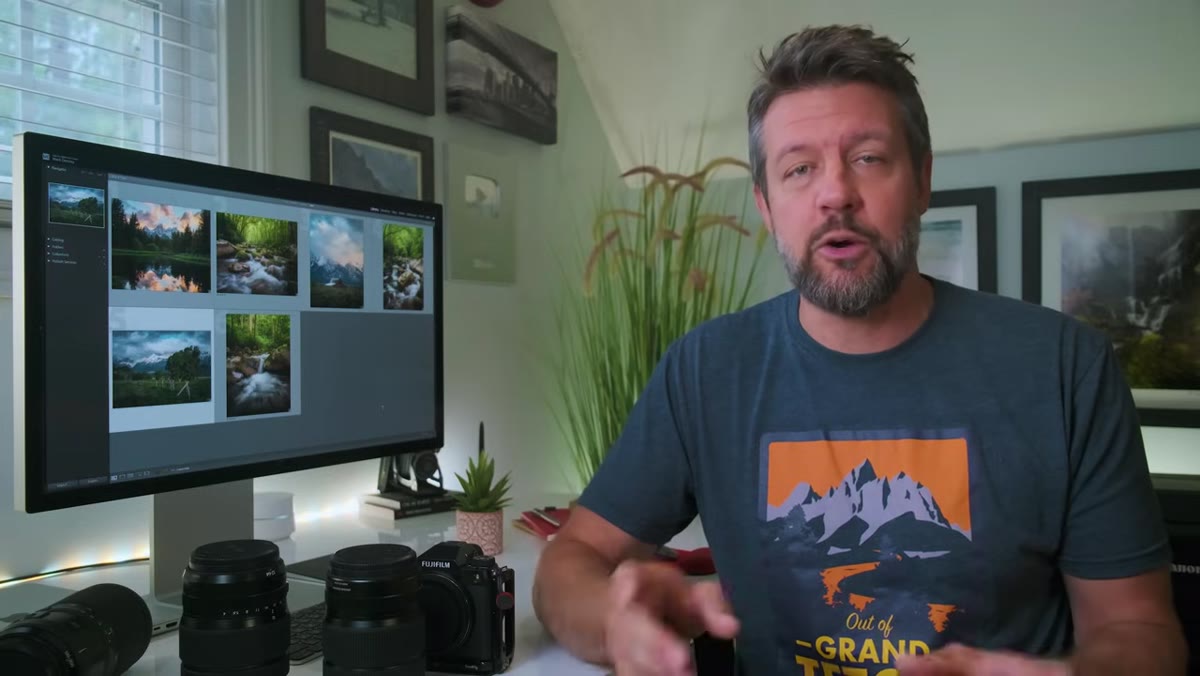
That’s exactly what happened to landscape photographer Mark Denney, and he breaks it down with refreshing honesty in this tutorial. Watch the full tutorial on YouTube. After years of shooting medium format with the Fuji GFX100S, he had a gut-punch realization during a workshop in Bali: his telephoto work had quietly disappeared from his portfolio. Not because he lost interest in long focal lengths, but because his system didn’t have a strong long-lens solution. His gear had been making creative decisions for him without him realizing it.
I think about this kind of creeping limitation a lot, especially when I talk to photographers who have invested heavily in one system. The gear isn’t bad. The images are often stunning. But when you audit your own portfolio honestly, you might find whole visual ideas that went missing. This tutorial is less a gear review and more a framework for evaluating whether your current kit is serving your vision or quietly shaping it.
Step 1: Do a Honest Portfolio Audit
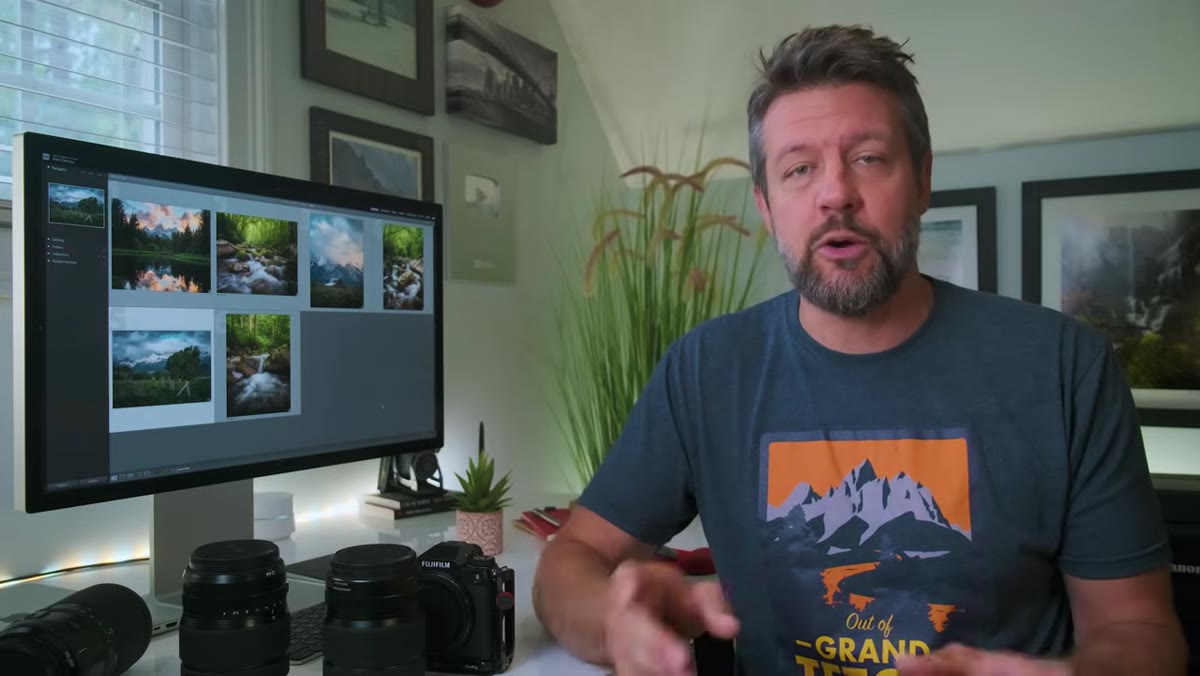 Photographer reviewing portfolio page on website during downtime
Mark’s lightbulb moment came when he was updating his website during some downtime in Bali. He wasn’t doing a formal gear evaluation, he was just browsing his own portfolio, and he noticed a pattern: everything in the telephoto or super-telephoto range was from years ago. Nothing recent.
Photographer reviewing portfolio page on website during downtime
Mark’s lightbulb moment came when he was updating his website during some downtime in Bali. He wasn’t doing a formal gear evaluation, he was just browsing his own portfolio, and he noticed a pattern: everything in the telephoto or super-telephoto range was from years ago. Nothing recent.
Sit down and do this yourself. Open your portfolio, your best-of folder, your Instagram grid, whatever you use to represent your work, and look at it by focal length or subject category. Ask yourself: are there types of shots I used to make that I’m not making anymore? If yes, dig into why. The answer might be creative burnout, or a change in your interests. But it might also be that your current system quietly made certain shots inconvenient enough that you stopped pursuing them.
Step 2: Separate “The Camera Can’t” from “The System Won’t”
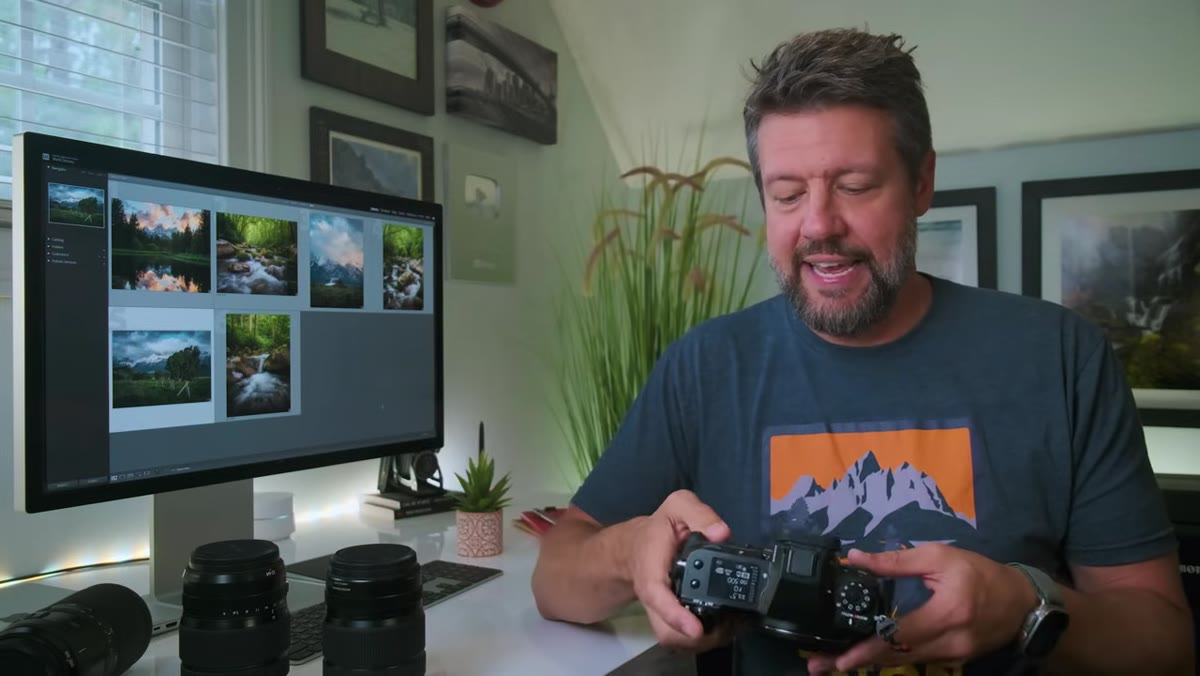 GFX100S with 100-200mm lens shown as the longest available option
Mark is careful to distinguish between camera capability and system ecosystem. The GFX100S is a genuinely exceptional camera. The issue wasn’t sensor quality or image output. The issue was the lens lineup: the longest practical option for the system gave him roughly 180mm full-frame equivalent reach, which isn’t enough for the kind of super-telephoto landscape compression he wanted to pursue.
GFX100S with 100-200mm lens shown as the longest available option
Mark is careful to distinguish between camera capability and system ecosystem. The GFX100S is a genuinely exceptional camera. The issue wasn’t sensor quality or image output. The issue was the lens lineup: the longest practical option for the system gave him roughly 180mm full-frame equivalent reach, which isn’t enough for the kind of super-telephoto landscape compression he wanted to pursue.
When you’re evaluating your own gear, make this same distinction. A camera body might be technically capable of beautiful images while still locking you into a narrower creative range because of what lenses, adapters, or accessories exist for it. List out the shots you want to make and then check whether your current system actually gives you a clear path to making them. If you’re adapting lenses, dealing with autofocus workarounds, or just avoiding entire focal lengths because it’s too much hassle, that’s worth acknowledging.
Step 3: Ask Whether Your Gear Is Making Creative Decisions for You
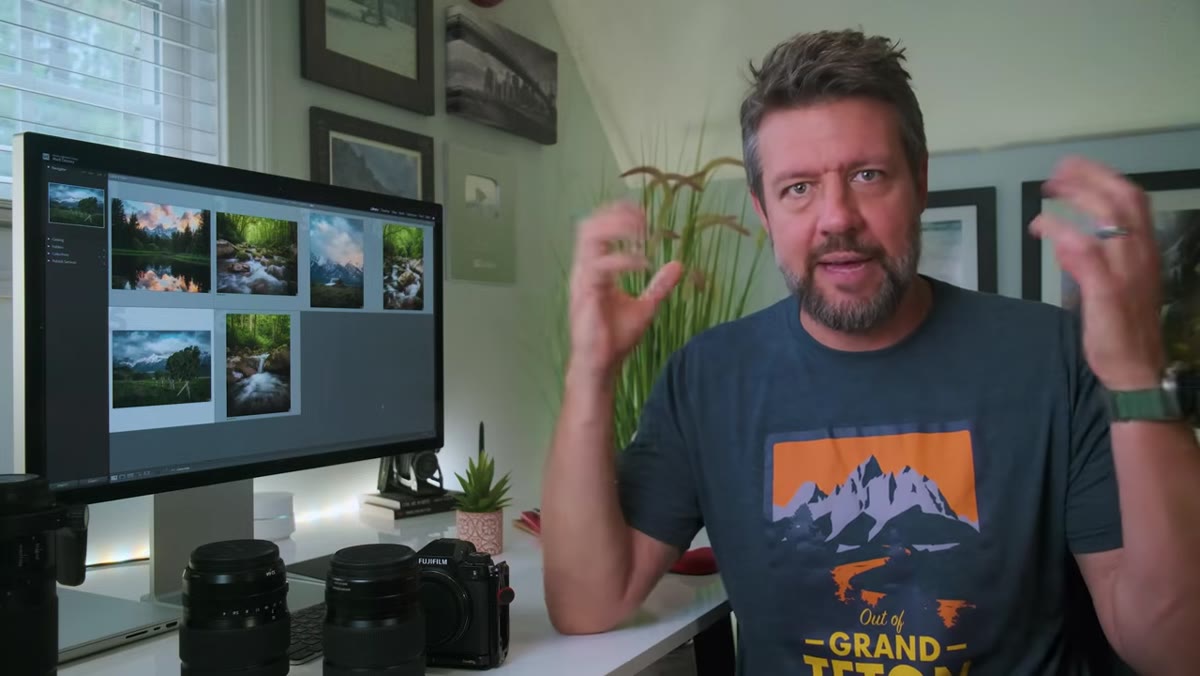 Mark describing the “gut punch” realization about gear limiting creativity
This is the core question Mark raises, and it’s the one that stuck with me most. He uses the phrase “gut punch moment” to describe realizing that his camera system was influencing which photographs he even attempted. That’s a subtle but important shift from the usual gear conversation, which tends to focus on image quality comparisons.
Mark describing the “gut punch” realization about gear limiting creativity
This is the core question Mark raises, and it’s the one that stuck with me most. He uses the phrase “gut punch moment” to describe realizing that his camera system was influencing which photographs he even attempted. That’s a subtle but important shift from the usual gear conversation, which tends to focus on image quality comparisons.
Think about the last time you were out shooting and talked yourself out of a composition or a subject because of something gear-related. Maybe it was weight, maybe it was focal length, maybe it was battery life or weather sealing. Some of those are reasonable trade-offs. But if you’re making those calls repeatedly on the same creative territory, your gear is shaping your photography in ways you may not have consciously agreed to.
Step 4: Revisit Format Categories You’ve Moved Away From
After sitting with this realization through the rest of his trip, Mark started asking whether it was time to revisit full-frame cameras. He had moved from Nikon full-frame to crop-sensor Fuji XT bodies, then up to medium format, and hadn’t shot full-frame in years. His conclusion was that full-frame sits in an interesting middle ground: better long-lens options than medium format, and better low-light and autofocus performance than many crop sensors.
If you’ve been in one system for a long time, it’s worth periodically checking whether adjacent formats or systems have evolved in ways that now serve your needs better. You don’t have to switch. But the exercise of looking is useful because it forces you to articulate what you actually need versus what you’ve just gotten used to.
Step 5: Let Your Portfolio Tell You What’s Missing, Not Your Gear List
 Website portfolio page showing absence of recent telephoto images
Mark didn’t start this process by reading gear reviews or watching camera comparison videos. He started by looking at his own work. That order matters. Your portfolio will show you gaps that no spec sheet will reveal, because spec sheets can’t tell you what you stopped dreaming about making.
Website portfolio page showing absence of recent telephoto images
Mark didn’t start this process by reading gear reviews or watching camera comparison videos. He started by looking at his own work. That order matters. Your portfolio will show you gaps that no spec sheet will reveal, because spec sheets can’t tell you what you stopped dreaming about making.
Before you read a single review or watch a single comparison video, spend thirty minutes with your own best work. Look for the images you haven’t made in the past year. Look for the subjects or techniques you used to love that aren’t showing up anymore. Then ask whether gear played any role in that drift. If it did, now you have a real creative brief to take into your research, rather than just chasing whatever is newest.
My Take: The Sunday Walk Test
I started applying a version of this audit to my own Sunday photo walks. I pick a focal length or subject category I haven’t shot in a while and build the whole walk around it. Not because I always want those images, but because it keeps me honest about whether I’m making creative choices or just defaulting to what’s easiest with the gear I grabbed off the shelf.
The one caveat I’d add to Mark’s framework is this: sometimes you genuinely have moved on from a style, and that’s fine. Not every gap in your portfolio is a gear problem. Some of it is just growth. The difference is whether you feel a pull toward those missing images or not. If you miss them, that’s a signal worth following.
The most important thing Mark Denney’s experience surfaces is this: your gear should expand what you can make, not quietly define the ceiling of what you even try. Audit your portfolio first, ask hard questions second, and let your creative vision lead the gear conversation, not the other way around.
Watch the full tutorial on YouTube to hear Mark walk through his full reasoning and where his system switch landed.
Comments
Leave a Comment