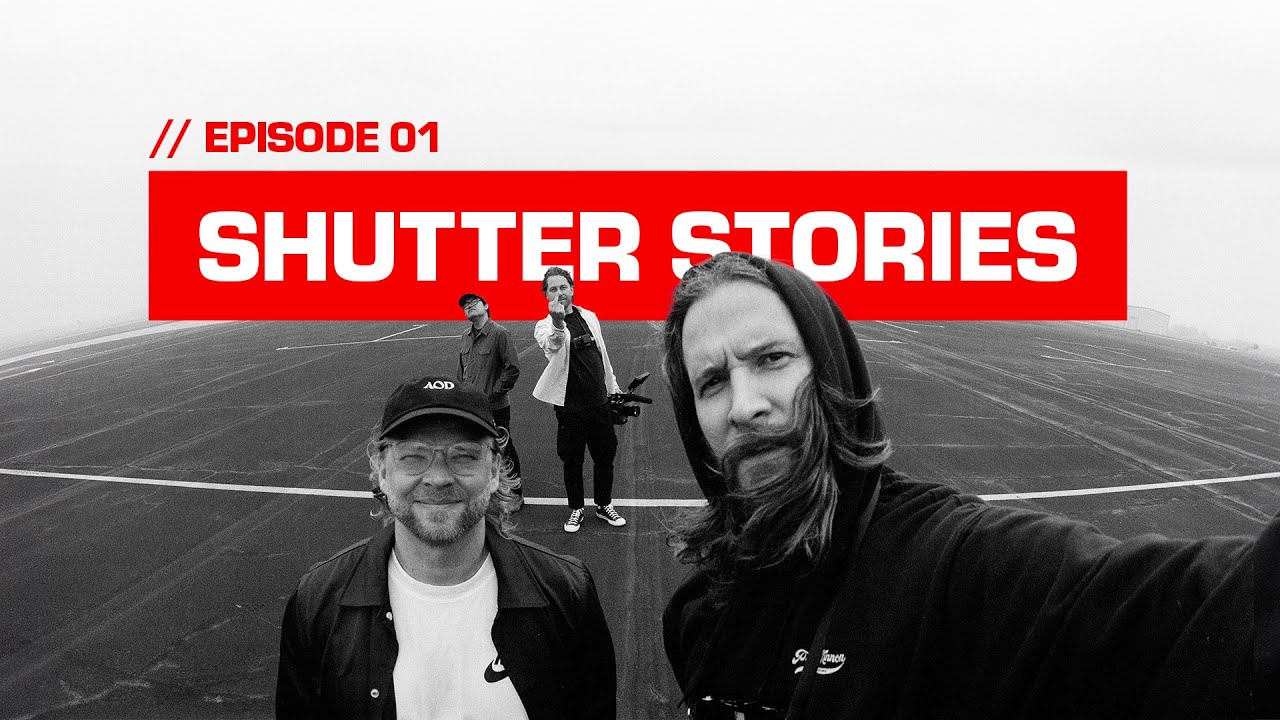
I have a confession: I spent about three years chasing the same kind of shot I kept seeing on Instagram. Same compositions, same color grades, same light. I thought I was developing a style. I was actually just borrowing everyone else’s. It wasn’t until I started pulling photography books off shelves, the physical kind, that something shifted in how I thought about making images. That’s exactly why this Peter McKinnon tutorial stopped me mid-scroll and made me want to write about it.
Watch the full tutorial on YouTube
In this Peter McKinnon tutorial, Peter walks through Jeff Bridges’ photography book “Pictures Volume 1” as part of a new book club series he’s launching. On the surface it looks like a book review. But what it actually is, once you sit with it, is a pretty clear-eyed argument for how photographers find and develop a point of view. The whole video is a masterclass in understanding why your access and your perspective are your most powerful creative tools, and how studying other photographers’ finished work (not their follower count) is one of the fastest ways to grow.
Here’s how I broke it down into steps you can actually use in your own practice.
Step 1: Recognize That Your Unique Access Is Your Subject
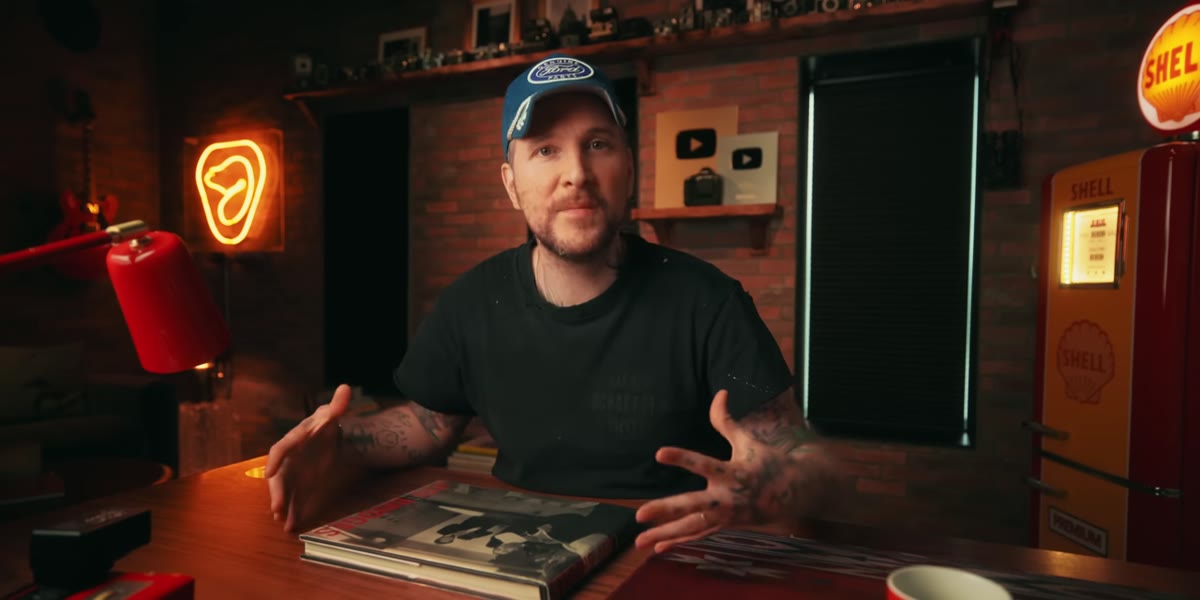 Peter explaining how Jeff Bridges photographs on movie sets
Jeff Bridges has photographed behind the scenes on film sets for decades, places most photographers will never be allowed. Peter makes the point that what makes Bridges’ work so compelling isn’t technical wizardry. It’s that he brought his camera into rooms nobody else could enter. Familiar faces, candid moments, the curtain pulled back.
Peter explaining how Jeff Bridges photographs on movie sets
Jeff Bridges has photographed behind the scenes on film sets for decades, places most photographers will never be allowed. Peter makes the point that what makes Bridges’ work so compelling isn’t technical wizardry. It’s that he brought his camera into rooms nobody else could enter. Familiar faces, candid moments, the curtain pulled back.
Ask yourself honestly: where do you have access that other photographers don’t? Maybe it’s your job, your neighborhood, your family, your community. My Sunday morning photo walks have given me a relationship with a specific stretch of Seattle waterfront that no visiting photographer could replicate in an afternoon. That intimacy shows in the pictures. Your ordinary access can be extraordinary material if you decide to point your camera at it with intention.
Step 2: Break Up with Social Media as Your Main Inspiration Source
 Peter talking about turning to books instead of scrolling social media
Peter is careful here. He’s not dismissing social media, which makes sense given that it’s literally his platform. But he draws a clear line between consuming social media and finding inspiration there. He found that scrolling produced a certain kind of influence, one that pushed his work toward what was already popular rather than toward something personal.
Peter talking about turning to books instead of scrolling social media
Peter is careful here. He’s not dismissing social media, which makes sense given that it’s literally his platform. But he draws a clear line between consuming social media and finding inspiration there. He found that scrolling produced a certain kind of influence, one that pushed his work toward what was already popular rather than toward something personal.
Books gave him a different kind of input. New photographers he didn’t know existed, images that weren’t optimized for a feed, stories with actual context. My challenge to you is to track where your inspiration actually comes from this week. If it’s 90% Instagram and TikTok, that’s going to show up in your work whether you mean it to or not. Pick one photography book, any one, and spend thirty minutes with it before you open an app.
Step 3: Study the Proof Sheets, Not Just the Final Prints
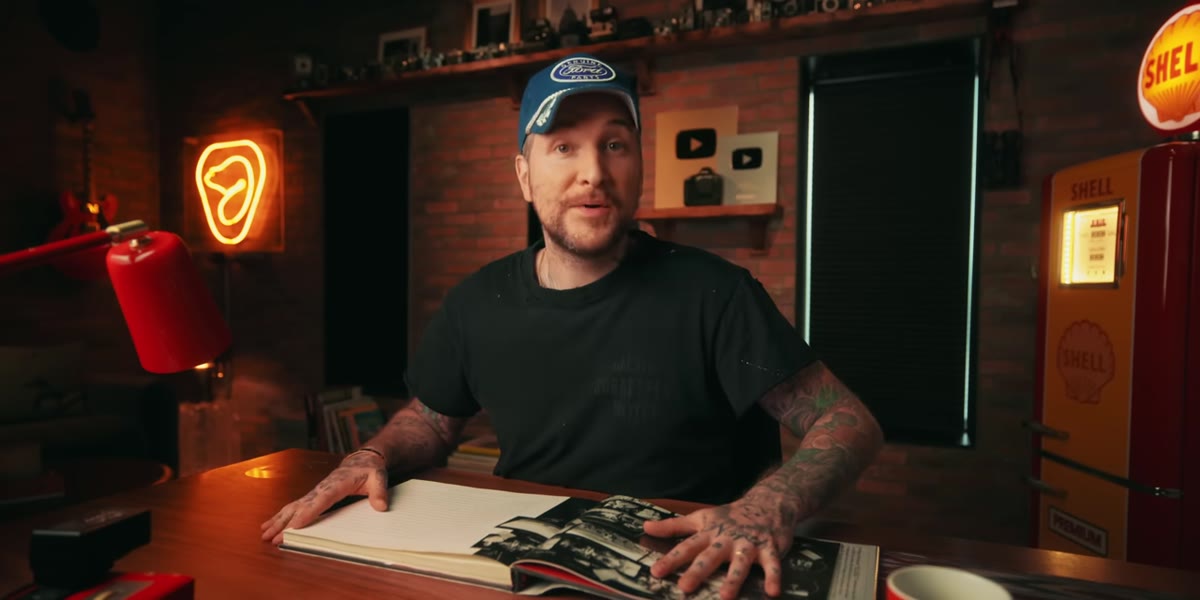 Peter showing proof sheets with Bridges’ handwritten notes and selections
One of the things Peter highlights about the book’s layout is that Jeff Bridges includes his proof sheets, those contact sheets photographers use to review and mark up film frames before selecting the final prints. They show his handwritten notes, his circled choices, his editing thinking laid bare.
Peter showing proof sheets with Bridges’ handwritten notes and selections
One of the things Peter highlights about the book’s layout is that Jeff Bridges includes his proof sheets, those contact sheets photographers use to review and mark up film frames before selecting the final prints. They show his handwritten notes, his circled choices, his editing thinking laid bare.
This is gold for anyone trying to understand how good photographers actually make decisions. The final image is the destination. The proof sheet shows you the road. When you’re editing your own shoots, try doing a version of this deliberately. Export a contact sheet, print it if you can, and make yourself physically mark which images you’re drawn to and why before jumping into post-processing. It slows you down in a useful way and makes your selection instincts visible.
Step 4: Let Equipment Be a Creative Constraint, Not Just a Spec Sheet
 Peter describing Jeff Bridges using the Widelux panoramic camera
Jeff Bridges shoots with a Widelux camera, a panoramic film camera with a scanning lens instead of a traditional shutter. It’s a strange, limited tool. And Peter was so inspired by the images it produced that he tracked one down for himself, and it became one of his most-used cameras in the months that followed.
Peter describing Jeff Bridges using the Widelux panoramic camera
Jeff Bridges shoots with a Widelux camera, a panoramic film camera with a scanning lens instead of a traditional shutter. It’s a strange, limited tool. And Peter was so inspired by the images it produced that he tracked one down for himself, and it became one of his most-used cameras in the months that followed.
The lesson isn’t “buy a Widelux.” The lesson is that a camera with unusual constraints forces you to photograph differently. The Widelux’s scanning motion, its wide field of view, the way it handles movement, all of it produces images that couldn’t come from a standard camera. Think about the constraints in your own kit. Shoot an entire afternoon on a 50mm prime if you always reach for a zoom. Shoot your next project on your phone if you haven’t done that recently (I do this a few times a year specifically because it makes me think differently). Constraints are not limitations. They’re prompts.
Step 5: Write the Story Around the Image, Not After It
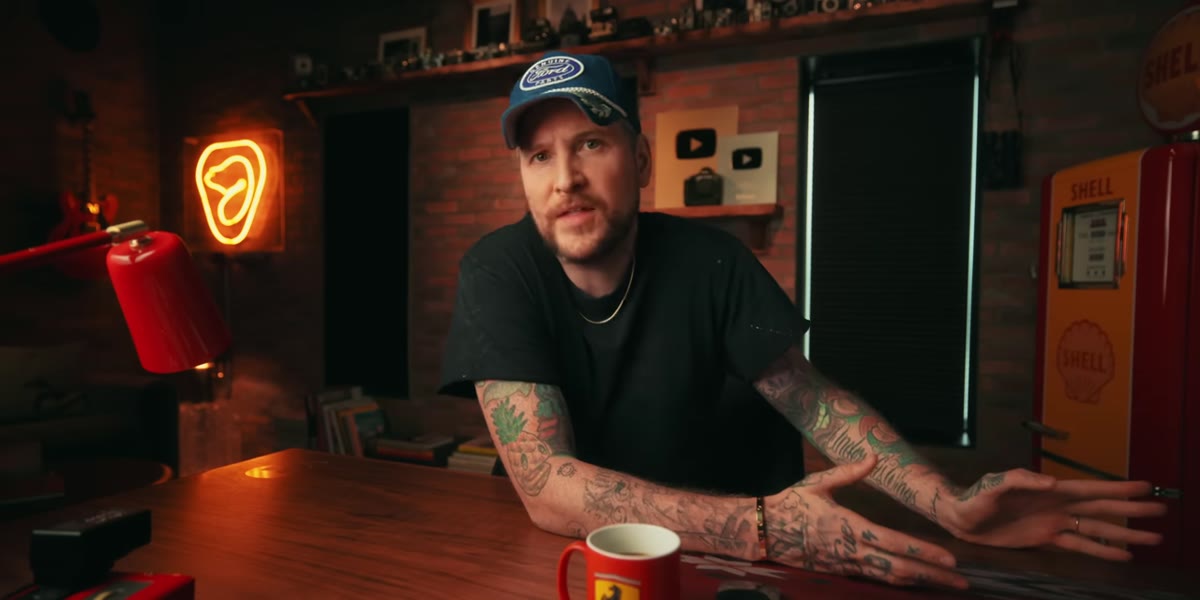 Peter discussing captions and context on Instagram’s early days vs. now
Peter gets a little nostalgic here about early Instagram, when people wrote real captions. Context. Stories. Why they were somewhere, what the moment felt like. He notes that photo books still preserve this habit because each image often comes with the photographer’s own account of what was happening.
Peter discussing captions and context on Instagram’s early days vs. now
Peter gets a little nostalgic here about early Instagram, when people wrote real captions. Context. Stories. Why they were somewhere, what the moment felt like. He notes that photo books still preserve this habit because each image often comes with the photographer’s own account of what was happening.
Before your next shoot, write two or three sentences about what you’re trying to capture and why it matters to you. Not a technical brief, a human one. Then go shoot. You’ll find that having articulated the story in advance changes what you look for through the viewfinder. After the shoot, try writing a caption before you even open your editing software. It keeps you honest about what the image was actually supposed to communicate.
What I’d Add From My Own Experience
The part of this video that hit me hardest was the idea that inspiration from books created a level of creative impact Peter hadn’t gotten from social media. I’ve felt that. Some of my favorite images I’ve ever taken were directly influenced by printed work, not feeds.
But here’s the caveat I’d offer: this isn’t about being anti-internet or precious about “real” photography. It’s about input diversity. When everyone is pulling from the same five trending accounts, the outputs start to look the same. Mixing in books, exhibitions, even other art forms like music or film, gives your photography a texture that’s harder to trace and harder to copy. That’s what makes a style instead of an aesthetic.
The single most important takeaway here is this: your perspective is the story, and you have to protect what shapes it. Where you find inspiration will show up in your work, whether you’re paying attention to it or not. Be intentional about the creative input you’re feeding yourself, and the output will follow.
Go watch the full breakdown and let Jeff Bridges’ work remind you what a deeply personal photography practice can look like:
Watch the full tutorial on YouTube
Comments (3)
Been doing this wrong for years apparently. Thanks for the wake-up call.
Quality content like this is rare. Keep it up.
Couldn't agree more. I've seen this make a huge difference in color grading work specifically.
Leave a Comment