There’s a question I get asked at almost every workshop I teach, and it usually comes from someone who’s technically solid but frustrated: “Why does my work all look… different?” They show me a portfolio and I can see the problem immediately. A moody street photo sits next to a bright, airy lifestyle shot, which sits next to a dramatic black-and-white portrait. All technically competent. None of it cohesive. And cohesion, it turns out, is everything when you’re trying to build a photography career or even just a reputation worth having.
This is exactly the problem Joel Grimes tackles head-on in his tutorial on photographer branding. Watch the full tutorial on YouTube before or after reading this breakdown. Grimes has spent decades developing one of the most recognizable visual signatures in commercial photography, and the way he explains branding strips away all the marketing jargon and makes it feel genuinely achievable. I’ve watched this one multiple times, and every time I come back with something new to apply.
What struck me most is how practical his framework is. This isn’t about logos or color palettes on your website. It’s about what happens when someone sees your image in a magazine and knows it’s yours before they check the credit line. That’s the goal. Here’s how he breaks it down.
Step 1: Understand What Branding Actually Means for a Photographer
 Joel Grimes explaining brand positioning using Coca-Cola as a reference
Grimes opens by defining branding in plain terms: it’s positioning yourself in the marketplace so that your name gets associated with a specific visual style. He uses Coca-Cola as a reference point, not because photographers need to think like multinational corporations, but because the principle is identical. When people think “soft drink,” Coca-Cola rises to the top. When people think “gritty, composite sports photography,” Grimes wants his name to rise to the top. Your goal is the same thing, just at whatever scale is meaningful to your career.
Joel Grimes explaining brand positioning using Coca-Cola as a reference
Grimes opens by defining branding in plain terms: it’s positioning yourself in the marketplace so that your name gets associated with a specific visual style. He uses Coca-Cola as a reference point, not because photographers need to think like multinational corporations, but because the principle is identical. When people think “soft drink,” Coca-Cola rises to the top. When people think “gritty, composite sports photography,” Grimes wants his name to rise to the top. Your goal is the same thing, just at whatever scale is meaningful to your career.
For photographers, branding isn’t about being famous. It’s about being the obvious choice for a specific type of image within your community, your niche, or your client base.
Step 2: Define the “Look” You Want to Own
 Grimes referencing Picasso’s distinct visual style as an example
Grimes points to Picasso as an example of an artist who became so associated with a particular visual approach that his style was identifiable without a signature. Your “look” is the combination of lighting choices, post-processing style, compositional tendencies, and subject matter that shows up consistently across your work.
Grimes referencing Picasso’s distinct visual style as an example
Grimes points to Picasso as an example of an artist who became so associated with a particular visual approach that his style was identifiable without a signature. Your “look” is the combination of lighting choices, post-processing style, compositional tendencies, and subject matter that shows up consistently across your work.
Start by pulling together your 20 favorite images you’ve ever made. Look for patterns. Do you keep returning to hard directional light? Desaturated tones? Wide environmental portraits? That pattern is the seed of your brand. If you don’t see a pattern, that’s useful information too. It means you haven’t committed to a direction yet, and that’s the first thing to work on.
Step 3: Commit to Repeating That Look Relentlessly
 Grimes describing his three-light sports photography approach and years of repetition
This is where most photographers stall. Grimes is refreshingly honest here: he doesn’t claim to be a creative genius. What he does credit is passion for the process and a serious work ethic. Those two things together gave him the ability to repeat the same approach over and over, refining it each time, until it became unmistakably his.
Grimes describing his three-light sports photography approach and years of repetition
This is where most photographers stall. Grimes is refreshingly honest here: he doesn’t claim to be a creative genius. What he does credit is passion for the process and a serious work ethic. Those two things together gave him the ability to repeat the same approach over and over, refining it each time, until it became unmistakably his.
He specifically mentions that he spent roughly seven years repeating the same three-light approach for his edgy sports composites. Seven years. Not seven weeks. If you’re switching up your style every few months because you’re bored or chasing trends, you’re resetting the clock on your brand every single time. Pick your direction and stay in it long enough for it to actually sink in with the people who follow your work.
Step 4: Accept That This Takes Two to Three Years
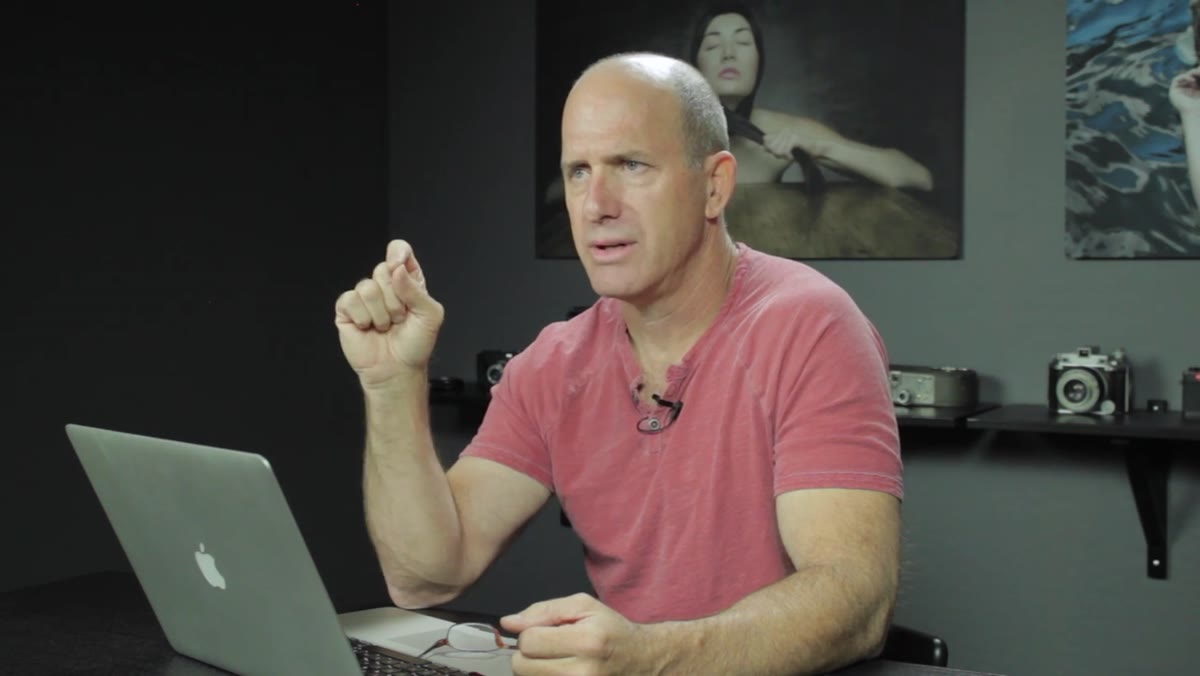 Grimes explaining the two-to-three year timeline for brand recognition in a market
Grimes is specific about the timeline, and I think this is the most valuable thing in the entire tutorial. He says it typically takes two to three years working consistently within a niche before people start genuinely associating your name with that look. He uses the example of wet plate photography: even if you started today with that technique and made incredible images, it would still take two to three years before you became “the wet plate photographer” in people’s minds.
Grimes explaining the two-to-three year timeline for brand recognition in a market
Grimes is specific about the timeline, and I think this is the most valuable thing in the entire tutorial. He says it typically takes two to three years working consistently within a niche before people start genuinely associating your name with that look. He uses the example of wet plate photography: even if you started today with that technique and made incredible images, it would still take two to three years before you became “the wet plate photographer” in people’s minds.
This reframe changed how I think about my own work. Consistency stops feeling like a constraint once you understand it as a long game. You’re not repeating yourself. You’re building name recognition one image at a time.
Step 5: Recognize That Every Brand Has a Shelf Life
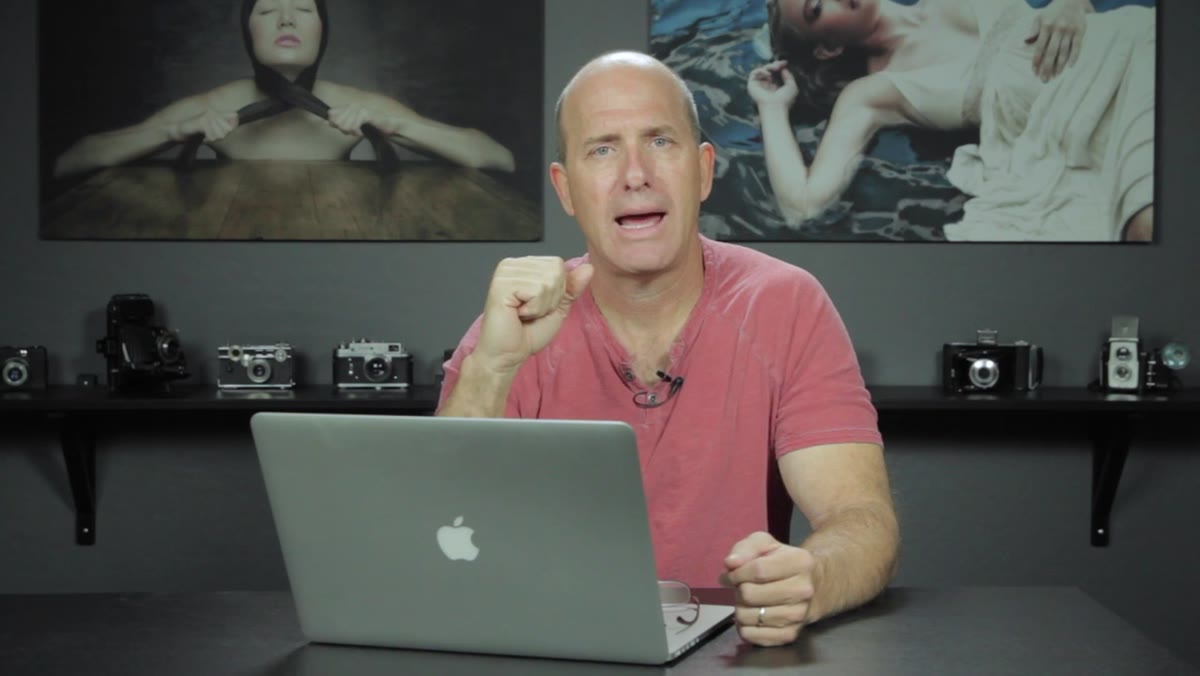 Grimes noting that visual styles have a natural lifespan in the marketplace
Grimes closes with something that caught me off guard the first time I heard it: brands have shelf lives. A visual style that feels fresh and distinctive today will eventually become familiar, then common, then dated. This isn’t a reason to avoid committing to a look. It’s a reason to stay observant and be willing to evolve deliberately, rather than constantly chasing the next thing before you’ve established anything.
Grimes noting that visual styles have a natural lifespan in the marketplace
Grimes closes with something that caught me off guard the first time I heard it: brands have shelf lives. A visual style that feels fresh and distinctive today will eventually become familiar, then common, then dated. This isn’t a reason to avoid committing to a look. It’s a reason to stay observant and be willing to evolve deliberately, rather than constantly chasing the next thing before you’ve established anything.
The key word is “deliberately.” You don’t reinvent your brand every year. But at some point, usually after years of working a signature style, you may find yourself ready to evolve it. When that happens, you bring your audience along rather than confusing them.
What I’d Add From My Own Experience
I’ve been shooting lifestyle and travel work long enough to have watched my own visual tendencies shift, sometimes on purpose, sometimes not. The honest thing I’d add to Grimes’s framework is this: you have to shoot a lot of bad, inconsistent work before you find the look that actually belongs to you. That exploratory phase is necessary, but at some point you have to stop exploring and start committing.
My Sunday morning photo walks, something I’ve kept up for years now, originally started as a way to experiment freely. No client, no expectations, just me and whatever light I found. Over time, those walks started producing a very consistent set of images, soft Pacific Northwest light, quiet ordinary moments, a lot of negative space. That wasn’t a decision I made in a planning document. It emerged from repetition. Then I started making it intentional.
If you’re in the early stages and still looking for your look, that’s fine. But start paying attention to what you keep returning to. That’s where your brand already lives.
The single most important thing Joel Grimes says in this tutorial is that branding doesn’t require genius. It requires patience and the willingness to repeat a thing until it becomes yours. That’s available to anyone willing to put in the time.
Watch the full tutorial on YouTube for Grimes’s full breakdown, including examples from his own commercial work that make the concept click in a way that’s hard to describe in text alone.
Comments
Leave a Comment