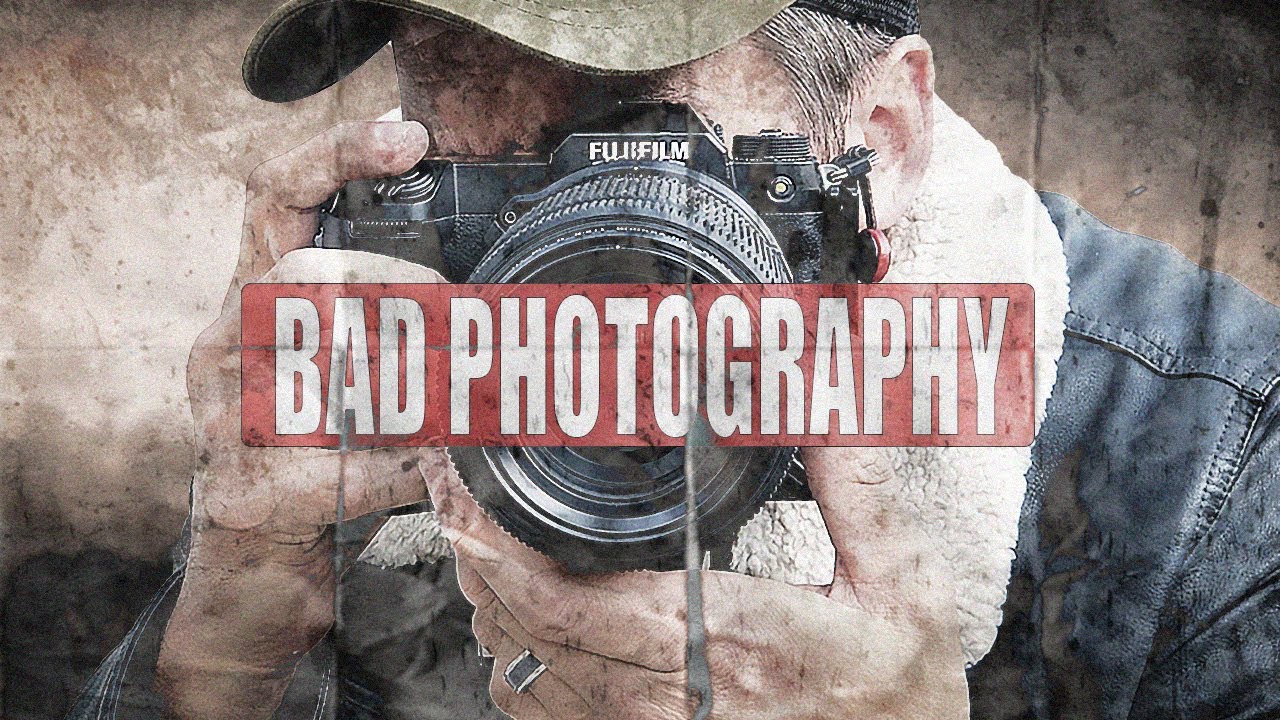
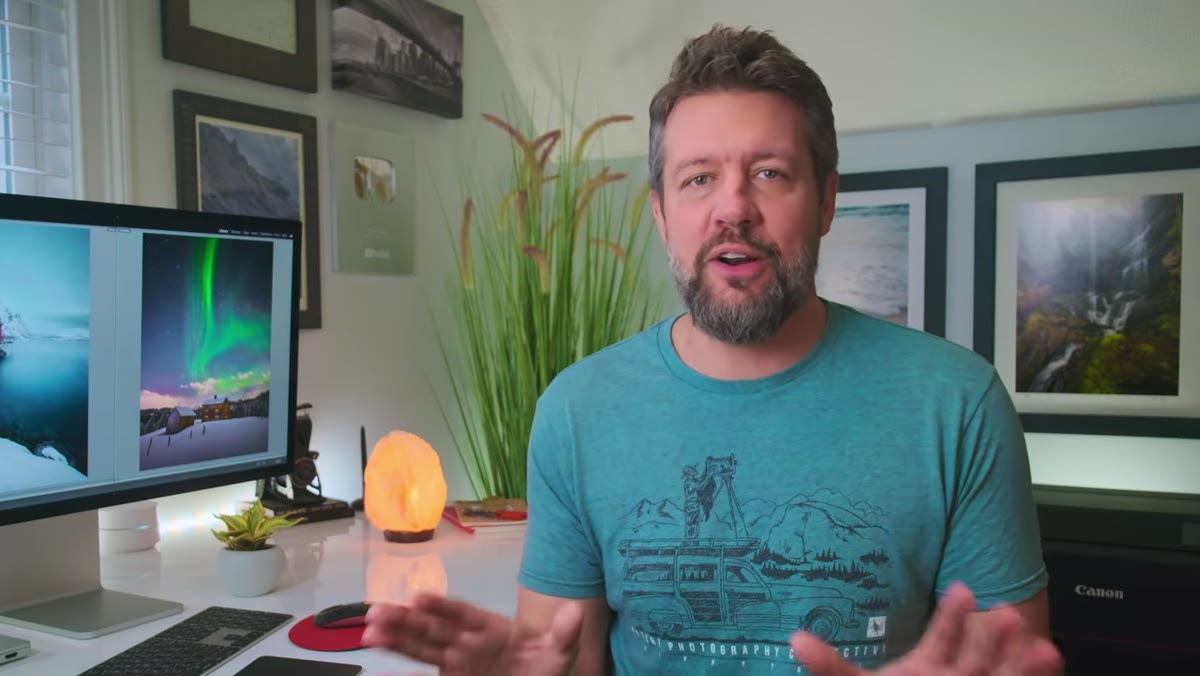
Every few months I sit down and ask myself why some of my shots feel alive and others feel like I’m just going through the motions. It’s not always about gear or light or location. Sometimes the problem is quieter than that. I’ve been chasing a particular outcome instead of staying curious about the process. That question led me to Watch the full tutorial on YouTube, where landscape photographer Mark Denney lays out something I think a lot of us need to hear more than we want to admit.
Denney opens by naming photographers widely considered great at what they do, people like Ansel Adams and Michael Kenna, and then deliberately sets them aside. His point isn’t to study them. His point is that the more interesting and more honest conversation is about the photographers who aren’t considered great yet but keep showing up anyway. That framing hit me harder than I expected. I’ve spent a lot of time comparing my work to photographers who have been shooting for decades. What Denney proposes instead is measuring yourself against your own commitment to getting better. That’s a standard you can actually work with.
What follows in the tutorial is a practical breakdown of four habits that fuel real growth. I’m going to walk through them step by step, pulling out the concrete actions so you can apply them without needing to pause and rewind.
Step 1: Experiment Without Fear of Failure
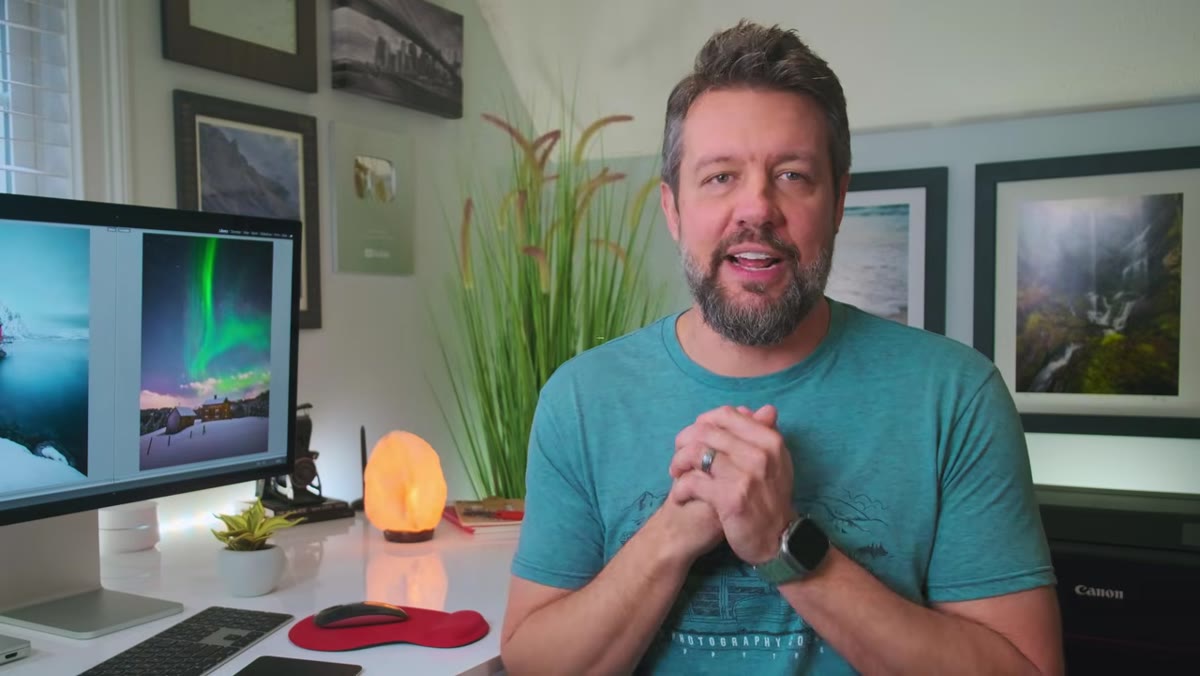 Photographer in the field experimenting with different focal lengths
When Denney talks about experimentation, he’s not being vague or motivational. He’s describing a specific shift he made early in his landscape work. Like a lot of beginners, he was fixed on wide-angle lenses, that 16-35mm range that promises big dramatic skies and sweeping scenery. The problem is that wide-angle shooting is genuinely difficult and also entirely dependent on conditions you can’t control. When the sky is flat and grey, a wide lens mostly just gives you a lot of boring foreground.
His solution was to start saying yes to everything else. Longer focal lengths to isolate a single tree or a band of color on a hillside. Macro work to find interesting textures close to the ground. Intentional camera movement, black and white, drone work. Not to master all of them at once, but to build a wider set of options. The practical takeaway here is to show up to your next shoot with a lens you don’t usually grab. If you always shoot at 24mm, bring a 50mm or an 85mm and commit to using it for at least the first 30 minutes. You’ll make awkward frames. That’s the whole point.
Step 2: Build a Photographer’s Arsenal for Bad Conditions
 Camera gear laid out, multiple focal length lenses visible
Denney uses the phrase “photographer’s arsenal” and I think it’s worth sitting with. The idea is that when conditions don’t cooperate, which is most of the time, you need more than one approach available to you. This is less about having a lot of gear and more about having practiced enough different techniques that you can pivot on location without feeling lost.
Practically, this means deliberately training for the bad days. On your Sunday walk or your next photo outing, set a constraint before you leave. Only shoot things at ground level. Or only shoot with the sky excluded from every frame. These limits force you to find images in places you’d normally walk past. After a few sessions like this, you’ll notice you stop waiting for perfect light. You start looking harder at what’s actually in front of you.
Step 3: Embrace the Process Over the Outcome
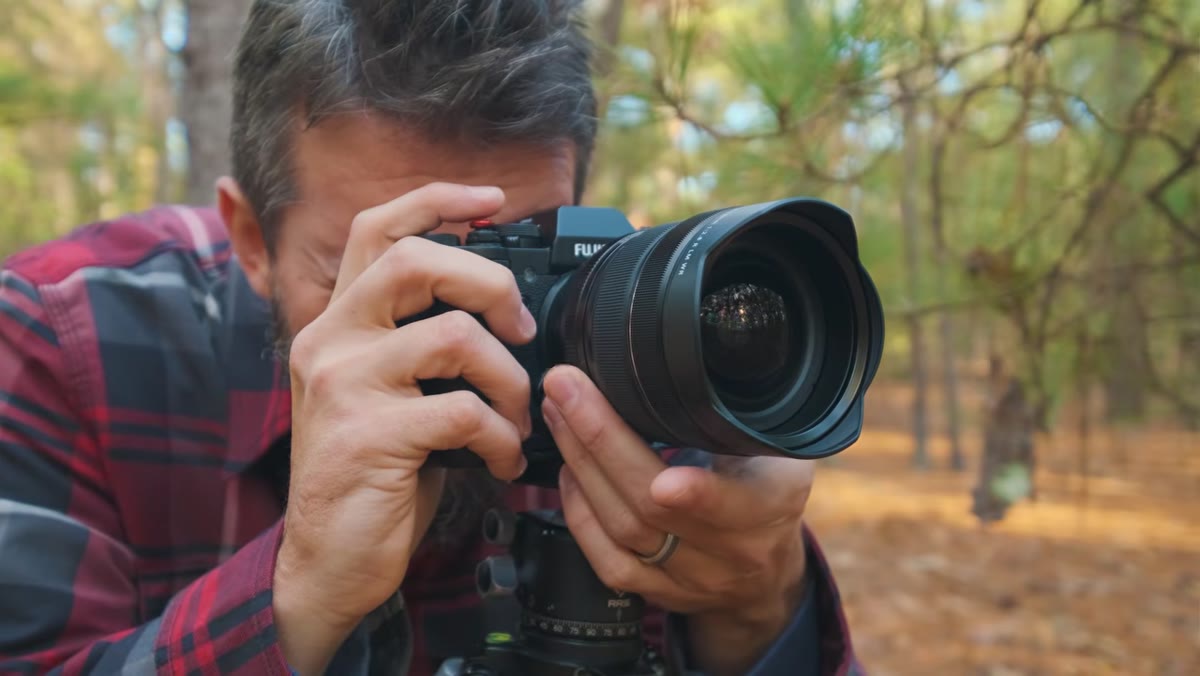 Photographer reviewing images on camera LCD in the field
One of the more subtle things Denney says is that every time you get behind the camera, the opportunity is for improvement, not for a great shot. That reframe changes how you evaluate a shoot. Instead of asking “did I get anything good,” you ask “did I learn something.” Those are very different questions and they lead to very different habits.
Try keeping a short shooting journal. Nothing elaborate. After each session, write one sentence about what you tried and one sentence about what didn’t work the way you expected. Over a few months, patterns show up. You’ll notice you keep struggling with the same compositional problem, or that you always underexpose in certain light. A journal makes invisible patterns visible, and that’s what accelerates improvement faster than any gear upgrade.
Step 4: Accept Failure as Part of the Commitment
 Photographer looking at a rejected frame, nodding thoughtfully
Denney is direct about this. You will fail. He frames failure not as evidence that you’re not cut out for photography, but as the most reliable signal that you’re actually trying something. The people who never make a bad frame are the people who only shoot in the same safe conditions with the same safe compositions. There’s no growth in that loop.
The actionable version of this is to stop deleting bad shots immediately. Give yourself 24 hours before you cull. Sometimes what looks like a failure in the field turns out to be a starting point for understanding why it didn’t work. And understanding why something failed is significantly more valuable than forgetting it ever happened.
What I’d Add: Make Experimentation Scheduled, Not Spontaneous
I’ve found that “I’ll experiment more” as a general intention basically never happens. Life fills in the gaps. What does work is treating experimentation like a standing appointment. My Sunday morning photo walks are non-negotiable for me, rain or shine in Seattle, which means rain most of the time. I pick one constraint per walk. One lens. One subject category. One editing approach I’ve never tried. That structure is what actually produces the variety Denney is talking about, not motivation, but routine.
I’ll also say this: some of my most interesting experiments have happened with my phone. No bag to carry, no settings to fiddle with, just the question of what can I actually see right now. If you’ve been telling yourself you’ll experiment more once your gear is better, try proving yourself wrong this weekend with whatever’s already in your pocket.
The single most important idea in this tutorial is that greatness isn’t a destination you arrive at. It’s a direction you keep choosing. Every shoot is a chance to try something uncomfortable, learn something specific, and show up again. That’s it. That’s the whole thing.
Watch the full tutorial on YouTube to hear Mark Denney walk through all four habits in his own words. His perspective on what it actually means to be committed to improvement is worth your full attention.
Comments
Leave a Comment