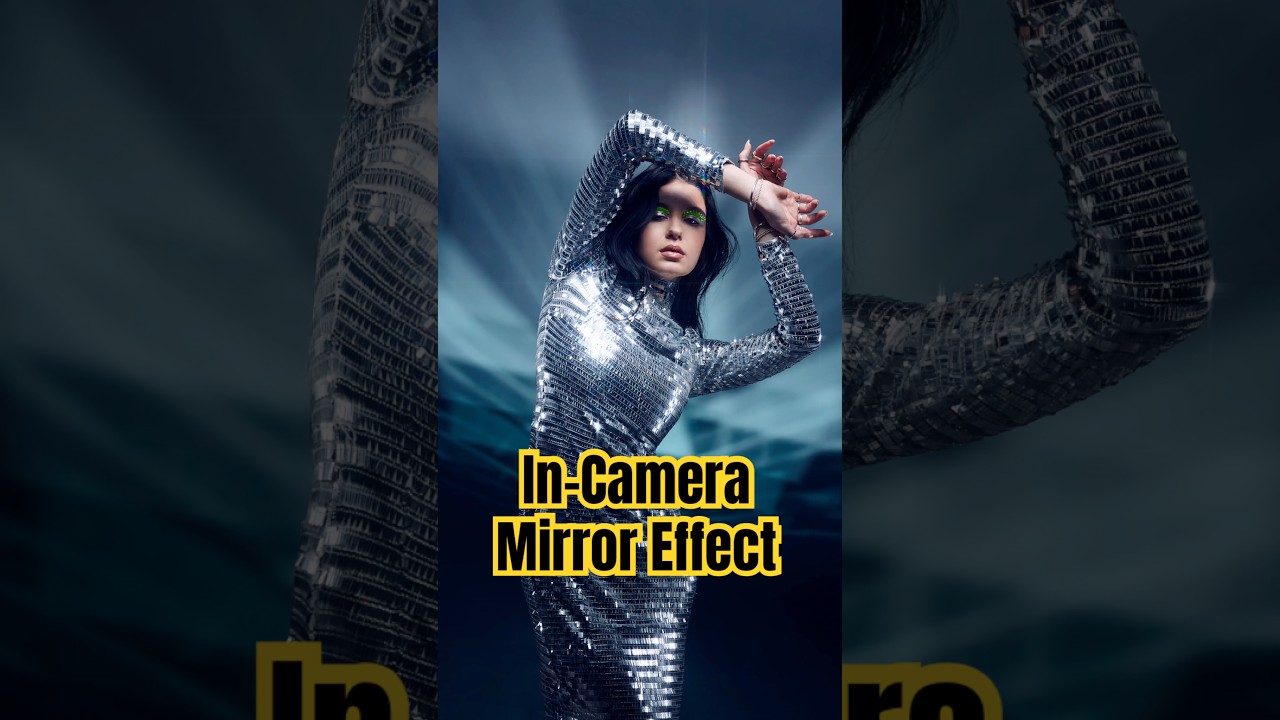
When I first discovered this technique, I was amazed at how simple materials could create such a sophisticated, high-fashion result. In this excellent tutorial, Joel Grimes shows us how to build a futuristic mirrored lighting effect entirely in-camera using just three mirrors and gaff tape. No Photoshop. No complex lighting rigs. Just clever positioning and practical problem-solving.
I’ve spent years collecting lighting techniques, and this one immediately became a favorite because it’s accessible, affordable, and produces genuinely striking results. Whether you’re shooting fashion, beauty, or editorial work, this mirror-based setup will expand your creative possibilities.
What You’ll Need (The Minimal Shopping List)
One of my favorite aspects of this technique is how economical it is. Before diving into the steps, let me break down exactly what you need:
- Three mirrors — these don’t need to be fancy or expensive. Standard mirrors from a hardware or home improvement store work perfectly
- Gaff tape — this is essential for securing your mirrors safely without damaging your equipment
- Your existing light source — a key light, beauty dish, or whatever main light you’re already using
- A sturdy stand or support system — to hold your mirror setup securely
That’s genuinely it. The beauty of this technique is that it works within your current lighting setup rather than requiring new equipment.
Step-by-Step Setup Instructions
Step 1: Position Your Primary Light Source
Start by placing your main light exactly where you’d normally position it for your subject. This might be a key light at a 45-degree angle, a beauty dish directly in front, or any other configuration you prefer. Your mirrors will amplify and redirect this existing light, so your starting point matters.
I recommend taking test shots at this stage. You want to establish your baseline lighting before adding the mirror complexity. This gives you a reference point to compare against once your mirrors are in place.
Step 2: Position Your First Mirror
Place your first mirror at an angle that catches light from your primary source and redirects it toward your subject. This is where gaff tape becomes invaluable — it secures the mirror at whatever angle you need without slipping.
Joel’s approach uses angled positioning rather than straight-on placement, which creates more interesting light patterns. Start experimenting with angles. Even small adjustments create noticeable differences in how the light falls on your subject’s face and body.
Step 3: Add Your Second Mirror for Depth
Position your second mirror to catch light either from your primary source or from the reflected light of your first mirror. This layering is what creates the futuristic, complex lighting effect. The mirrors begin working together, multiplying your light sources without actually adding more equipment.
This is where things get genuinely creative. The interplay between mirrors creates light paths that would be difficult to achieve with traditional lighting alone. You’ll start seeing interesting shadows and highlights that have a three-dimensional quality.
Step 4: Position Your Third Mirror Strategically
Your third mirror is where you fine-tune the effect. Use it to fill shadows, create catchlights in your subject’s eyes, or add accent lighting. Some photographers use it to bounce light onto the background, creating separation and depth.
At this stage, I always encourage stepping back and really studying the light on your subject. Move around. Look at different angles. The magic of this technique is that small repositioning creates dramatic changes in the final image.
Step 5: Secure Everything with Gaff Tape
Once you’ve dialed in your mirror positions, secure each one thoroughly with gaff tape. This prevents any accidental movement during your shoot. I can’t stress this enough — a falling mirror is dangerous and expensive. Safety and stability should be your priority.
My Additional Tips From Using This Technique
Experiment with mirror sizes. Larger mirrors create broader light areas; smaller mirrors create more defined, directional light. Mix sizes for more complex effects.
Clean your mirrors beforehand. Dust and fingerprints affect light quality. A quick wipe makes a noticeable difference in image clarity.
Shoot tethered if possible. Being able to see your images on a larger screen helps you evaluate the mirror positioning more accurately than looking at the back of your camera.
Keep your subject comfortable. Multiple light sources can feel intense. Check in with your model frequently about heat and glare.
Why This Technique Works So Well
What makes this approach so effective is that it feels sophisticated without being complicated. Your lighting becomes more dimensional, with multiple subtle light sources creating depth. The effect photographs beautifully without looking artificial or over-lit.
It’s also infinitely customizable. You can create soft, flattering light for beauty work, or dramatic, edgy light for fashion. The same basic setup yields completely different results based on mirror positioning and angles.
Watch the Full Tutorial
To see exactly how Joel positions these mirrors and the specific angles that create the most striking effects, I strongly encourage you to watch the complete tutorial. Seeing the technique in motion clarifies positioning in ways that written instructions simply can’t convey. Pay attention to how he adjusts angles in real-time and evaluates the results.
This is one of those techniques that takes maybe 20 minutes to set up but produces images that look like you’ve spent hours designing complex lighting. That’s my favorite kind of photography hack — simple, affordable, and genuinely impressive.