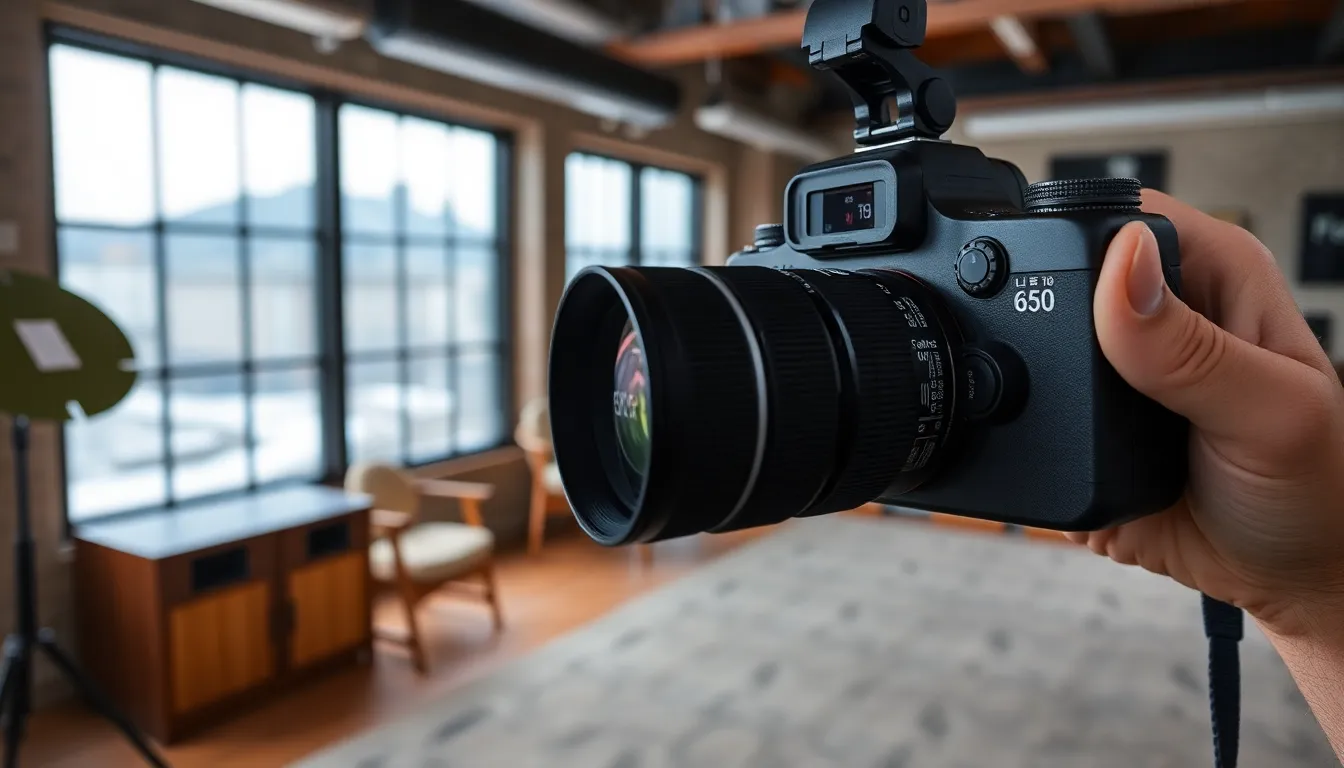
Best Camera Settings for Indoor Photography: Complete Guide for Stunning Results
Indoor photography can feel intimidating, especially when you’re working with limited natural light and challenging conditions. I’ve been there—struggling with blurry photos, strange color casts, and exposure issues that made me want to throw my camera across the room. But here’s what I’ve learned: the best camera settings for indoor photography aren’t mysterious or complicated. They’re just a combination of intentional choices that work together to produce sharp, beautifully exposed images.
In this guide, I’m going to walk you through exactly which settings to adjust, why they matter, and how to adapt them to different indoor scenarios. Whether you’re photographing a family portrait in your living room or capturing a child’s birthday party, these principles will help you nail your shots.
Understanding the Exposure Triangle
Before we dive into specific settings, let me explain the three interconnected factors that control your image exposure: aperture, shutter speed, and ISO. I think of these as a balancing act—adjust one, and you’ll need to compensate with the others.
Aperture controls how wide your lens opens (measured in f-stops like f/2.8 or f/5.6). A lower number means a wider opening and more light.
Shutter speed determines how long your sensor is exposed to light (measured in fractions of a second, like 1/125 or 1/30).
ISO is your sensor’s sensitivity to light. Higher numbers mean more sensitivity but also more digital noise.
For indoor photography, you’re typically working with less light, so you’ll need to increase at least one or two of these factors. Let’s explore how.
Best Camera Settings for Indoor Photography: The Foundation
Here are the core settings I recommend starting with for indoor environments:
-
Set your aperture to f/2.8 or wider (if your lens allows it). This opens your lens fully to gather maximum light. If you’re using a kit lens that maxes out at f/5.6, that’s okay—just be aware you’ll need to compensate with shutter speed or ISO.
-
Use shutter speed between 1/60 and 1/125 of a second. This is fast enough to avoid camera shake and motion blur when handheld, while still capturing enough light. If you’re using a tripod, you can slow this down to 1/30 or even longer.
-
Start with ISO 1600 to 3200. Modern cameras handle this ISO range beautifully. Don’t be afraid of it—a little grain is better than a blurry photo.
-
Shoot in Aperture Priority mode (A or Av). This lets you control aperture while your camera automatically adjusts shutter speed. I find this is the most intuitive mode for indoor work.
-
Use manual white balance or set a custom white balance. Indoor lighting (tungsten bulbs, fluorescent lights, LED) can create unwanted color casts. I typically shoot at 3200-4000K to compensate for warm tungsten lighting.
Adjusting for Different Indoor Lighting Conditions
Not all indoor environments are created equal. Here’s how I adapt my settings:
Low Light Rooms (Restaurants, Dimly Lit Homes)
Push your ISO to 3200-6400, open your aperture as wide as possible, and slow your shutter speed to 1/50 if you have steady hands or a tripod. This is where upgrading to a lens with a wider maximum aperture (like a 50mm f/1.8) makes a huge difference in your ability to gather light.
Bright Indoor Spaces (Well-Lit Kitchens, Studios)
You have more flexibility here. You can shoot at ISO 400-800, aperture f/4 to f/8, and shutter speed 1/125 or faster. This gives you greater depth of field if that’s your goal.
Mixed Lighting (Windows + Indoor Lights)
This is tricky because you’ll have competing color temperatures. I recommend exposing for the most important part of your subject and accepting that some areas may be slightly under or overexposed. Alternatively, position your subject to use window light as your primary source.
The Game-Changer: Adding Supplemental Light
Here’s my honest truth: the single best improvement I made to my indoor photography was investing in proper lighting equipment. While you can absolutely succeed with camera settings alone, adding light changes everything.
For accessible, budget-friendly options, I’m a fan of the Neewer 660 LED Video Light 2-Pack Kit. These are dimmable, color-temperature adjustable, and don’t require flash sync—just position them where you need light. They’ve transformed my ability to shoot in previously impossible indoor scenarios.
If you prefer traditional flash, the Godox TT600 Speedlite Flash is an excellent entry-level option. It’s lightweight, affordable, and can be bounced off ceilings and walls to create natural-looking light.
When you add supplemental light, you can actually lower your ISO and use faster shutter speeds, resulting in cleaner images with more creative control.
Step-by-Step Indoor Photography Workflow
Here’s how I approach setting up my camera for indoor photography:
- Survey the lighting situation and identify your light source
- Set your camera to Aperture Priority mode
- Choose your aperture (widest your lens allows if light is low)
- Set ISO between 1600-3200 as a starting point
- Take a test shot and check exposure and sharpness
- Adjust ISO up if underexposed, down if overexposed
- Verify your shutter speed isn’t below 1/60 (or your sync speed if using flash)
- Set custom white balance if you notice color cast
- Take your shot and review
Common Indoor Photography Mistakes to Avoid
-
Pushing ISO too aggressively. Start at 1600 and increase only as needed. Modern cameras are excellent at high ISO, but you want the cleanest image possible.
-
Using wide apertures for group photos. With f/1.4, only one person might be sharp. Use f/2.8 to f/5.6 for groups so everyone’s in focus.
-
Forgetting about composition. Perfect exposure means nothing if your framing is off. Pay attention to backgrounds and positioning even in low light.
-
Ignoring white balance. That orange or blue cast ruins otherwise perfect shots. Always adjust white balance for indoor lighting.
Final Thoughts
The best camera settings for indoor photography aren’t one-size-fits-all—they’re a starting point you’ll adjust based on your specific situation, equipment, and creative vision. What matters most is understanding why you’re changing each setting and how it affects your final image.
Start with the foundation settings I’ve shared, practice intentionally, and don’t hesitate to experiment. Indoor photography is one of the most rewarding genres to master because it forces you to truly understand your camera instead of relying on perfect natural light.
You’ve got this. Go forth and capture some beautiful indoor moments.
Comments
Leave a Comment