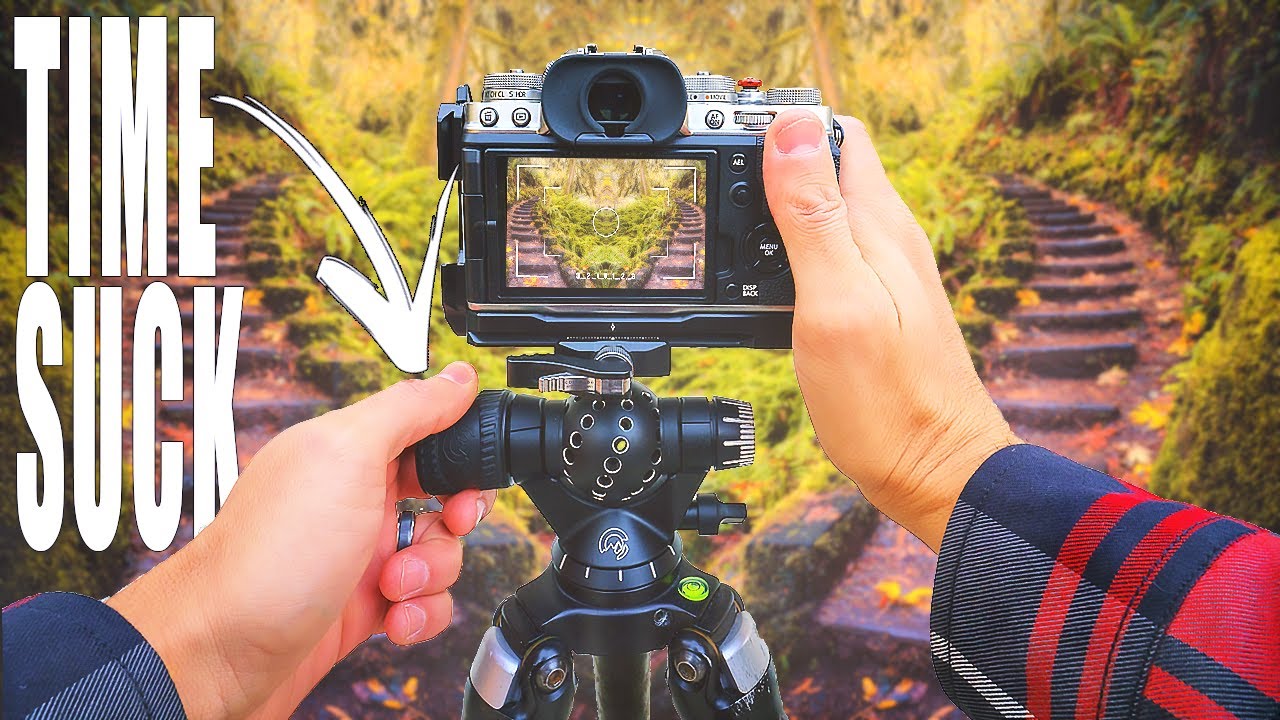
There’s a particular kind of frustration that comes from driving an hour to a location, spending three hours there, and coming home with one usable shot. I know it well. I used to do this constantly before I started being deliberate about how I actually spend my time when I’m out shooting. Most of us aren’t full-time photographers with unlimited days to wander around with a camera. We’re squeezing shoots into weekends, early mornings before work, or the occasional vacation. Every minute counts.
That’s exactly why I kept coming back to Watch the full tutorial on YouTube - a recent video from landscape photographer Mark Denney where he breaks down seven habits he’s built over the years to be more productive on location. Denney is meticulous about efficiency, and this video translates that into practical, repeatable steps. I’ve pulled out the core techniques and expanded on each one so you can put them to work without having to pause and rewind.
What struck me watching this is that none of these tips are about gear or technical settings. They’re about behavior - the small decisions you make from the moment you arrive at a location that either compound into a great session or quietly drain it.
Step 1: Start Handheld Before You Even Think About a Tripod
 Photographer walking a location with camera in hand, no tripod
When you arrive somewhere new, resist the urge to immediately set up your tripod. Denney calls this the “handheld starter,” and it’s a genuinely freeing way to begin a session. Walk the scene with just your camera in hand and physically move it around - get lower, get higher, swing left and right, crouch down near the ground. You’re not taking final shots yet. You’re scouting compositions with the fastest possible tool you have.
Photographer walking a location with camera in hand, no tripod
When you arrive somewhere new, resist the urge to immediately set up your tripod. Denney calls this the “handheld starter,” and it’s a genuinely freeing way to begin a session. Walk the scene with just your camera in hand and physically move it around - get lower, get higher, swing left and right, crouch down near the ground. You’re not taking final shots yet. You’re scouting compositions with the fastest possible tool you have.
The moment a tripod is attached to your camera, your brain stops exploring. You commit to a position and start optimizing within it rather than continuing to search. Going handheld first keeps you fluid. Think of it like sketching before you paint - you’re rough-drafting compositions before locking any of them in.
Step 2: Don’t Hammer Away at One Composition
 SD card grid showing many nearly identical frames from one composition
This one stung when I first heard it described, because I absolutely used to do this. You find a composition you like, and then you spend the next 45 minutes shooting variation after variation of essentially the same frame. Denney shows an SD card grid from a recent shoot where his early work reflects exactly this pattern - dozens of nearly identical images from one locked-in angle.
SD card grid showing many nearly identical frames from one composition
This one stung when I first heard it described, because I absolutely used to do this. You find a composition you like, and then you spend the next 45 minutes shooting variation after variation of essentially the same frame. Denney shows an SD card grid from a recent shoot where his early work reflects exactly this pattern - dozens of nearly identical images from one locked-in angle.
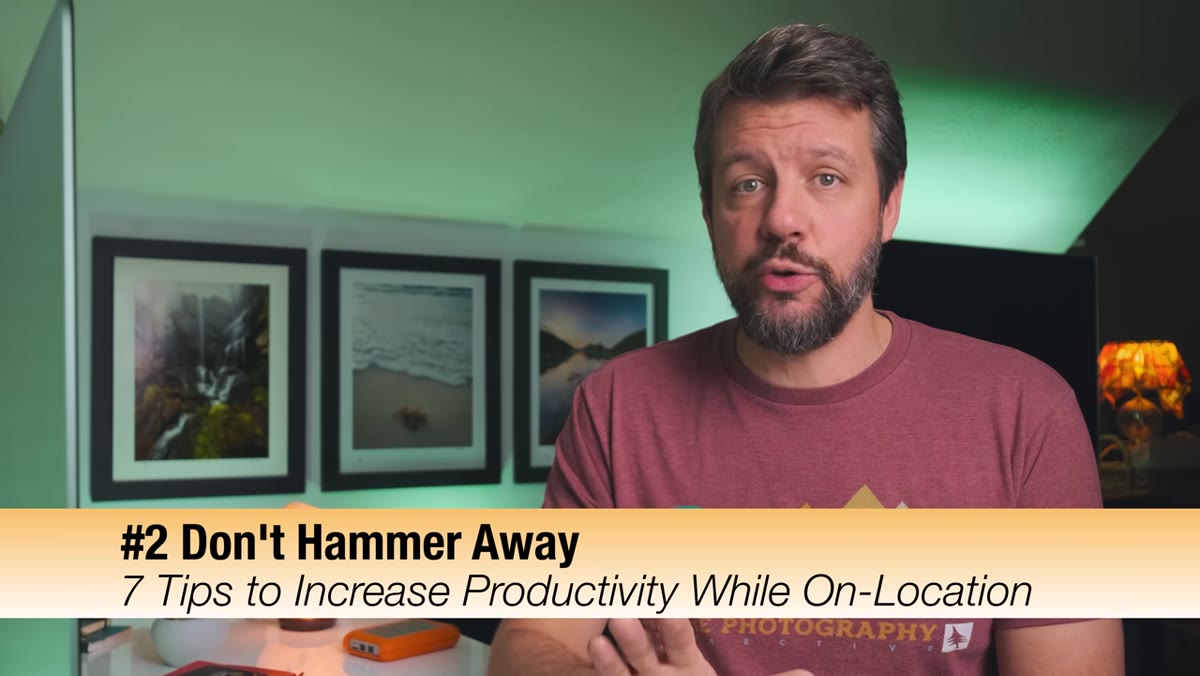
The fix is to set a mental limit. Shoot the composition enough to feel confident you’ve captured it, then move. Even if the light is still good. Even if you’re not sure the next spot will be better. The discipline of moving on is what creates a diverse, useful set of images from a single outing rather than 80 versions of one mediocre shot.
Step 3: Prioritize Compositions Based on Lighting Conditions
 Photographer evaluating scene with changing light overhead
Not every composition needs the same quality of light, and learning to match your shooting order to the available light is one of the highest-leverage habits in this list. When you arrive, do a fast mental inventory of the spots you want to shoot. Ask yourself which ones depend on directional light, which ones work in flat or overcast conditions, and which ones need specific color in the sky.
Photographer evaluating scene with changing light overhead
Not every composition needs the same quality of light, and learning to match your shooting order to the available light is one of the highest-leverage habits in this list. When you arrive, do a fast mental inventory of the spots you want to shoot. Ask yourself which ones depend on directional light, which ones work in flat or overcast conditions, and which ones need specific color in the sky.
Then sequence your session accordingly. If golden hour is coming and you have one composition that needs that warm side-light, hold it for the right moment. Fill the time before with compositions that are less light-dependent. You stop reacting to the light and start working with it intentionally.
Step 4: Use “Reactive” Shooting to Stay Nimble
 Wide shot of location with multiple potential compositions visible
Denney makes an important distinction between planned compositions and reactive ones. Planned compositions are the spots you scouted ahead of time. Reactive compositions are the ones that present themselves unexpectedly - a reflection you didn’t notice until the wind died, a patch of fog rolling in, a subject that wanders into the frame.
Wide shot of location with multiple potential compositions visible
Denney makes an important distinction between planned compositions and reactive ones. Planned compositions are the spots you scouted ahead of time. Reactive compositions are the ones that present themselves unexpectedly - a reflection you didn’t notice until the wind died, a patch of fog rolling in, a subject that wanders into the frame.
Staying reactive means keeping part of your attention available even when you’re locked into a tripod setup. Glance around every few minutes. Don’t get so tunnel-visioned on your main composition that you miss the thing happening ten feet to your left. Some of my favorite frames have come from abandoning a planned shot because something better appeared and I was paying enough attention to catch it.
Step 5: Bracket Your Settings, Not Just Your Exposures
 Camera screen showing exposure settings being adjusted between shots
Most photographers know about exposure bracketing for HDR or blending. Denney extends this logic to the broader idea of not over-committing to one technical approach. When you’re at a scene, try the shot at different focal lengths if you have a zoom. Try with and without a filter. Try a slightly different aperture to change the depth of field character.
Camera screen showing exposure settings being adjusted between shots
Most photographers know about exposure bracketing for HDR or blending. Denney extends this logic to the broader idea of not over-committing to one technical approach. When you’re at a scene, try the shot at different focal lengths if you have a zoom. Try with and without a filter. Try a slightly different aperture to change the depth of field character.
These variations take only seconds each, and they give you real options in post-processing rather than forcing you to make every decision in the field under pressure. The goal isn’t to shoot more frames for the sake of it - it’s to create genuine technical alternatives for your best compositions.
Step 6: Keep Moving During Flat Light
 Photographer walking between two different spots during midday conditions
Flat, overcast, or midday light doesn’t have to mean wasted time. Denney treats these conditions as an opportunity to cover ground rather than wait passively. Move to secondary compositions you’d normally skip during better light. Scout angles for your next visit. Experiment with tighter framing or abstract details that actually benefit from soft, even light.
Photographer walking between two different spots during midday conditions
Flat, overcast, or midday light doesn’t have to mean wasted time. Denney treats these conditions as an opportunity to cover ground rather than wait passively. Move to secondary compositions you’d normally skip during better light. Scout angles for your next visit. Experiment with tighter framing or abstract details that actually benefit from soft, even light.
The photographers who come home with the most useful work aren’t necessarily the ones who waited for the best conditions. They’re the ones who kept making decisions during every phase of the session, including the uninspiring ones.
Step 7: End With a Deliberate Review Before You Leave
 Photographer reviewing images on camera LCD at the location
Before you pack up, take five minutes to scroll through what you captured while you’re still at the location. This isn’t about pixel-peeping - it’s about identifying any obvious gaps. Did you mean to get a wider establishing shot and forget? Is there a foreground element you wanted to include but never circled back to?
Photographer reviewing images on camera LCD at the location
Before you pack up, take five minutes to scroll through what you captured while you’re still at the location. This isn’t about pixel-peeping - it’s about identifying any obvious gaps. Did you mean to get a wider establishing shot and forget? Is there a foreground element you wanted to include but never circled back to?
Catching these gaps while you’re still standing there costs almost nothing. Realizing them on your computer at home costs a whole extra trip.
My Addition: The “One Wildcard” Rule
I’ve added something to this framework that Denney doesn’t specifically mention but that fits the spirit of everything he’s teaching. At every session, I give myself one wildcard - one composition or technique that has no logical basis and no guarantee of working. Maybe it’s shooting into the sun. Maybe it’s using my phone instead of my camera. Maybe it’s lying flat on the ground for a perspective that looks absurd until it doesn’t.
The wildcard keeps the session from becoming purely mechanical. Efficiency matters, but so does the part of photography that has nothing to do with optimization.
The single biggest shift here is simple: arrive with a process, not just a camera. Knowing how you’ll move through a location - from handheld scouting to sequenced compositions to a final review - turns a two-hour session into something you can actually build on over time. That’s the difference between going home exhausted and going home with work you’re proud of.
Watch the full tutorial on YouTube to see Denney walk through all seven habits with footage from his actual winter storm shoot. Seeing how these decisions play out in real conditions makes the logic click even faster.
Comments (2)
I've watched a dozen tutorials on this and yours is the clearest by far.
Wow, I had no idea you could do this. Mind blown.
Leave a Comment