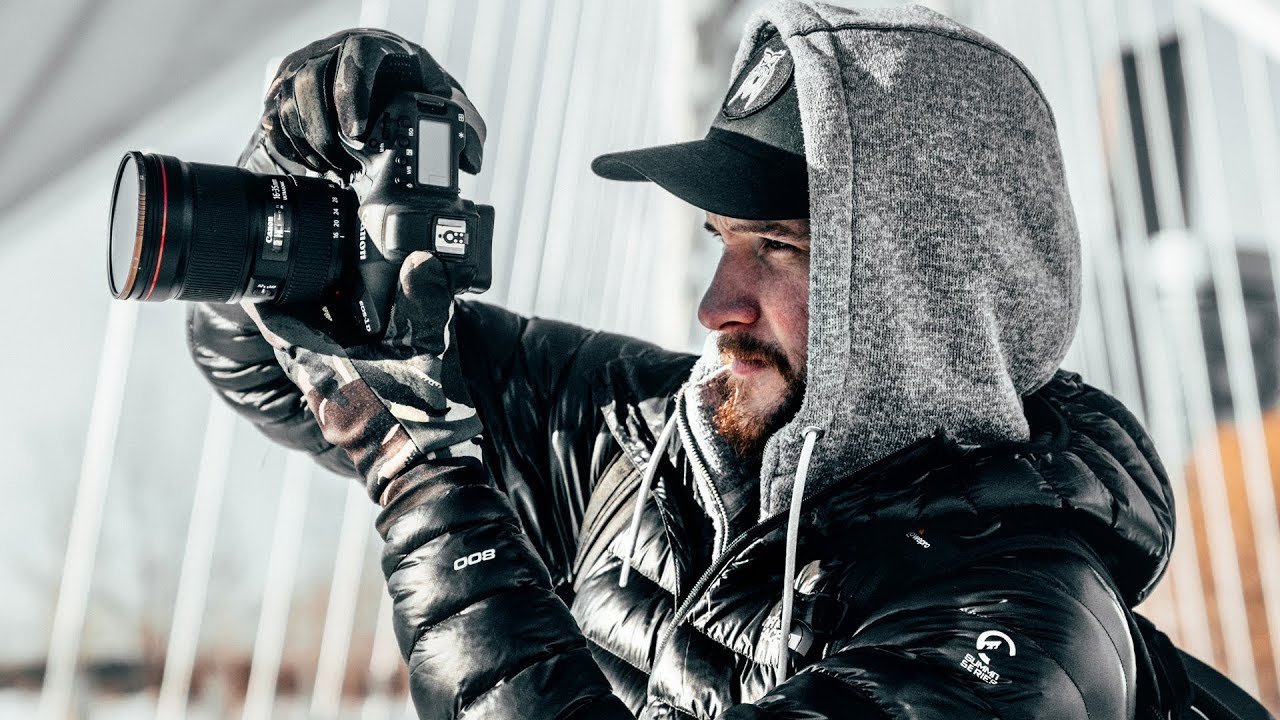
Every photographer I know has a list of things they wish someone had called them out on earlier. Not gear mistakes or technical errors, but habits. The quiet, low-stakes decisions that compound over time until one day you realize they’ve been quietly capping your growth for years.
I came across this Peter McKinnon tutorial a while back and ended up pausing it four times to take notes, which doesn’t happen often. What makes it worth your time is that McKinnon isn’t lecturing from some theoretical high ground. He’s pulling these habits directly from his own shooting life and from the people he works with regularly. That kind of honesty is rarer than it should be in photography education. Watch the full tutorial on YouTube and then come back, because I want to walk through each habit with some extra context for how to actually fix them.
These aren’t abstract concepts. They’re patterns. And once you name them, you start seeing them everywhere, including in your own work.
Step 1: Stop Refusing to Shoot in Less-Than-Perfect Conditions
 Photographer explaining reluctance to shoot in harsh midday light
McKinnon opens with a habit that will feel painfully familiar to a lot of us: only picking up the camera during golden hour, overcast afternoons, or other soft, forgiving light. When conditions are harder, like harsh midday sun or a flat grey sky that isn’t quite overcast enough to be beautiful, we put the camera down and tell ourselves we’ll come back.
Photographer explaining reluctance to shoot in harsh midday light
McKinnon opens with a habit that will feel painfully familiar to a lot of us: only picking up the camera during golden hour, overcast afternoons, or other soft, forgiving light. When conditions are harder, like harsh midday sun or a flat grey sky that isn’t quite overcast enough to be beautiful, we put the camera down and tell ourselves we’ll come back.
The problem with this habit isn’t just that you miss shots. It’s that you never develop the skills to handle difficult light. Every shoot in a comfortable condition is a free pass that keeps you dependent on the weather. Start deliberately practicing in bad light. Shoot portraits at noon with direct sun overhead. Force yourself to find open shade, use fill flash, or turn the harsh light into a graphic element rather than a problem to avoid.
Step 2: Shoot More Frames Per Session
 Demonstrating continuous shooting mode versus single frame selection
This one stings because it feels counterintuitive if you came up valuing intentionality. McKinnon admits he has a habit of snapping a few frames, checking the back of the camera, deciding he’s happy, and moving on. The result is that his subject never had a chance to settle into something natural, and he’s left with no variation to choose from in post.
Demonstrating continuous shooting mode versus single frame selection
This one stings because it feels counterintuitive if you came up valuing intentionality. McKinnon admits he has a habit of snapping a few frames, checking the back of the camera, deciding he’s happy, and moving on. The result is that his subject never had a chance to settle into something natural, and he’s left with no variation to choose from in post.
The fix here is practical. Switch your camera to continuous shooting mode for portrait and candid work, and keep the shutter firing even after you think you have the shot. Give your subject time to move, relax, look away and back, adjust their expression. The best frame is often the one taken three seconds after you thought you were done. Yes, you’ll cull more images, but that’s a workflow problem worth solving. Missing the real shot is worse.
Step 3: Review Your Images Critically, Not Comfortably
 Reviewing images on camera screen with quick dismissal pattern
One of the more subtle habits in the video is the tendency to review photos on the back of your camera and only see what you hoped to capture rather than what’s actually there. We get attached to the moment, to the effort, to the memory of pressing the shutter, and that attachment makes us grade our own work on a curve.
Reviewing images on camera screen with quick dismissal pattern
One of the more subtle habits in the video is the tendency to review photos on the back of your camera and only see what you hoped to capture rather than what’s actually there. We get attached to the moment, to the effort, to the memory of pressing the shutter, and that attachment makes us grade our own work on a curve.
The discipline here is to develop a review ritual that separates the shooting session from the editing session by at least a few hours. When you sit down to cull, look at the image, not the memory of taking it. Ask whether it works technically, whether the composition holds up, and whether there’s real emotional weight there, or just your own nostalgia for the moment. That gap between shooting and reviewing is one of the most underrated parts of improving your eye.
Step 4: Stop Leaving Your Camera at Home Because the Conditions Aren’t Perfect
 McKinnon discussing the habit of waiting for better conditions to shoot
This is a close cousin of Step 1 but worth separating out. McKinnon talks about the psychological habit of deciding in advance that conditions won’t be worth it and leaving the camera behind entirely. Not shooting is a very different problem from shooting in hard light and struggling. Not shooting at all means you’re not learning, not building a body of work, and not staying sharp.
McKinnon discussing the habit of waiting for better conditions to shoot
This is a close cousin of Step 1 but worth separating out. McKinnon talks about the psychological habit of deciding in advance that conditions won’t be worth it and leaving the camera behind entirely. Not shooting is a very different problem from shooting in hard light and struggling. Not shooting at all means you’re not learning, not building a body of work, and not staying sharp.
The practical solution I’d add: keep your camera accessible. I shoot with my phone on days I’ve decided “aren’t worth it” and I have proven myself wrong more times than I can count. My most-liked Instagram photo was taken on a $200 phone during a Sunday morning walk I almost skipped because it looked cloudy. Friction is the enemy of habit change. The lower the barrier to pulling out a camera, the less power bad conditions have over you.
Step 5: Build Deliberate Variation Into Every Shoot
 Discussing shifting angles and subject variation during a session
McKinnon points out that even when photographers do shoot enough frames, they often shoot the same frame repeatedly rather than introducing real variation. Same angle, same distance, same focal length, just more shots of the identical composition.
Discussing shifting angles and subject variation during a session
McKinnon points out that even when photographers do shoot enough frames, they often shoot the same frame repeatedly rather than introducing real variation. Same angle, same distance, same focal length, just more shots of the identical composition.
Deliberate variation means treating each small adjustment as its own creative decision. After you feel good about a composition, shift your position by a few feet. Try horizontal and then vertical. Move closer. Move further. Change your shooting height. None of these need to be dramatic moves, but each one gives you a genuinely different option when you’re editing. Variation is how you discover the version of a shot that’s better than the version you originally planned.
Step 6: Don’t Use Habit as a Substitute for Intention
 McKinnon explaining the difference between bad habits and honest mistakes
The last through-line in McKinnon’s tutorial is the distinction between a habit and a mistake. A mistake is something you didn’t know. A habit is something you know is wrong but keep doing anyway, often because the alternative feels uncomfortable or effortful.
McKinnon explaining the difference between bad habits and honest mistakes
The last through-line in McKinnon’s tutorial is the distinction between a habit and a mistake. A mistake is something you didn’t know. A habit is something you know is wrong but keep doing anyway, often because the alternative feels uncomfortable or effortful.
The honest version of improving your photography is sitting with that discomfort regularly. Choosing to shoot in the light you’ve always avoided. Keeping the camera up when your gut says you already got it. Reviewing your work without emotional softness. These things feel harder in the short term, and they are. That’s exactly why they work.
What I’d Add From My Own Experience
The thing McKinnon’s video doesn’t go into, which I’ve found just as important, is the role that routine plays in breaking these habits. I do a photo walk every Sunday morning, same general neighborhood, no agenda. It started as a creative exercise, but it’s become the place where I practice shooting in whatever conditions show up. Fog, flat light, that brutal Seattle drizzle, all of it. Because I’ve committed to showing up regardless, the “conditions aren’t right” habit loses most of its power. You don’t have to motivate yourself every time if you’ve already decided in advance.
The single most important thing to take from McKinnon’s tutorial is this: most of what limits photographers at the intermediate level isn’t knowledge, it’s patterns. Recognizing your habits, naming them plainly, and building small deliberate practices to interrupt them is more valuable than any new piece of gear or any new technique.
Watch the full tutorial on YouTube to hear McKinnon walk through these habits in his own words, with his own examples. It’s worth the twenty minutes.
Comments (2)
Finally someone explains this in a way that actually makes sense.
Applied this to my portfolio shots and the improvement is noticeable.
Leave a Comment